
Hello beautiful people, and welcome back on the route! 🙂
Have you ever noticed that most places have a “magic month”?
A time of year when everything lines up: the light, the weather, the festivals, the animals, even the mood of the people!!
Arrive a month early and you find rain. Arrive a month late and the show is over… it can be northern lights, it can be a fire festival, it can be carnival, it can be foliage, it can be a huge festival or the perfect clear sky for a climb… visiting places at the RIGHT time, indeed makes a HUGE difference!
So the other day, we asked ourselves a simple question…
“if we had a whole year and wanted to catch every place at its very best moment, where would we go???”
In this article, you’ll find our answer!
Twelve months, twelve wonders, most of them places we’ve already seen with our own eyes but not all, from a salt flat in Bolivia that turns into a mirror to a thermal bath steaming under the Budapest snow!
Ready to go?
Grab a calendar…and let’s dive right in! 🙂
One practical note before we start.
If you plan to tick off more than two or three of these in the same year, we can recommend to get an annual travel cover for frequent travellers which can cover every departure in one go (instead of making an insurance every time!) and it lets you focus more on living your best adventure, completely stress-free 🙂
In this article:
- 1. January: Salar de Uyuni, Bolivia
- 2. February: Levi, Finnish Lapland
- 3. March: Holi, India
- 4. April: Bali, Indonesia
- 5. May: Cappadocia, Turkey
- 6. June: Bay of Kotor, Montenegro
- 7. July: The Great Migration, Kenya and Tanzania
- 8. August: Mallorca, Spain
- 9. September: Italy
- 10. October: Vermont, USA
- 11. November: Sossusvlei, Namibia
- 12. December: Budapest, Hungary
1. January:
Salar de Uyuni, Bolivia

Have you ever wished you could walk on the clouds?
The Salar de Uyuni is the largest salt flat in the world: more than 10,000 km² of white crust, at over 3,600 metres above sea level, in the south-west of Bolivia. It’s so flat that NASA has used it to calibrate satellites.
For most of the year the ground is covered by perfect hexagonal salt shapes, already a wonder on their own!
But between January and March, during the rainy season, something incredible happens: a thin layer of water settles on the salt, and the whole flat turns into the largest mirror on Earth. The sky comes down to the ground, and you honestly lose the line of the horizon.
It’s still, hands down, one of the most incredible places we’ve ever been.
Our advice is not to settle for the one-day tour from Uyuni. Take the 3–4 day trip that crosses the salt flat and continues south through deserts and coloured lagoons: the train cemetery, the cactus-covered Isla Incahuasi, the red Laguna Colorada full of pink flamingos, the geysers of Sol de Mañana at dawn, and a dip in the Polques hot springs at 4,000 metres.
Bring warm clothes (nights are freezing) and sunglasses, because the white glare is no joke. You’ll find Uyuni, together with other once-in-a-lifetime places, in our top 10 natural wonders to see in your lifetime.
2. February:
Levi, Finnish Lapland

In winter, Lapland looks like another planet!
The trees turn into ice sculptures, the lakes freeze into endless white plains, and at night the sky gets painted green by the aurora borealis.
When we visited, we set our base in Levi, and it had everything we could wish for: endless kilometres of cross-country tracks, ski slopes, husky sleds, reindeer farms and saunas hot enough to make you forget it’s -20°C outside.
My personal highlight was renting a snowmobile and driving freely for about 200 kilometres through the silent white wilderness. There’s no feeling like it.
Why February? The darkest part of the polar winter is over, so you get a few hours of soft pink light during the day, while the nights are still long enough for the northern lights. It’s the perfect balance.
Fun fact: in Finnish Lapland there are almost as many reindeer as people, so don’t be surprised if one crosses the road in front of you. Just one warning: you’ll spend the whole week dressed like the Michelin man. Totally worth it!
PS. I am actually writing this article from Lapland right now, and we just today happened to see something like 2 dozen reindeers ahah 🙂
3. March:
Holi, India

Imagine an entire country throwing colours at each other, laughing, dancing, and hugging strangers in the street…. That’s Holi, the Hindu festival that celebrates the arrival of spring and the victory of good over evil!
In 2027 it falls on Monday 22 March, with the bonfire of Holika Dahan the night before. On the main day, coloured powder (gulal) and water fly everywhere, and for a few hours age, caste and social rules seem to disappear.
If you want to live it at its most intense, the places to go are Mathura and Vrindavan, the land of Lord Krishna, where celebrations last for days. In nearby Barsana, during Lathmar Holi, women playfully “chase” men with wooden sticks, a tradition linked to an old Krishna legend.
A few honest tips:
- wear old white clothes you’re happy to throw away;
- rub coconut oil on your skin and hair, so the colours wash out more easily;
- protect your phone and eyes;
- if you’re travelling solo, celebrate with your hotel or a group: the big crowds can get very wild.
And here’s a bonus: March is also one of the best months for a tiger safari, as the forest starts to dry up. If you’re curious, read why India is the best place for a tiger safari and our 7 fun facts about tigers in India. For your first trip, don’t miss our 10 awesome experiences in India for first-timers and the 7 secret places in India.
4. April:
Bali, Indonesia

April is when Bali opens its eyes after the rainy season 🙂 The dry season begins, the skies clear up, and the rice terraces are still bright green from months of rain.
It’s the perfect moment to see the Jatiluwih rice terraces, part of the Balinese subak irrigation system protected by UNESCO, a cooperative way of sharing water that the Balinese have used for over a thousand years.
When we explored the island, we rented a “battle-scooter” in Seminyak and rode three hours to Pura Lempuyang, the temple with the famous “Gates of Heaven”.
We then crossed to Nusa Penida for Kelingking and Diamond Beach (the stairs down are not for the faint-hearted!), and we tried drift diving in Lembongan: you let the current carry you along the reef like a leaf in the wind. Pure adrenaline.
A curiosity: if you arrive in March instead, you might catch Nyepi, the Balinese “Day of Silence” (9 March 2027). For 24 hours the whole island stops: no lights, no traffic, no work, and even the airport closes. The night before, giant demon statues called ogoh-ogoh are paraded through the streets and burned :))
Start planning with our Bali travel guide:
- the top 10 places to visit in Bali;
- the Bali hotspots map;
- how much Bali costs;
- the drift diving in Lembongan experience.
5. May:
Cappadocia, Turkey

We arrived in Cappadocia in May 2023 with our orange van, Arancino, and after almost five years on the road we can say it: places this unique can be counted on one hand!!!
Every morning, before sunrise, the sky over Göreme fills with dozens of hot-air balloons rising slowly over a desert of “fairy chimneys”, strange rock towers that look straight out of Mars. Watching them from the roof of the van, with a hot çay in our hands, is one of those memories that never fade.
May is the sweet spot: mild days, cool mornings, wildflowers in the valleys, and fewer tourists than in summer. One thing most people don’t know: balloons don’t fly every day. If the wind is too strong, flights are cancelled, so plan a few extra mornings.
And Cappadocia is much more than the postcard. Underground, you’ll find entire cities carved into the rock, like Derinkuyu, which goes down about 85 metres and could shelter thousands of people. Above ground there’s the castle of Uçhisar, and the wineries and cave hotels of Ürgüp.
For campervans it’s paradise: wild camping is tolerated almost everywhere and the locals are incredibly welcoming. Everything is in our Cappadocia by camper guide and our 7 things to know before visiting Cappadocia. And if balloons are your thing, Göreme is first in our top 11 places for hot-air balloon rides.
6. June:
Bay of Kotor, Montenegro

On our road trip from Italy to Turkey, Montenegro was the first non-EU country we crossed. We knew almost nothing about it, and it completely won us over.
The highlight is the Bay of Kotor: deep blue water squeezed between steep black mountains. It’s often called the southernmost fjord in Europe (technically it’s a submerged river canyon, but nobody cares when they see it ahah). The medieval town of Kotor, a UNESCO site, is a maze of stone alleys, and if you have the legs, around 1,350 steps lead up to the fortress of St. John for the best view of the bay.
We were there in March, and the view from our campervan window was already unreal. June is even better: the sea is warm enough to swim, the days are long, and the big summer crowds haven’t arrived yet.
Two curiosities you’ll love:
- Kotor is a cat city. Stray cats are everywhere and loved by everyone. There’s even a cat museum.
- Our Lady of the Rocks, the tiny church-island off Perast, is artificial. Sailors built it over centuries by throwing stones into the sea, and every 22 July locals still row out at sunset to add more. The tradition is called the fašinada.
One more for Italians: Elena of Montenegro became Queen of Italy, and the famous Amaro Montenegro liqueur is named after her!
Everything you need is in our Montenegro by camper guide and our 10 fun facts about Montenegro. If you’re driving through the Balkans, check out our Croatia by motorhome guide and our tips for travelling to Albania too.
7. July: The Great Migration,
Kenya and Tanzania

Every year, around 1.3–1.5 million wildebeest, together with 250,000–300,000 zebras and hundreds of thousands of gazelles, walk in a giant circle across the Serengeti–Mara ecosystem, following the rains and the fresh grass. It’s the largest movement of land animals on the planet.
From July, the herds reach the Mara River, on the border between Tanzania and Kenya. That’s where the most dramatic scenes happen: thousands of animals hesitating on the bank, then jumping into the water all together, while the crocodiles wait. It’s raw, chaotic and unforgettable.
A fun detail: zebras seem able to sense rainstorms from more than 30 km away, and the wildebeest often follow them.
July to October is peak season, so book camps early!
Before you go, be sure to read where and when to see the Great Migration in Tanzania and the best time to visit Kenya.
If you’re planning something special, here are the 10 best places for a luxury safari in Kenya and Tanzania, and to impress your guide, our 15 unique animal behaviours in East Africa (yes, some lions really climb trees) 😉
8. August:
Mallorca, Spain

Mallorca is home. We spent about eight years coming and going from this island, so choosing just one month was hard. We went for August because the sea is at its warmest, and because of a little secret.
Around 12–13 August, the Perseids meteor shower reaches its peak. Drive up into the Serra de Tramuntana, lie down on a blanket and count the shooting stars: these UNESCO-listed mountains in the north-west are far from the lights of Palma.
Then wake up the next morning and jump into a turquoise cove.
Our tips for August, when the island is at its busiest:
- go to the beach early. At Es Trenc, one of our favourites, arrive before noon, bring a cooler full of ice and cold beers, and enjoy one of the longest wild beaches on the island;
- watch the sunset from Cap de Formentor, where the cliffs drop straight into the sea;
- take the centenary train to Sóller, a wooden train that has been running since 1912.
Want to know more?? Our Mallorca travel guide has everything:
- the 25 best beaches;
- the 7 best sunset spots;
- 10 things to do away from the beach;
- the hotspots map;
- the budget;
- what to pack.
9. September:
Italy

As Italians, we may be a little biased, but September is THE month to visit Italy.
The summer crowds go home, the sea is still warm, the light turns golden, and in the countryside it’s time for the vendemmia, the grape harvest.
We visited Matera in September, and it’s one of the most magical places in the country.
Its Sassi, neighbourhoods of stone houses carved into the rock, have been inhabited for thousands of years.
They went from being called “the shame of Italy” in the 1950s to becoming a UNESCO site and European Capital of Culture in 2019. Walk them at sunset, when the stone turns pink. You’ll understand why so many films are shot there.
If you want sea instead, the Adriatic coast is perfect in September.
The Conero Riviera has white cliffs and beaches you can only reach on foot or by boat, like Due Sorelle.
On the Trabocchi Coast in Abruzzo, the old wooden fishing machines stand on stilts over the water (the poet D’Annunzio described them as “lurking monsters”), and today some of them are tiny seafood restaurants.
And if you’re heading north-east, don’t skip Trieste, with its Austro-Hungarian cafés and the sea right in the city centre: here’s what to see in Trieste in one day (our guide is in Italian, but the map speaks every language 😉).
To plan it all:
- our 10-day itinerary to travel Italy like a local;
- our guide to Matera;
- the 100 fun facts about Italy;
- our 40 essential Italy travel tips from an Italian.
And to keep track of every place you tick off, we created a scratch map with the top 100 places to see in Italy: you scratch them one by one, and the poster fills with colour.
10. October:
Vermont, USA

There’s a moment, every autumn, when Vermont catches FIRE!
Between late September and mid-October, the beech, birch and maple forests turn scarlet, amber and gold, and the whole state becomes a photographer’s dream.
And it’s a lot of forest: about 80% of Vermont is covered by trees and mountains, with farms and barns filling most of the rest. Drive the back roads, stop at the old covered bridges, and eat pancakes drowned in local maple syrup. It’s no exaggeration: Vermont produces more than half of all the maple syrup in the United States.
Two curiosities to finish: in Waterbury you’ll find the only Ben & Jerry’s factory in the world open to visitors, and Montpelier is famous for being the only US state capital without a McDonald’s.
Read our 7 reasons to visit Vermont.
If you’d rather see the foliage from the Canadian side, take a look at the 10 biggest Canadian festivals too 🙂
11. November:
Sossusvlei, Namibia

The Namib is considered the oldest desert in the world, and Sossusvlei is its heart: a sea of unending red dunes among the highest on Earth.
The king of them all is Big Daddy, about 325 metres tall!
Climbing it was the highlight of our whole Namibian road trip. Step after step on the soft sand, with the wind on your face, until you reach the top and look down at Deadvlei: a white clay pan dotted with black, dead camel thorn trees, around 900 years old, standing against the orange dunes and the deep blue sky.
It looks like a surreal painting. Then you run down the dune in a few seconds. Pure joy. 😎
Why November?
It’s the end of the dry season, the light is incredibly clear, and there are fewer tourists. The catch: in the middle of the day temperatures can go above 40°C.
That’s why you enter the park at sunrise, when the Sesriem gate opens, and drive the 65 km to the dunes while the sand is still cool.
Namibia is a road trip country, and our Namibia travel guide covers it all:
12. December:
Budapest, Hungary
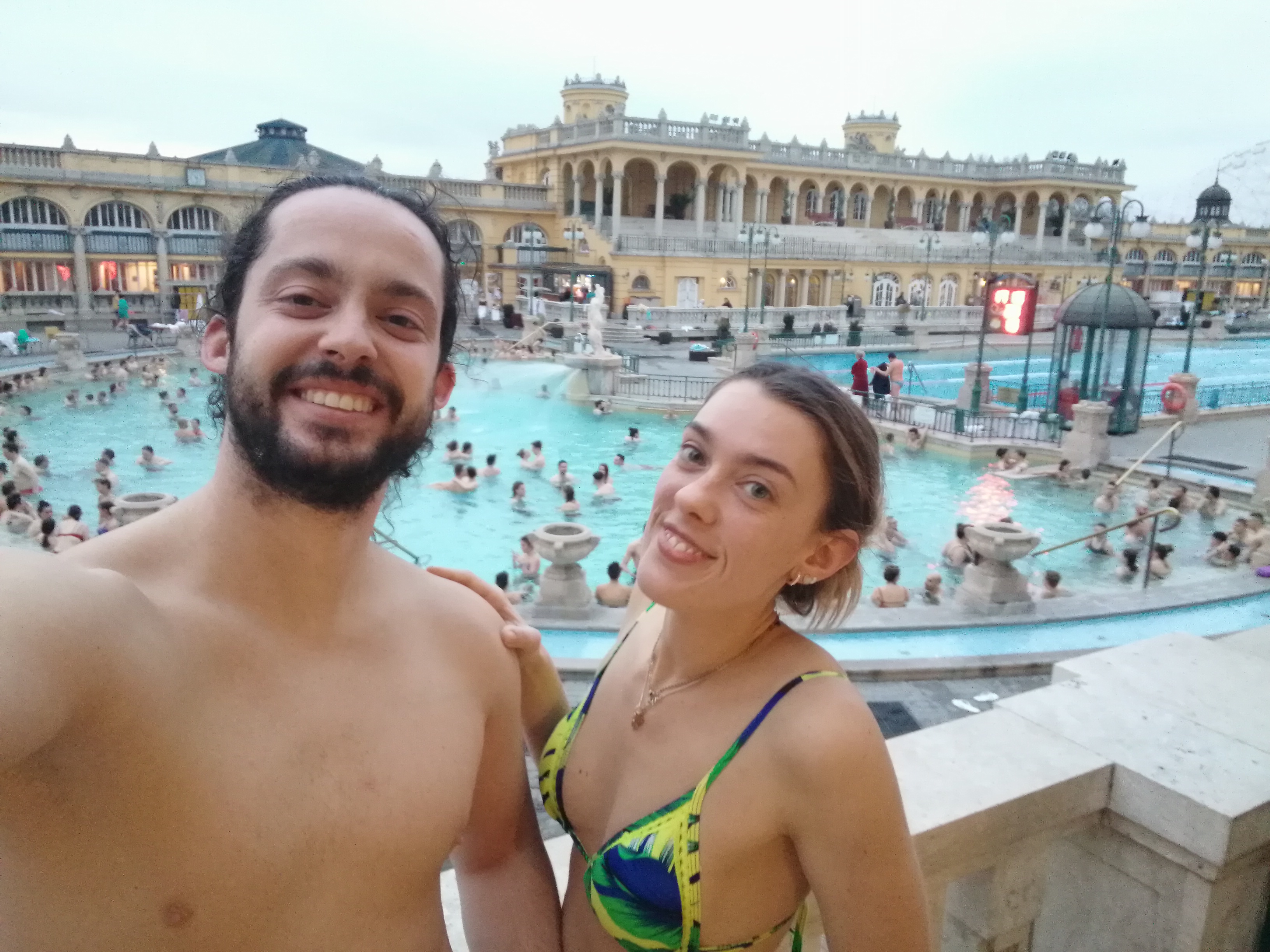
We end the year with steam, lights and mulled wine.
We’ve crossed Budapest with our campervan four times, and one memory always comes back: soaking in the outdoor pools of the Széchenyi Baths, under a grey winter sky, while the air around us was freezing.
Budapest sits on more than 100 thermal springs, and Széchenyi, with its huge yellow neo-baroque buildings, is the most iconic.
Big tip: bring your own swimsuit and flip-flops, because the ones sold at the entrance are SO overpriced!
In December the city also adds its Christmas magic!
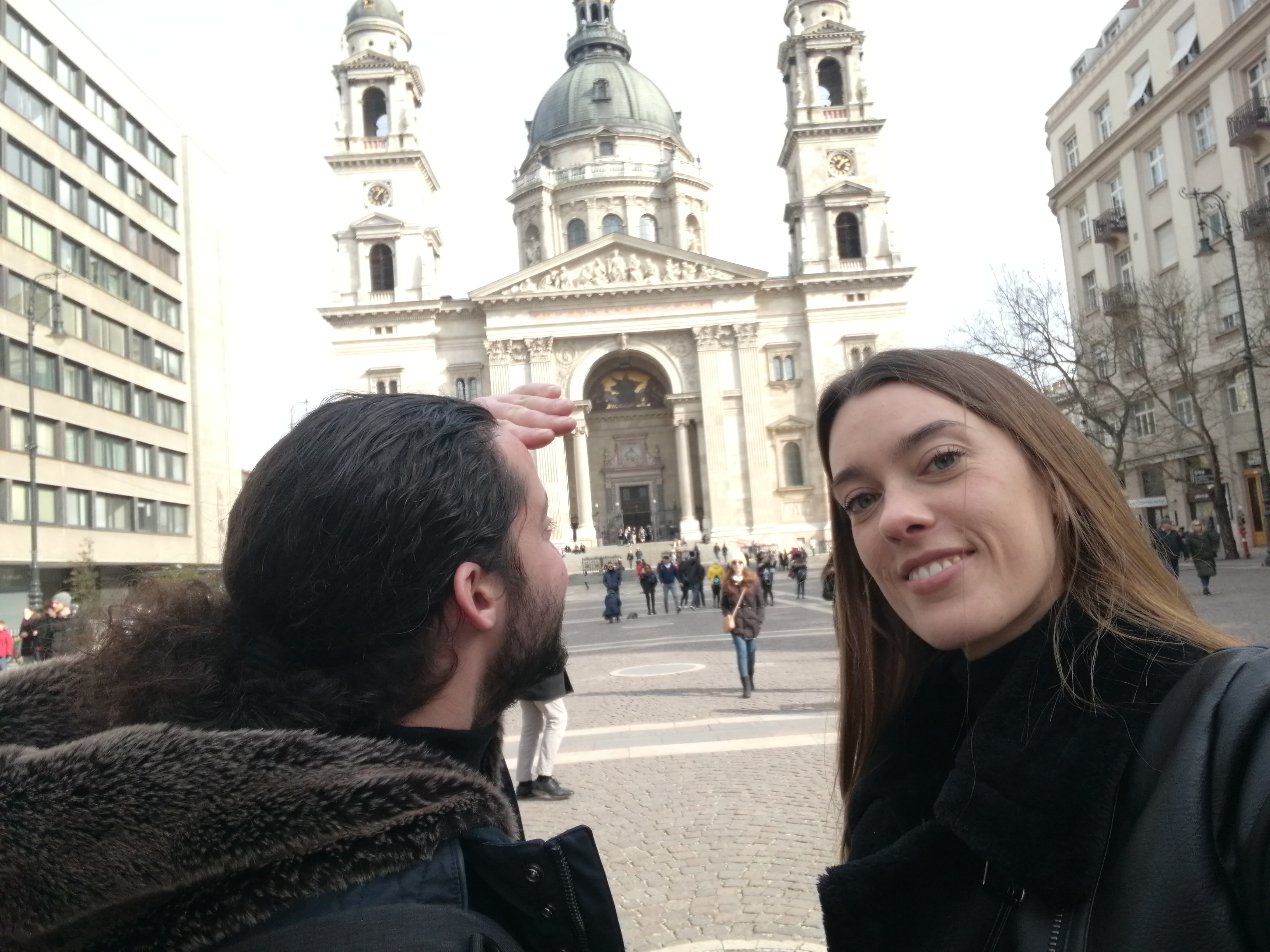
The market in front of St. Stephen’s Basilica has been voted the best Christmas market in Europe several times by European Best Destinations, with light shows projected on the basilica’s façade, an ice rink and stalls of kürtőskalács (chimney cake).
The historic market in Vörösmarty Square is the perfect second stop.
Then walk along the Danube at night, when the Parliament glows gold on the water.
For more ideas, read our Budapest for couples guide:)
Conclusions 🙂
And here we come at the end of this article! 🙂
In this post we’ve travelled a whole year in twelve wonders: a mirror of salt in Bolivia, the northern lights of Lapland, the colours of Holi, the green rice terraces of Bali, the balloons of Cappadocia, the fjord of Kotor, the Great Migration, the Perseids over Mallorca, golden Italy, the burning forests of Vermont, the red dunes of Namibia and the steaming baths of Budapest.
- Which one would you choose first?
- And which wonder would you add to the calendar?
Let us know in the comments below! 😀
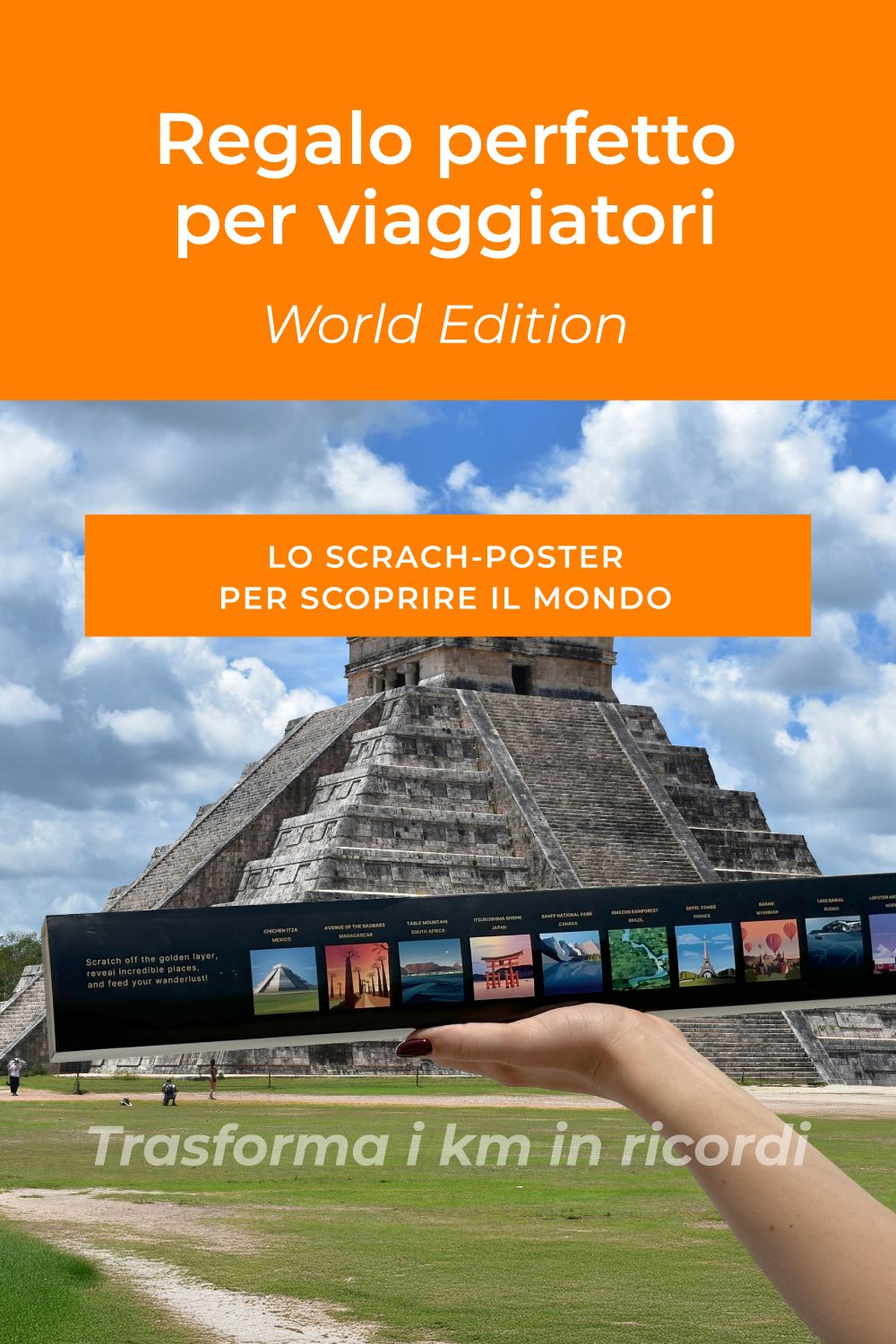
If you’re hungry for more, check out our top 10 natural wonders to see in your lifetime, and if you prefer to take it slowly, read about the 6 benefits of slow travel. And if you want to keep score, our World Edition scratch map has the top 100 places on the planet waiting to be scratched.
Thank you for reading, and see you in the next article! 🙂




0 Comments