Hello beautiful people, and welcome back once more on the route with us! 🙂
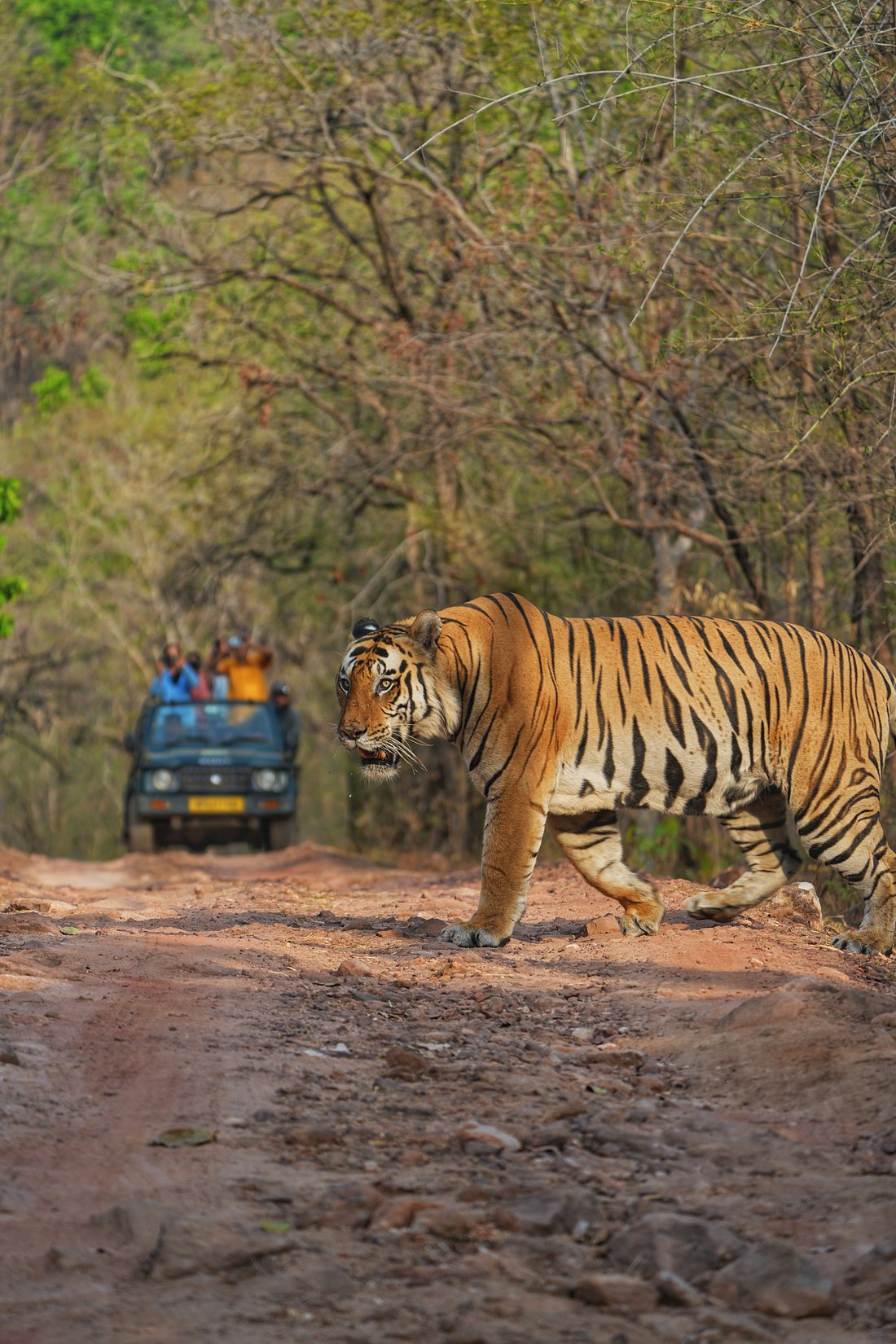
In this article we are going to talk about tigers, and how to maximize your chances to see them in real life! 🙂
First things first, if you dream of seeing a wild tiger out of the zoo, there is one country that gives you better odds than anywhere else and that, of course, is nothing else than India! 😊
According to the latest national census in facts, India is today home to roughly 3,680 wild tigers (almost 75% of all the wild tigers left on the planet – here is the official data!).
Add 58 tiger reserves spread across 18 states, safaris that cost a fraction of an African trip, and the chance to see the Taj Mahal and many other Indian beauties on the same holiday…
No wonder more and more travellers choose India for their first big cat adventure! 😀
Organising a full safari in details though, that is another story…
To enter tiger safaris you need an official authorisation, called a permit (the number of visitors is limited to avoid molesting crowds).
Permits normally sell out months in advance, every park has its own rules and seasons (India is HUGE!), and since late 2025 there are even new laws on phones inside the reserves!
That’s why many travellers rely on agencies and local experts to avoid the hassle and organise their trip with ease:)
QUICK TIP: If you’re also in the planning phase and don’t know where to start organising your trip, you should check out Nature Safari India, one of the most trusted tiger safari operator in India, with 30 years of inbound safari experience!
Their founder, Sharad Vats, has spent 38 years tracking tigers in the forests of Central India, and they run their own lodges in Kanha and Bandhavgarh 🙂
In this article we will see:
- 1. The Top National Parks and When to Visit Them
- 2. The Types of Tiger Safari in India
- 3. India vs Africa: Which Safari Is Right for You?
- 4. What to Bring on a Tiger Safari
- 5. FAQ About Tiger Safaris in India
Let’s dive right in! 😀
1. Top National Parks
(and When to Visit Them)

Let’s start from the most important: where are the coolest places to go?
As said before, India has 58 tiger reserves, but if your goal is to actually see a tiger with a high likelihood, a handful of them do most of the work!
Each main park has its own landscape, history and character, so here’s a quick guide to choosing the one that best fits your needs:)
Bandhavgarh (Madhya Pradesh)
This is the classic choice for first-timers.
With 135 tigers counted in the reserve in 2022, it’s one of the best places in the country for sightings, especially in the famous Tala zone.
Above the forest stands a fort on an 800-metre hill.
Legend says the god Rama gave it to his brother Lakshmana, and the name literally means “brother’s fort” 🙂
Kanha (Madhya Pradesh)
This is the most scenic of the Central Indian parks: over 2,000 km² of sal forest, bamboo and huge open meadows.
And it is also home to one of India’s greatest conservation stories…
As the story goes, in 1970 only 66 hard-ground barasingha (a swamp deer with up to 12 antler points) were left in the world, all of them in Kanha. Today there are around 1,050, and the park even made the deer its official mascot, calling it “Bhoorsingh the Barasingha” ;D
Pench
Located on the border between Madhya Pradesh and Maharashtra, this is the forest that inspired Kipling’s The Jungle Book.
Peculiar about this place, is that it was also home to Collarwali, the “Supermom” tigress, who gave birth to 29 cubs in her life (25 survived) before dying of old age at 16 in January 2022.
Its open teak forest makes it a great park for spotting leopards, wild dogs, and an abundance of bird species, too. Also, her you might see the majestic Indian bison 🙂
Ranthambore (Rajasthan)
Ranthambore looks completely different from the previous entries: here dry forest, lakes and ruins, are the scenic panorama of a 10th-century fort that is a UNESCO World Heritage Site.
This is where “Machli” lived, the Bengal tigress often called the “most photographed tiger in the world”.
It’s about 3 hours by road from Jaipur, so it fits easily into a classic Rajasthan trip.
The downside? It’s also one of the busiest parks on this list.
Tadoba-Andhari (Maharashtra)
Taboda-Andhari is Maharashtra’s oldest and largest national park, about 140 km from Nagpur airport.
Its reputation for good sightings has grown a lot in recent years, and it’s usually less crowded than Ranthambore:)
Those are just the TOP places to go on a safari, of course there are many more which might be also convenient for you depending on the trip you’re planning.
Few honorable mentions are also Jim Corbett (Uttarakhand) which was the first reserve to be established, Kaziranga (Assam) a UNESCO site since 1985 which is home to 2,613 one-horned rhinos, and Sundarbans (West Bengal) which is the largest mangrove forest in the world and the only one where tigers live. 🙂
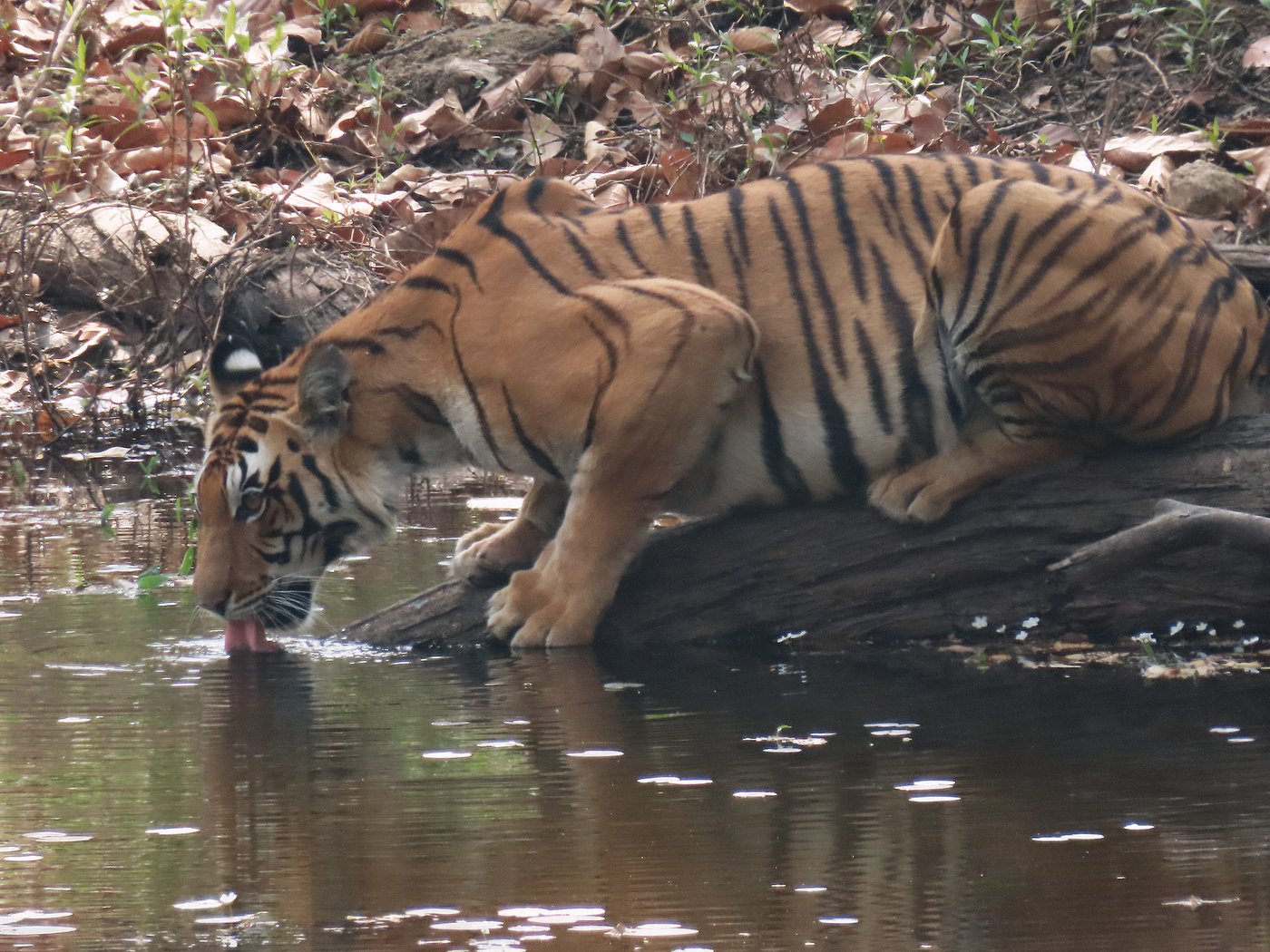
When is the best time to go for a Tiger Safari?
Different parks enjoy different climates, so it is always a good idea to check specifically the area you are going to be visiting.
Said that, here is a guideline to give you an idea of the weather, to help you enjoy your best tiger tour in India:
- July to September: the core zones of almost all reserves are closed for the monsoon, when tigers mate and raise their cubs (in Madhya Pradesh from 1 July to 30 September). Only some buffer zones and Corbett’s Jhirna zone stay open.
- October and November: most parks generally reopen on 1 October. Forests are green and lush and there are fewer people, but the tall grass makes tigers harder to spot.
- December to February: mornings in an open jeep can drop to 0–5°C, while afternoons reach a pleasant 15–20°C. Christmas and New Year are high season, and permits fly!
- March to June: the best sightings, because the forest dries up and tigers stay close to the waterholes. The price to pay is temperatures that can reach 45°C.
Quick Tip: permits open on a fixed window: 120 days in advance in Madhya Pradesh (Kanha, Bandhavgarh, Pench, Panna, Satpura), 90 days in Ranthambore and 45 days in Corbett.
So plan accordingly! 🙂
2. Types of Tiger Safari
in India 🙂

First, a key concept: every tiger reserve has a “core zone”, the heart of the park where the tigers breed and where most safaris happen, and a “buffer zone” around it.
Buffer zones are cheaper and easier to book, and sometimes they might surprise you with great sightings and happenings, so our tip is not to rule them out! 🙂
Here are the most popular tiger safari options:
Jeep safari
This is the classic, and the one most experts recommend.
Normally the vehicle is an open 4×4 jeep that carries up to 6 guests plus the the driver and a mandatory forest guide, for a 3.5 to 4-hour drive in the morning or afternoon.
The jeep can react quickly to an alarm call and position you well for photos.
In Tadoba, for example, a full jeep costs around ₹8,000–9,000 (about €80–90), split between up to six people (very accessible if you ask me!) 🙂
Canter safari.
An open mini-bus with 16 to 20 seats, found mainly in Ranthambore and Corbett.
It’s cheaper per person, but it follows fixed, wider routes and is noisier.
Good if you’re on a budget, less good if the seeing tigers at your own pace is your main goal 🙂
Full-day safari.
An exclusive permit that keeps you inside the park from sunrise to sunset, often across several zones.
It’s a dream for photographers and but consistently more expensive than a simple jeep trip: in Ranthambore for example, it costs around ₹72,000 per jeep for foreigners (about €700 to split between participants:).
Boat and canoe safaris.
In the Sundarbans, registered boats are the means of entering and travelling through the reserve.
Instead of following dusty tracks, in this case you explore a landscape of waterways and mangroves, with a mandatory ecotourism guide on board.
Notice that it isn’t necessarily a boat-only experience from start to finish: visitors may disembark at designated tourist sites.
These include Sudhanyakhali’s watchtower overlooking a freshwater pond and Dobanki’s elevated canopy walk, which is around 400 metres long 🙂
Walking freely into the forest is not permitted in any case!
Walking safaris.
Satpura is one of the very few reserves in India where you can actually walk in the core zone… always with a guide!
The reserve offers guided walking and trekking, including designated activities in its core area. These are organised excursions with authorised guides — not permission to wander through tiger habitat independently (else you know what might happen right? 😉 ).
The appeal is the detail you might miss from a moving vehicle: animal tracks, plants, insects, bird calls and the smaller signs of life around you.
A bit of safari vocabulary: “pugmarks” means an animal’s paw prints so “pugmarks and footprints” are essentially the same thing!
Elephant safaris.
This is a controversial one.
Many people in India like in the west would be against this, but apparently elephant safaris are still a thing…
In Kaziranga you can still ride an elephant at dawn to get close to the rhinos in the tall grass. Personally, this is not our cup of tea as animal welfare to us comes first, but we thought of including it for completeness.
Last but not least, you might wonder: “Dani, you didn’t tell us about night safaris?”
FORGET THEM! 🤣
Some parks used to offer them in buffer zones, but in November 2025 India’s Supreme Court banned night safaris in tiger reserves (we thought of leaving you more ruling in the FAQ you’ll find at the end of the article:).
3. India vs Africa:
Which Safari Is Right for You?

We’ve written a lot about African safaris on the blog, from the Great Migration in Tanzania to the best places for a luxury safari in Kenya and Tanzania.
So the question comes naturally: which one is better?
The truth is… that they are two marvelous, yet completely different experiences!
I compiled this table to give you an understanding at a glance while saving you time:
| India | Africa (East & South) | |
|---|---|---|
| Stars of the show | Bengal tigers + plus leopards, sloth bears, wild dogs and gaurs | The Big Five and the Great Migration! |
| Landscape | Dense sal and teak forest, bamboo, meadows | Mostly open savanna, or rocky terrains |
| How you find animals | Tracking alarm calls and pugmarks | Spotting animals from far away |
| Park size |
Usually 1,000 to 2,000+ km²
|
Kruger ≈ 19,500 km², Serengeti ≈ 14,750 km². Humongous! |
| Rules | Fixed zones and shifts, no off-road, no phones in core zones, no night drives | Parks on tracks, but private reserves allow off-road, night drives and walks |
| Best season | October to June (best March to May) | East Africa dry season, June to October is the best season! |
| Typical cost | A jeep for 6 people ≈ €80–90 per drive | $250 to $1,500+ per person per day (Tanzania/ Namibia/ Botswana) |
As you might have spotted already, the biggest differences come from the animal itself, the time of the year, and prices!
Lions live in groups on open plains, so in Africa you can see dozens of species in a single morning.
The Bengal tiger on the other hand, is a solitary ambush hunter that needs cover, so an Indian safari is more like a detective game where your guide plays a key role in spotting animals! 😀
Here we wrote a full article on Curiosities and Fun facts about Tigers in India, if you would like to give it a look 😉
Then there’s the budget!
In Tanzania a mid-range safari costs $450–800 per person per day, and the park fees alone are around $100–200 per day in the Masai Mara (depending on the season).
In India, roughly the same amount pays for a whole jeep for six people!
All in all, they are two completely different experiences and, if you ask us, we would say: why choosing one or the other? They are both worth of yours lifetime’s bucket list! ;D
TIP IF YOU’RE SHORT ON TIME: If you’ve got only 10-14 days, we would suggest going for India! Here you can combine tigers with the Taj Mahal, the palaces of Jaipur and the temples of Khajuraho (just half an hour from Panna). Operators even design itineraries around it, like this tiger safari & Golden Triangle tour 🙂
Africa on the other hand, still wins for sheer quantity of animals and wide-open horizons, but it might need more time to travel properly through it!
Last but not least, notice that the two main seasons even complement each other: India’s safari season ends in June, just as East Africa’s best months begin.
So keep it in mind: why not do both? 😉
4. What to Bring
on a Tiger Safari

On a safari, depending on your vehicle choice, you’ll still spend hours in a likely open vehicle, through dust, cold mornings and burning afternoons, so packing right makes a real difference!
Here we compiled for you a list of the basic things you should think about 🙂
Clothes
- Earthy colours: khaki, olive green, brown, beige. Avoid white and bright colours, which stand out in the forest and disturb the animals.
- From December to February, real layers: thermal shirt, fleece, warm jacket, beanie and gloves. At 6 am in an open jeep it can be close to 0°C, and by noon you’ll be in a t-shirt. Think of yourself as an onion! xD
- In April and May: a light long-sleeved shirt and a wide-brimmed hat, because the sun is relentless.
- A scarf or buff for the dust, plus sunglasses, water and suncream!
Gear
- Binoculars: many sightings happen at 50–100 metres.
- A real camera with a zoom lens (something like 100–400 mm), with extra batteries and memory cards! This matters more than ever, because since the new rules your phone won’t come with you into the core zones 🥲🥲🥲
- A reusable water bottle (many reserves limit single-use plastic), sunscreen, mosquito repellent and wet wipes.
Documents and money
- Your original passport: the same one you used to book the permit, because it gets checked at the gate!
- Cash in small notes (₹100 and ₹200) for tips to the guide and driver.
What to leave at the lodge
Drones (forbidden!), perfume, flashy clothes and loud voices.
Patience instead is mandatory xD
5. FAQ About
Tiger Safaris in India
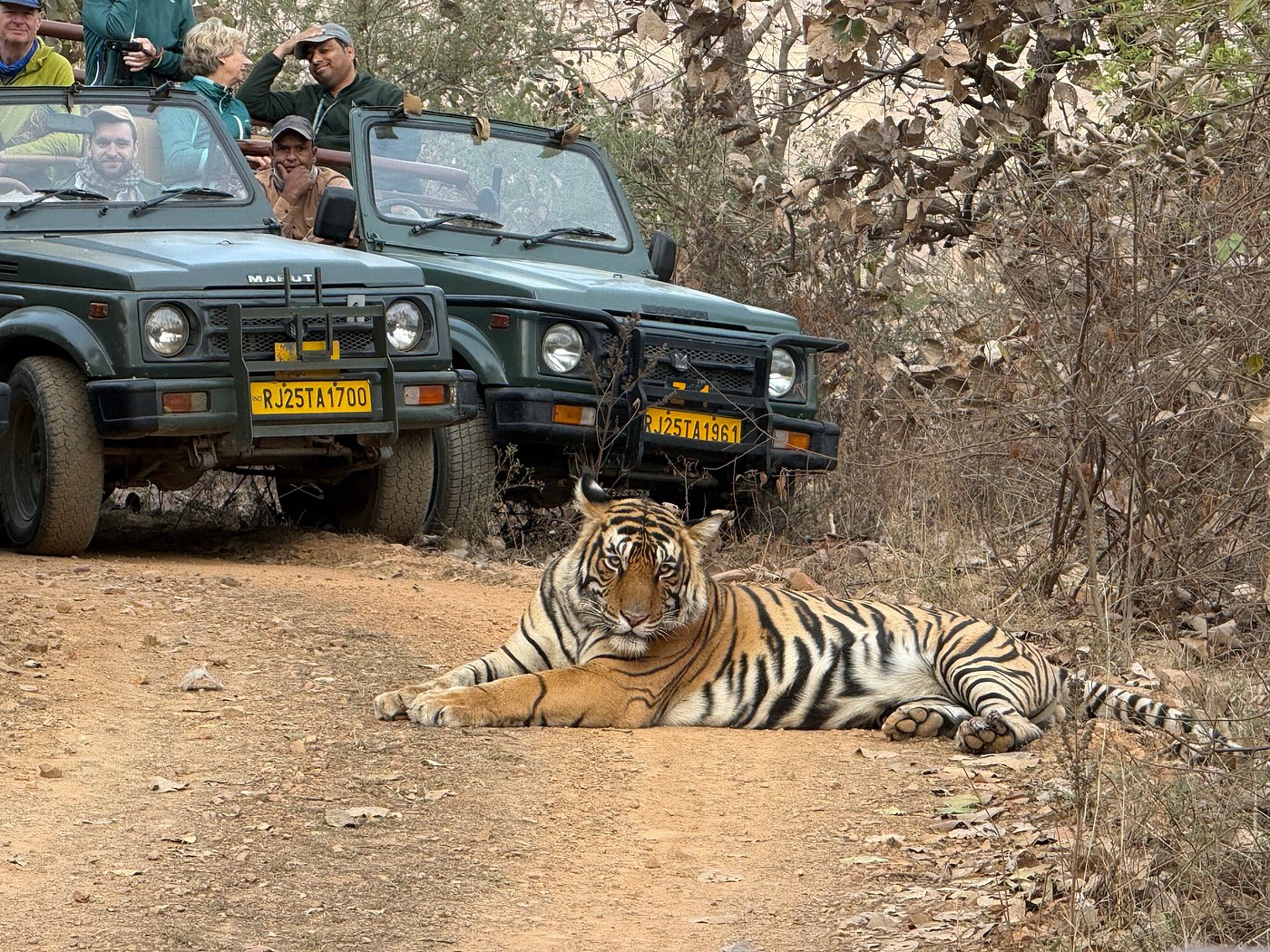
Is a tiger sighting guaranteed?
No, and be wary of anyone who promises one. Tigers are wild animals. To maximise your chances, operators recommend at least four safaris per park, mixing morning and afternoon drives, and choosing the hottest months (March to May) when tigers stay near water.
Can I bring my phone on a tiger safari?
Not in the core zones anymore. On 17 November 2025, India’s Supreme Court ruled that mobile phones should not be allowed in core tourism zones, after a series of “safari jams” with dozens of jeeps crowding around a single tiger.
As Sharad Vats, CEO of Nature Safari India, explained to the BBC, WhatsApp groups between drivers were accelerating sighting alerts and causing the pile-ups. Corbett has applied a complete ban since 5 February 2026, and parks like Ranthambore, Kanha, Bandhavgarh, Pench and Tadoba have followed, with lockers at the gates (more on the new rules here).
When are tiger reserves closed?
Core zones close during the monsoon, usually from 1 July to 30 September, and reopen on 1 October. Kaziranga is only open from November to April, while Corbett’s Jhirna zone stays open all year. Also check the weekly closures (Wednesday afternoons in Madhya Pradesh, Tuesdays in Tadoba’s core).
How far in advance should I book?
As early as possible. Permits open 120 days before in Madhya Pradesh, 90 days in Ranthambore and 45 days in Corbett, and the best zones in peak season (Christmas, April–May) sell out within hours.
Is it safe to sit in an open jeep near a tiger?
Yes, as long as you follow the rules: stay seated, keep quiet, never get off the vehicle and respect the distance indicated by the forest guide. Tigers in tourist zones are used to jeeps and generally ignore them.
How much does a tiger safari in India cost?
It depends a lot on the park, the season and above all the lodge. As a reference, a jeep safari in Tadoba costs around ₹8,000–9,000 per vehicle (up to 6 people), while a full-day exclusive permit in Ranthambore can exceed ₹70,000.
When comparing operators, always ask for an itemised quote that shows what’s included (permits, naturalist, transfers, meals, camera fees).
Conclusions 🙂

And here we come at the end of this article! 🙂
In this post we’ve seen why India, home to three out of four wild tigers on the planet, is the best place in the world for a tiger safari: which parks to choose and in which months, how jeeps, canters, boats and walking safaris work, how it compares with Africa, and what to put in your bag before that 6 am wake-up call! 😉
- Have you ever been on a safari, in India or in Africa?
- And which park would you pick for your first tiger encounter?
Let us know in the comments below! 😀
If you want to know more about the big cat, check out our 7 fun facts about tigers in India. If it’s your first time in the country, don’t miss our 10 awesome experiences to try in India as a first timer and the 7 secret places that will make you fall in love with India.
Thank you for reading, and see you in the next article! 🙂


0 Comments