
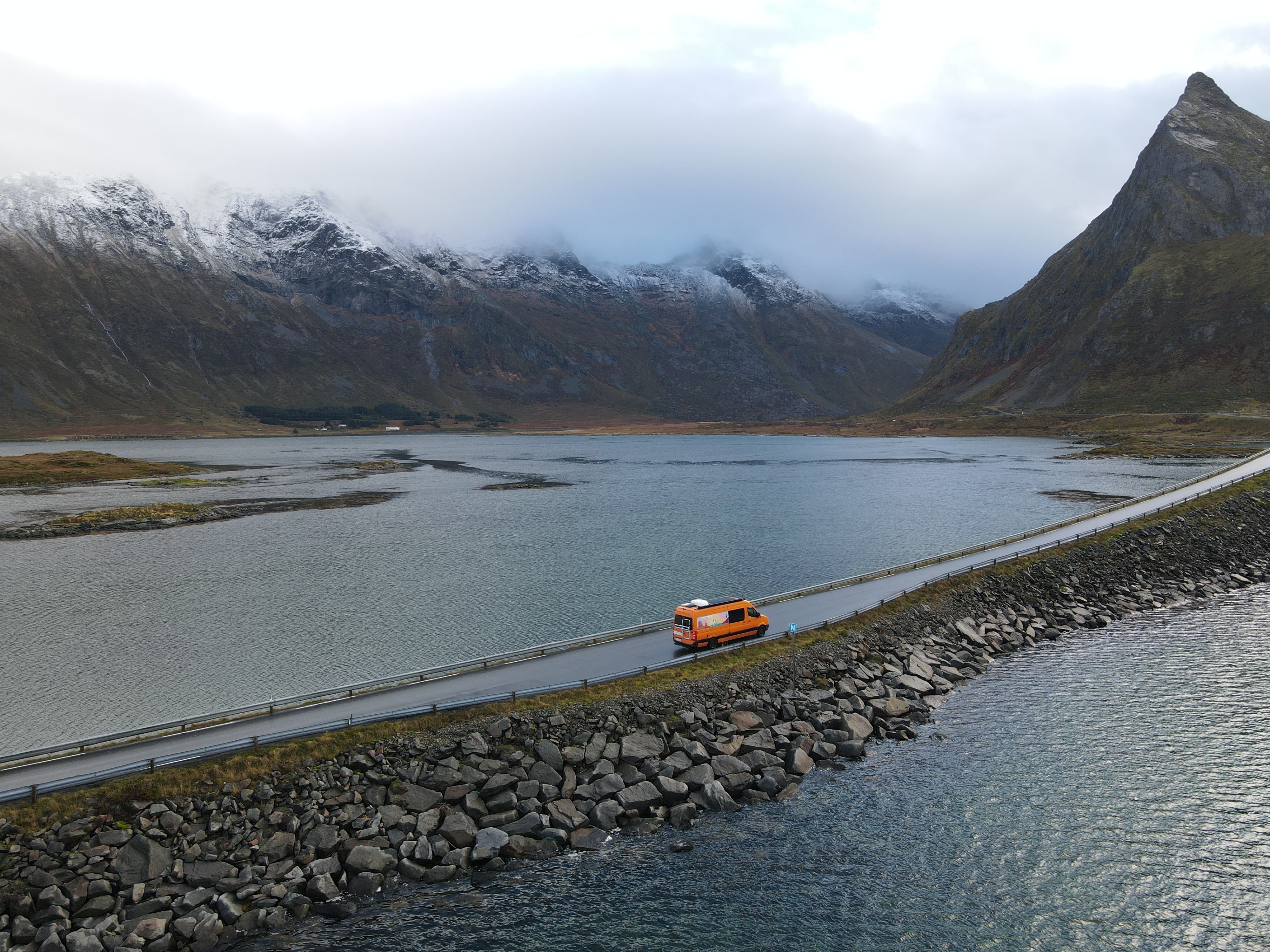
What is it like to travel by campervan in a country where you want to stop at every bend?
In this article we try to tell you: we’ve just come back, and we’re still speechless!
Over the last month we crossed Norway from the south all the way to the North Cape: 30 days of fjords, mountains, autumn colours and roads that seem to take you to the edge of the world.
We discovered a country full of nature, beauty and that freedom that makes us love campervan travel so much.
Between dreaming of a trip like this and actually organising it, though, there are quite a few questions.
- Where do you sleep?
- How do tolls and ferries work?
- How easy is it to find water and services?
- And in autumn, with rain and shorter and shorter days, how much do solar panels really produce?
In this guide we’ve packed everything we learned on our trip into a complete guide to help you plan yours: the places that left us speechless, the parking rules, the real costs, what we’d do again, what we’d change, how much we really spent and much more!
I wrote this guide for those who, like us, keep (or kept) telling themselves for years “sooner or later we’ll go to Norway” xD
In our case we kept saying it for 3 years in a row before actually going, eheh!
So…between dreaming and doing, we hope this guide will be your “next little step” to organise your trip to Norway and really leave for this wonderful corner of the world!
Would you rather watch than read?
You can find everything in the full video on our YouTube channel!
Our trip in numbers
| Item | Our trip |
|---|---|
| Duration | 32 days, from Oslo to the North Cape |
| Distance | about 4,000 km (67 hours of driving) |
| Period | from September to mid-October |
| Total spent in Norway |
€2,832 for two (about €1,416 per person) (cost of getting here not included) |
| Tolls and ferries | about €150 in total |
| Diesel | from about €2.36 to €2.83 per litre (autumn 2026) |
| Battery charging |
only from the engine and a little solar, never plugged into a charging post or a campsite! |
Table of Contents
- 1. Norway’s Geography: How Big Is It Really
- 2. The Weather in Autumn: Three Seasons in a Single Day
- 3. Solar Panels and Battery Charging
- 4. Nature in Autumn: Colours, Animals and Auroras
- 5. Places to See: Our Favourite Stops
- 6. Overnight Stay and Parking Rules
- 7. Tolls and Ferries
- 8. Campervan Services and Useful Apps
- 9. Food, Supermarkets and Local Specialities
- 10. Gyms to Train on the Road
- 11. How Much We Spent: the Full Budget
- 12. What We’d Do Again and What We’d Change
- 13. Conclusions
1. Norway’s Geography: How Big Is It Really?
Before coming to Norway we had no idea how big it really was…
On the map it looks big, but when you get there it’s even more huge!
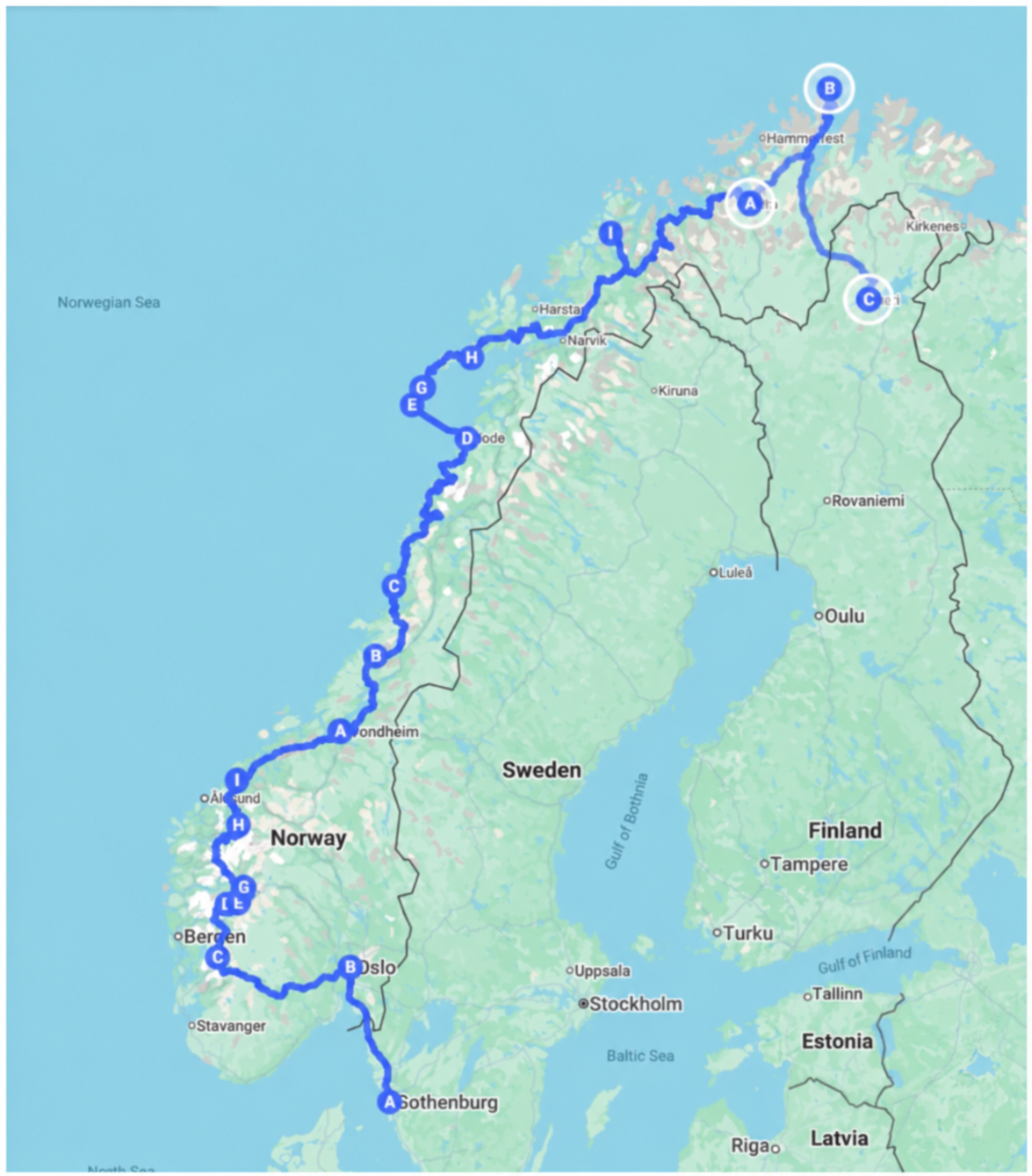
As the crow flies, from south to north it measures about 1,700 km, much more than Italy!
This vertical layout creates many different climates, which we talk about in the next section.
That’s why, especially in the shoulder season, it’s best to dress in layers: lighter clothes at the start of the trip in the south and heavier and heavier ones as you head north.
Few inhabitants, and slow, slow roads…
Here I’ll leave you some geographic data, to give you an idea of what a monster Norway really is 🤣
To start, let’s look at the area: mainland Norway is about 7% bigger than Italy, but it has a tenth of the inhabitants: only 5.6 million people!
This means you meet far fewer people than in Italy or in the big European countries: huge territory, small population!
The speed limit is almost always 80 km/h or less, and the roads aren’t straight at all, but very, veeery scenic!
The landscape is mainly mountainous (it looks like an extra-large Trentino!), with more than 1,000 fjords, huge inlets where the sea stretches deep into the mountains.
Because of all the fjords, what looks “only 100 km away” as the crow flies on the map can sometimes take hours to reach!
Fjords, rivers, mountains and winding roads… in Norway you need to take your time and go without rushing!
Luckily, ferries, passes and tunnels often help you avoid huge detours (but watch out, many stop running as winter approaches!).
On our crossing of Norway, we drove about 4,000 km in 30 days, from Oslo all the way to the North Cape.
Coming from Trentino (a mountain region in the Dolomites), after seeing the vastness of Norway’s mountains and nature, going back to my region now feels like going back to my own backyard: just to give you an idea of how immense Norway is!
Imagine a Trentino, but multiplied by the whole size of Italy and more, with the sea as a bonus… it’s immensely incredible! 😉
2. The Weather in Autumn: Three Seasons in a Single Day!
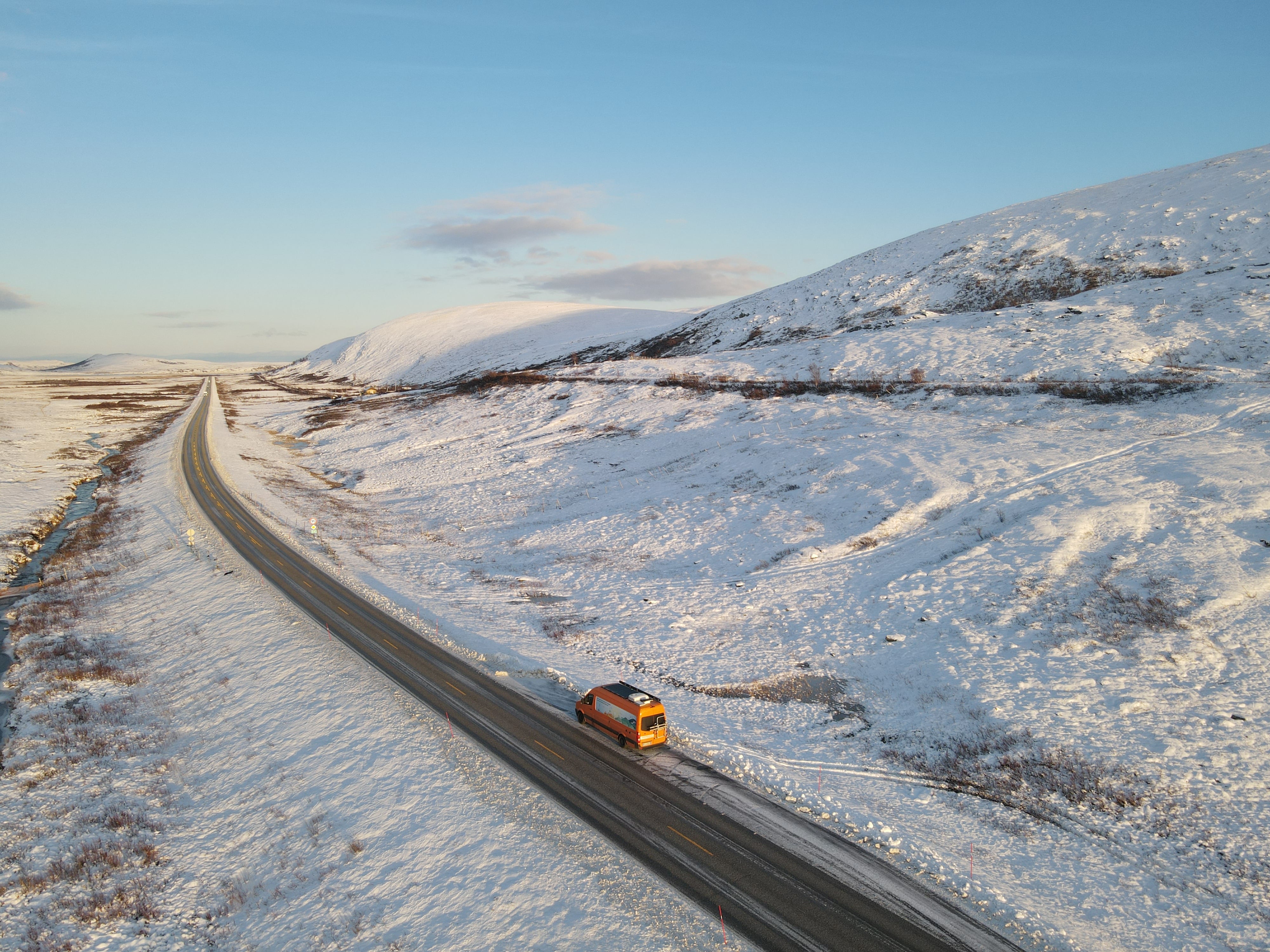
Autumn in Norway is an in-between period between summer, when there’s always sunlight, and winter, which is mostly all dark.
The weather we found was very, very changeable and a bit crazy: beautiful calm sunny days, and very rainy and very windy days, changing face very quickly.
The three climate macro-regions
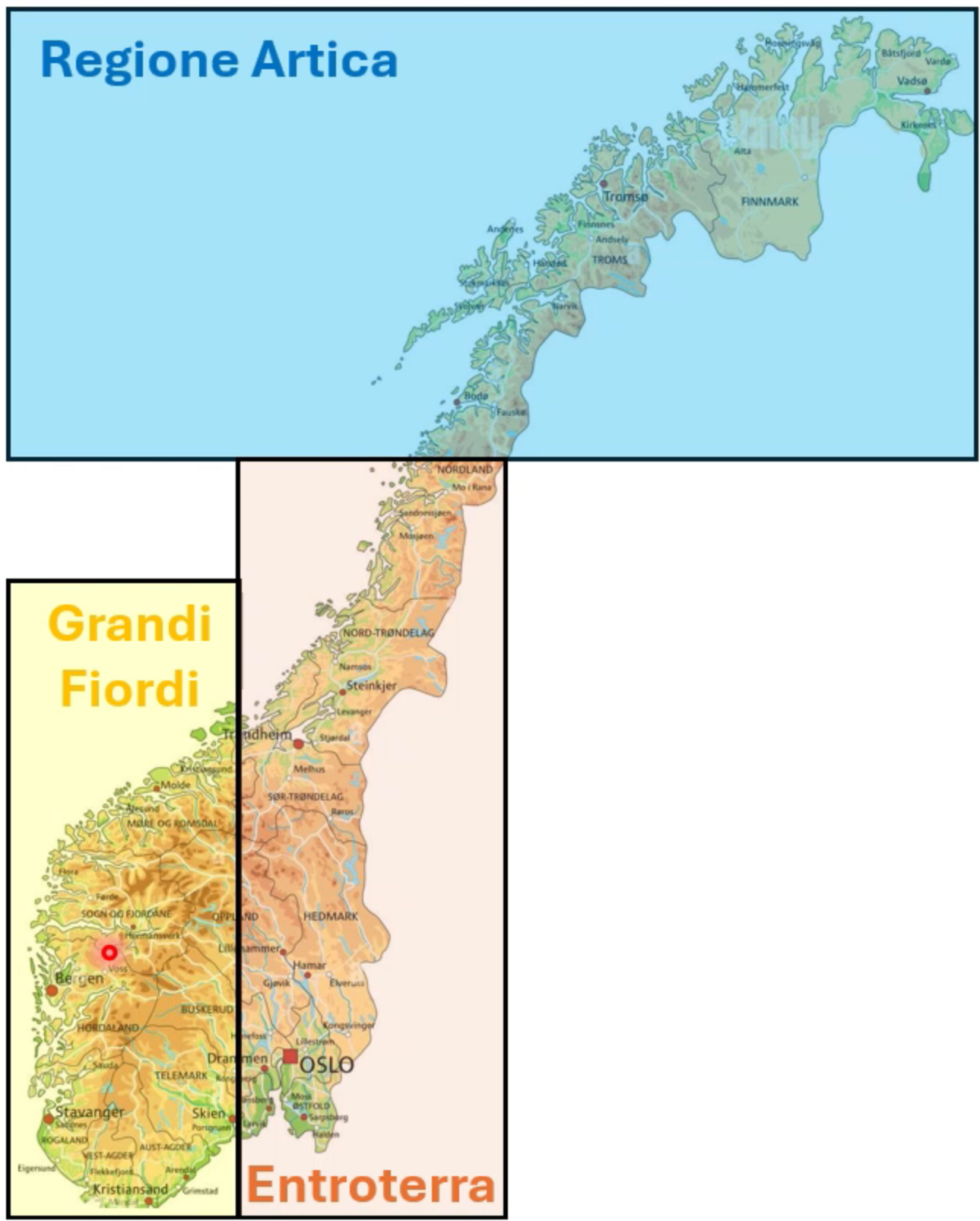
- Arctic region: the Lofoten and the whole north, from Tromsø to the North Cape.
- Inland: mainly the Oslo area and the whole interior.
- Region of the great fjords: large stretches of water and relatively high mountains.
On top of that, the closer you get to the coast, the more oceanic the climate becomes, because Norway faces the Atlantic.
Temperatures and altitude
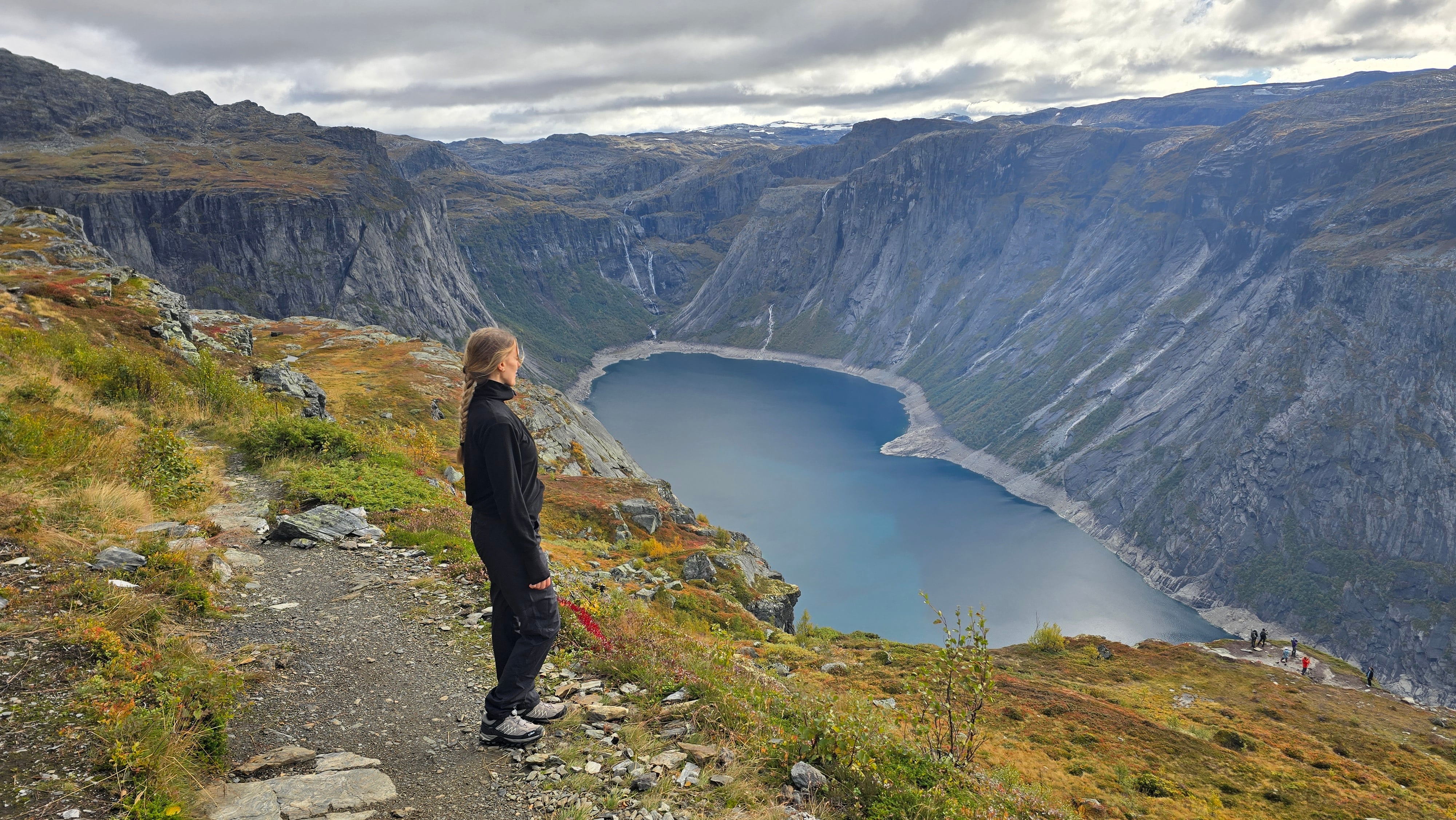
At sea level, between September and October, we found good temperatures, around 10-15 °C and on some rare (ONE time, in Oslo! XD) occasions 18 °C: like the end of summer back home.
Up high the climate gets much harsher: already in mid-September, climbing the mountains around the fjords you can find snow, especially near the permanent glaciers.
The result is that in a single day you can basically go through three seasons just by changing altitude: late summer at sea level, forests full of yellows, oranges and reds as you climb, snow at the top. In three words: it’s damn MAGICAL!!!
In autumn, the days get shorter FAST!
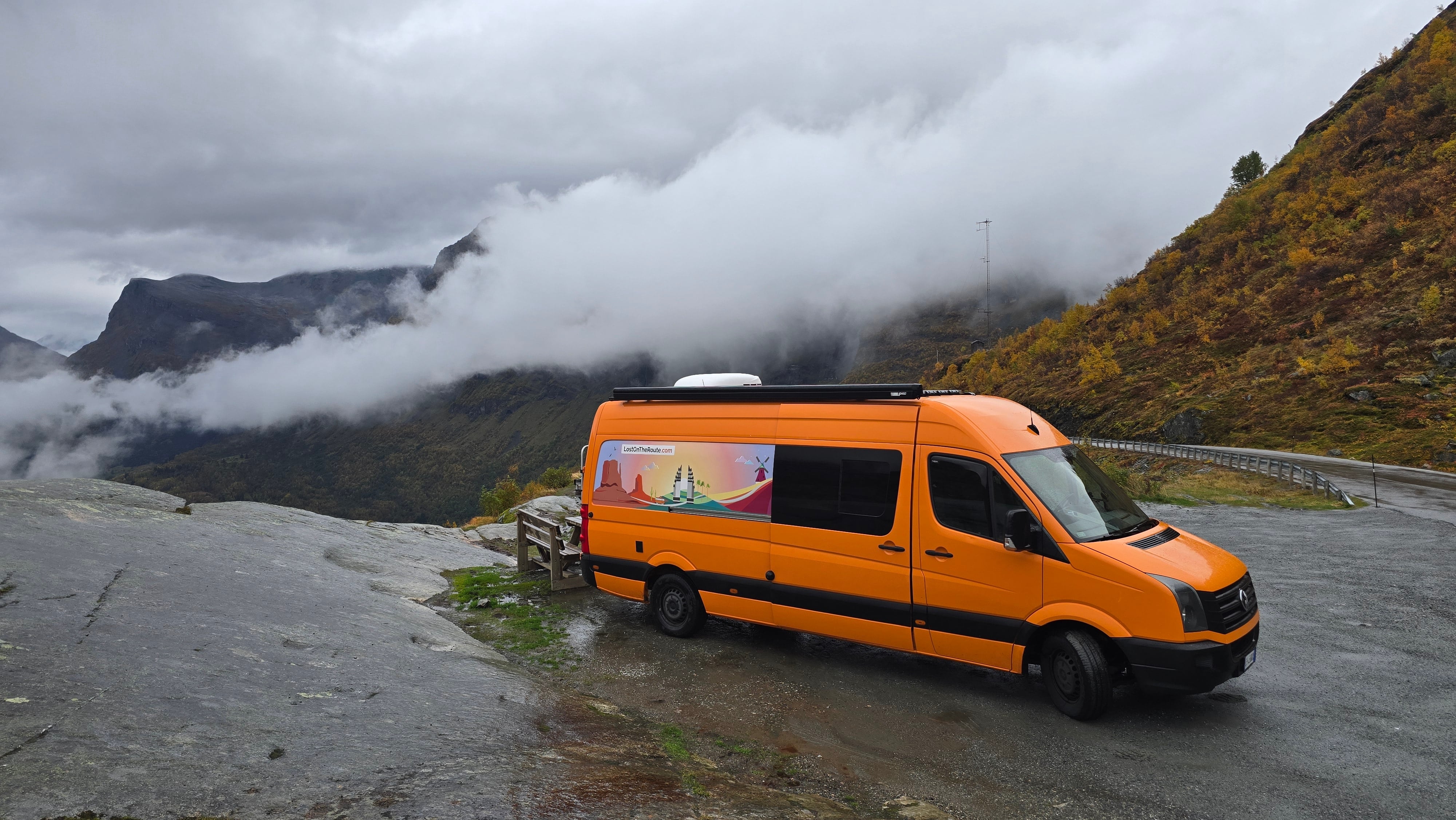
After 21 September, the day when there are 12 hours of sunlight all over the world, each day gets shorter by about 5 minutes in southern Norway and by about 10 minutes in the north… which is a lot!
If you’re in Tromsø (in the Arctic area), to give you an idea, a week from now the sun will set more than an hour earlier than last week. And so on, every week until December!
Daylight hours are a key detail to consider when you plan outdoor hikes… and that’s why, besides the weather, it’s good to always check the sunset time too, to avoid nasty surprises.
Heading north, in one month we lived a “sprint autumn”: we left at the end of summer (in Oslo, where summer lasts longer) and arrived at the doorstep of winter (at the North Cape, where winter starts very early), with the most incredible autumn nature all along the way!
How did the autumn weather go for us? Stop by stop!
- Oslo: 12-15 September. It was still the end of summer, I risked my shorts and got away with it xD
- Fjords/South: 16-30 September. Extremely changeable weather, from heavy rain with incredible waterfalls on the mountains (and “incredible” is really an understatement!) to beautiful days for hikes like the 10 hours to reach the Trolltunga! Note that September is the limit for many hikes (Trolltunga, Lysefjord, Kjeragbolten… after that it’s better to do them with a guide, because they get more slippery and dangerous and the long ones no longer have enough daylight!).
- Atlantic Road: 30 Sept-5 October. Quite a bit of wind, but also pleasant sunny days. In this area we found ourselves driving for hours and hours and hours, admiring the landscape from the van more than walking it, apart from a few unmissable stops like Torghatten – which we’ll talk about later 😉
- Lofoten: 6-9 October. very changeable and very humid weather, alternating clouds and sun, but still nice days to explore without too much rain (maybe no longer good for the beaches or the longer hikes!).
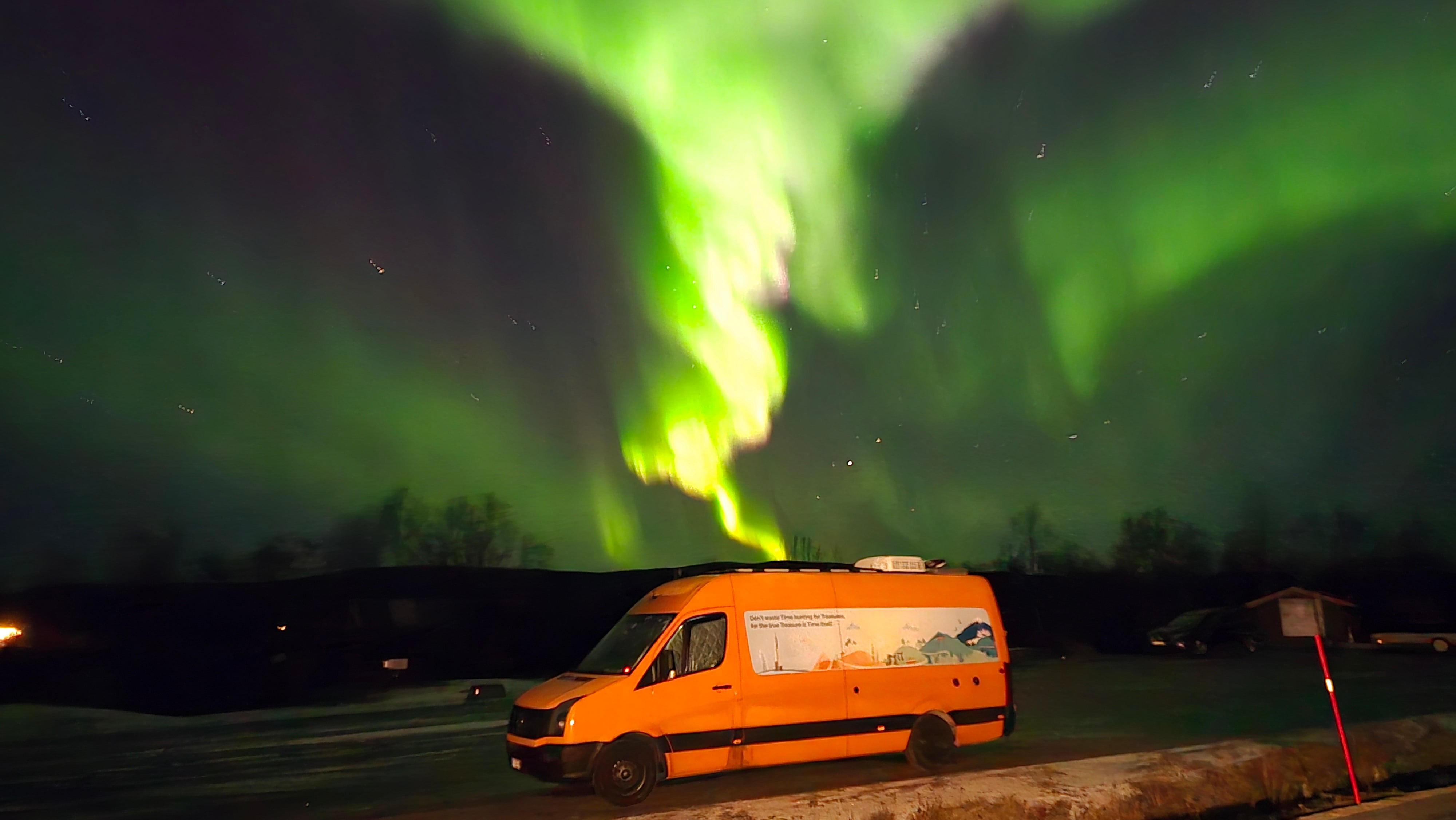
- Arctic Region Tromsø/Alta: 10-14 October. It had already snowed in the previous days and snow was forecast afterwards too; we slipped into a snow-free window (very luckily), but we found fairly icy roads and almost wintry conditions. The snow line was probably about 100 m above sea level, while driving along the coast the roads were still in great condition. Super bonus: in this period, the auroras are practically guaranteed, and we fell asleep under them almost every night
- North Cape: 15-16 October. There was snow all around, not a lot, but there had already been a few sprinkles before we arrived. The road was still clear and we could drive to the monument on our own without problems or special precautions. It was without a doubt the coldest stop of the trip, and the wind can be really merciless here. That said, a spectacular place, auroras all night and nobody around, a moving and unique experience, at the edge of the continent!
3. Solar Panels and Battery Charging
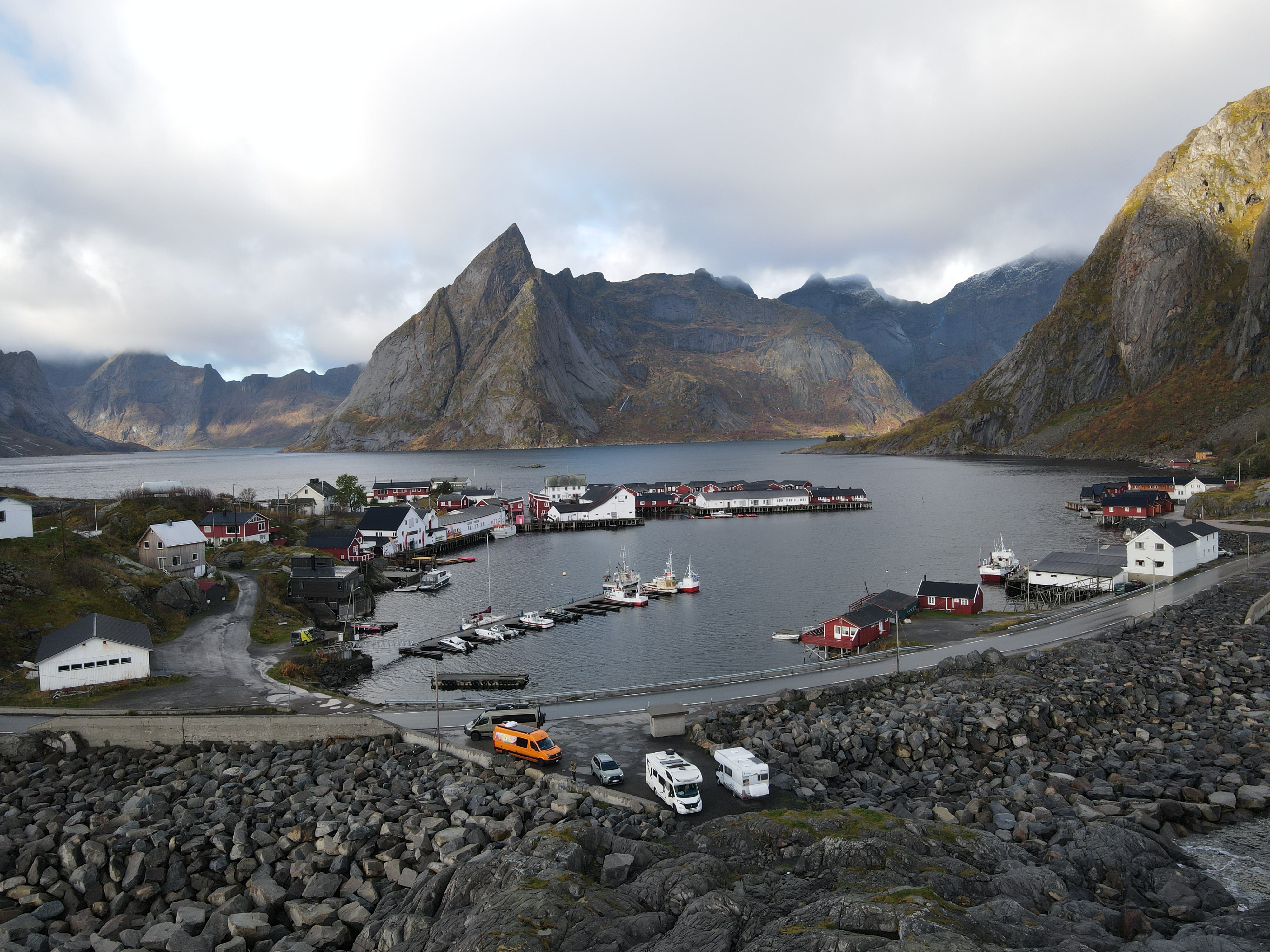
A practical detail that matters to every vanlifer: battery charging!
The further north you go, the lower the sun, the less the panels produce…and on top of that, in autumn the sunny hours get fewer and fewer day by day!
On our van we have a 600 W bifacial solar panel, installed flat on the roof, and we kept an eye on how much it produced during a month in Norway (spoiler: next to nothing! 🤣).
How much did the panel produce?
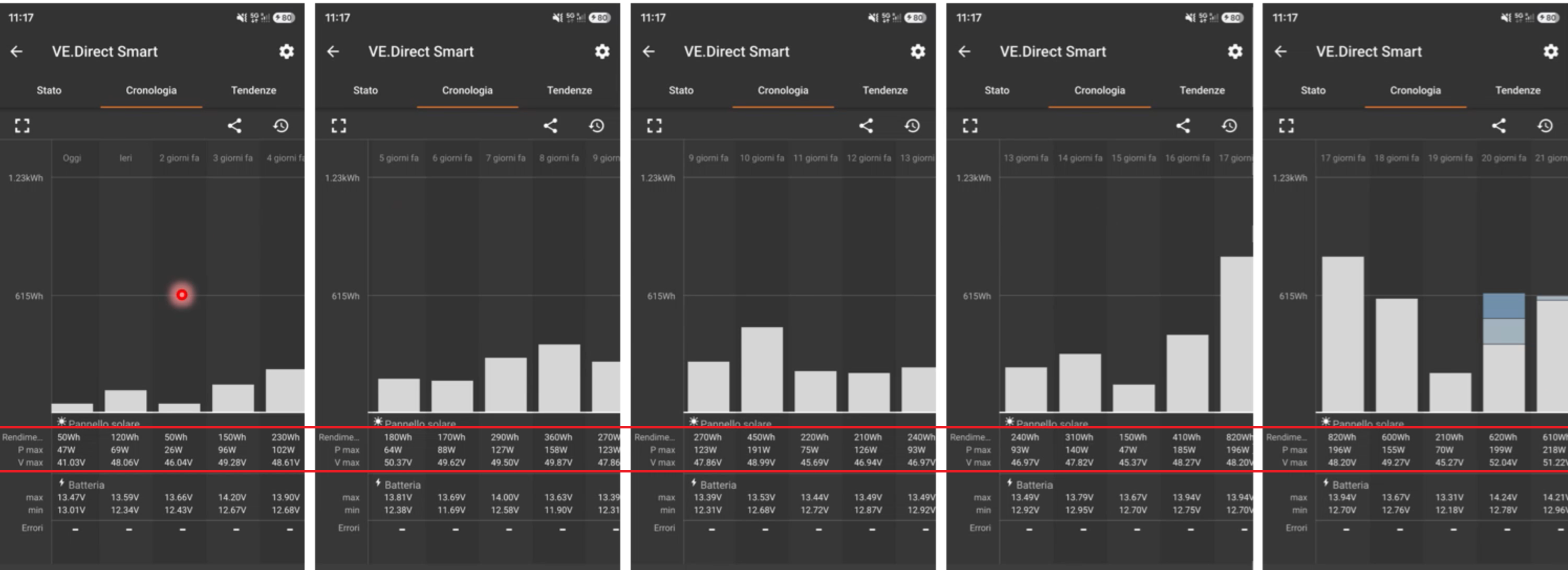
Starting from Oslo, in southern Norway, in the first days it produced between 500 and 800 Wh (with cloudier days at 200 Wh): about 50-60 Ah over a whole day, already in September.
Then, going north, the graph goes down, down, down and in the end the panel produced practically nothing: 50-200 Wh, that is barely 10-20 Ah over a whole day.
The peaks recorded by our Smart Solar go from 70 W in the far north to 290 W in the south, but they are just peaks, at full midday: in practice a panel gives you from 15% to 40-50%!
Our verdict is clear: in this period, with a flat panel on the roof, solar charging is almost completely useless, and I wouldn’t count on charging your batteries this way, unless you come up with creative solutions!
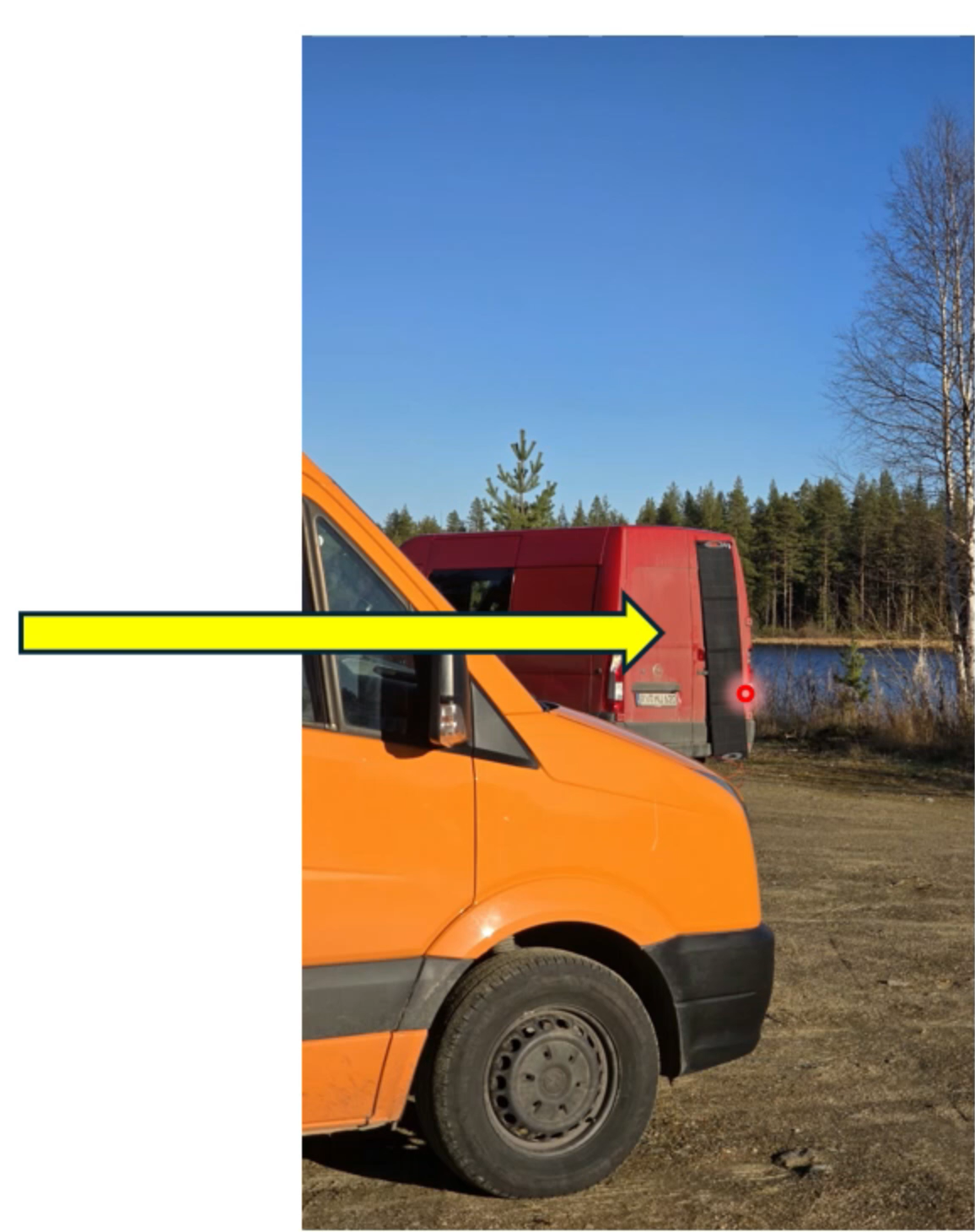
We spotted one solution on a campervan parked near us: hanging a portable panel or a solar blanket vertically, so it sits perpendicular to the sun’s rays and probably produces more.
How we really charged: all from the engine
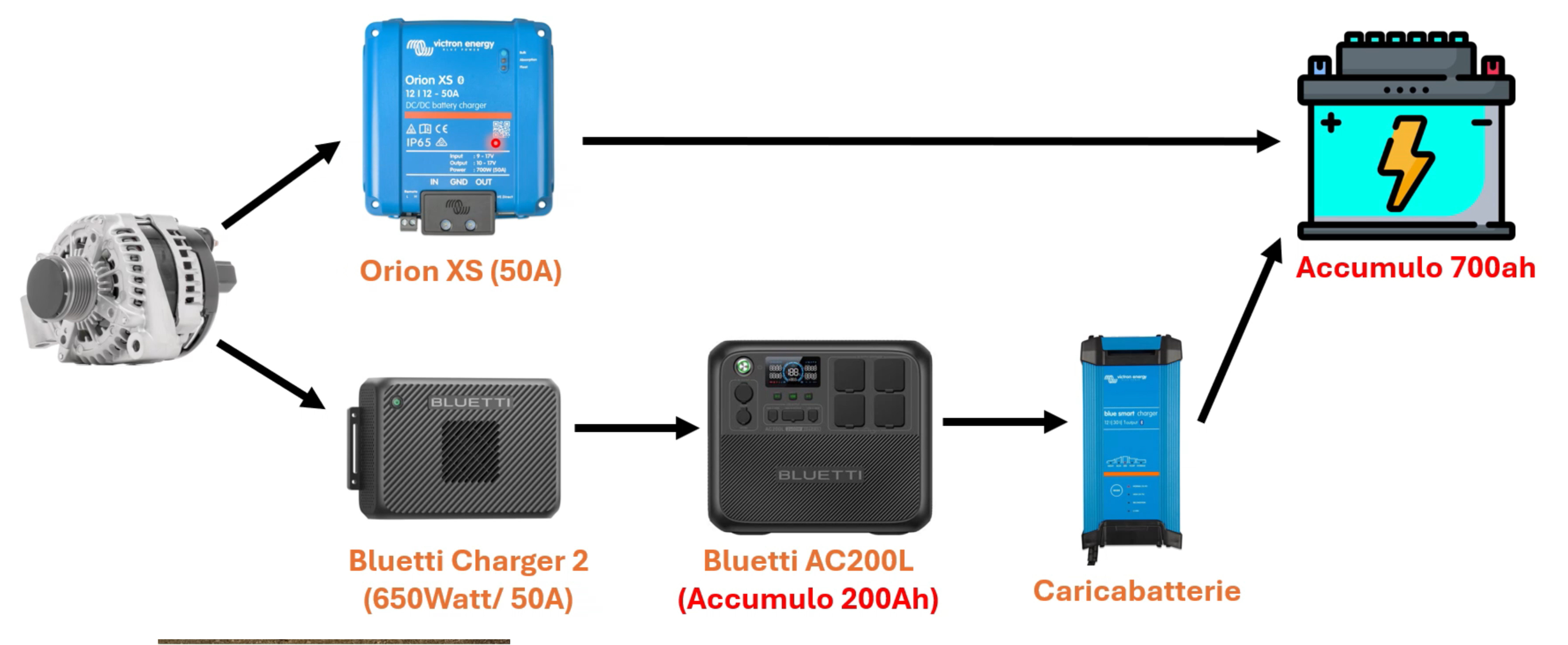
We charged practically everything from the alternator, with a Victron Orion XS 50 A DC-DC: 50 Ah for every hour of driving.
Our battery bank is 700 Ah, so while we’re moving we can store plenty of power to use when we stop.
On top of that we have a Bluetti Charger 2 set to 650 W, which charges about another 50 Ah for every hour with the engine running, and which we use to charge our Bluetti AC200L (an internal storage roughly equivalent to 200 Ah at 12 V – update: we’ve now swapped it for a Bluetti Elite 300).
When needed, through the Bluetti and our Blue Smart charger, we also charged the battery bank.
In total we have about 900 Ah of storage, and we managed to do the whole of Norway without ever plugging into a charging post.
The maths: we produced 250 Ah a day!
In 30 days we drove 4,000 km at an average of about 60 km/h, that is about 67 hours of driving, more or less 2 hours a day.
With the two DC-DC chargers we produced about 6,700 Ah; adding that little bit of solar we got to about 7,500 Ah in a month, which is roughly 250 Ah a day.
That’s more than enough to live and work even as heavy users like us: computers, heating, fridge, lights, hairdryer, kettle, everything you need day to day.
It’s not always enough, though, to cook lunch and dinner for two on the induction hob: if you stop for 2-4 days without starting the engine and without sunlight, nothing gets charged.
That’s why every now and then we used the camping gas stove we keep for emergencies: about six gas canisters over the whole trip 🙂
A little off-topic:
If you want to build an electrical system like ours, we’ve prepared a complete DIY electrical system guide with wiring diagram and a selection of the best products for a campervan electrical system.
About the power station we used on the trip, you’ll find all the details in our review of the Bluetti in a campervan, and for the battery bank you can read our review of the PowerQueen lithium batteries for campervans 🙂
4. Nature in Autumn: Colours, Animals and Auroras
A premise: photos and videos can’t even come close to capturing the immensity and beauty of this place.
We try to show it to you and describe it, but it’s so huge and incredible that it’s really hard, in words and even in pictures!
The colours
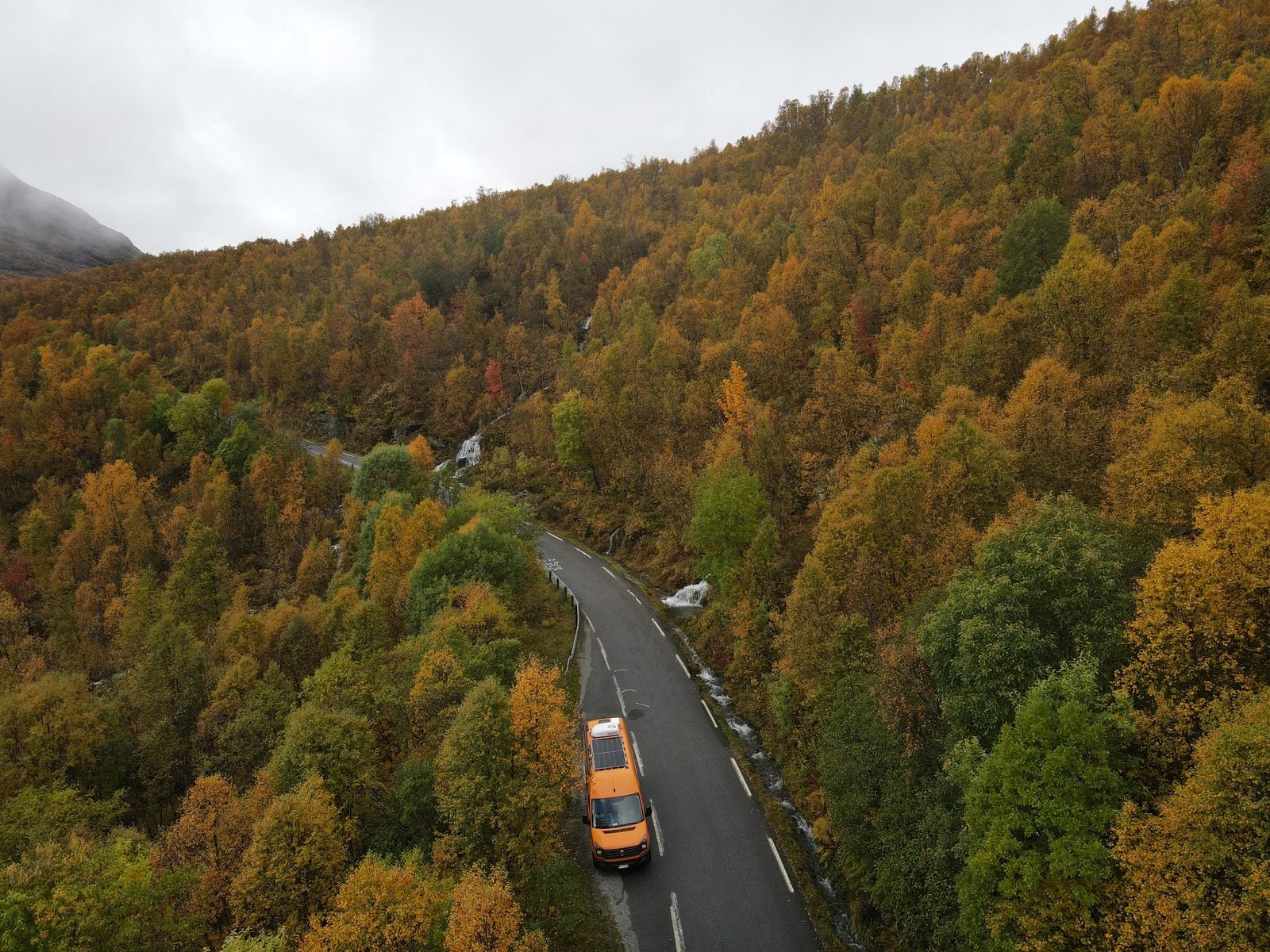
In autumn there’s a huge spectrum of colours:
- foliage with all the trees in colour,
- waterfalls near the fjords (so many that after a while you stop even noticing them!) where everything is still green,
- almost wintry mountain views
and all this while passing by glaciers, ocean, tundra and taiga.
You go from green places to rocky ones, from snow-capped peaks to valleys of broadleaf trees set on fire by the autumn colours: bridges, fjords, waves, rocky cliffs, lakes and show after show!
The roads are almost always empty: it feels like driving in a car commercial, because there’s almost never anyone around!
The animals
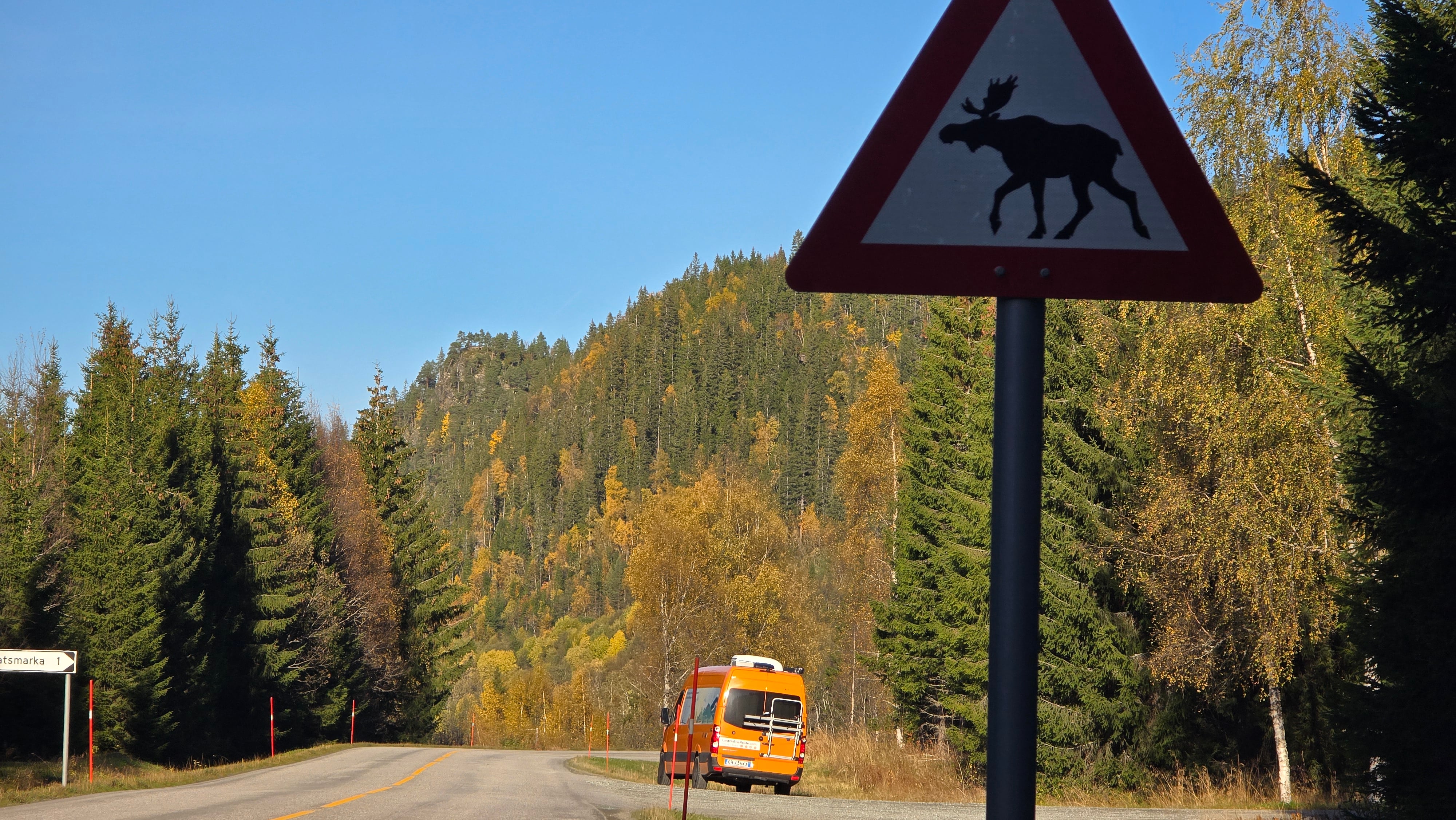
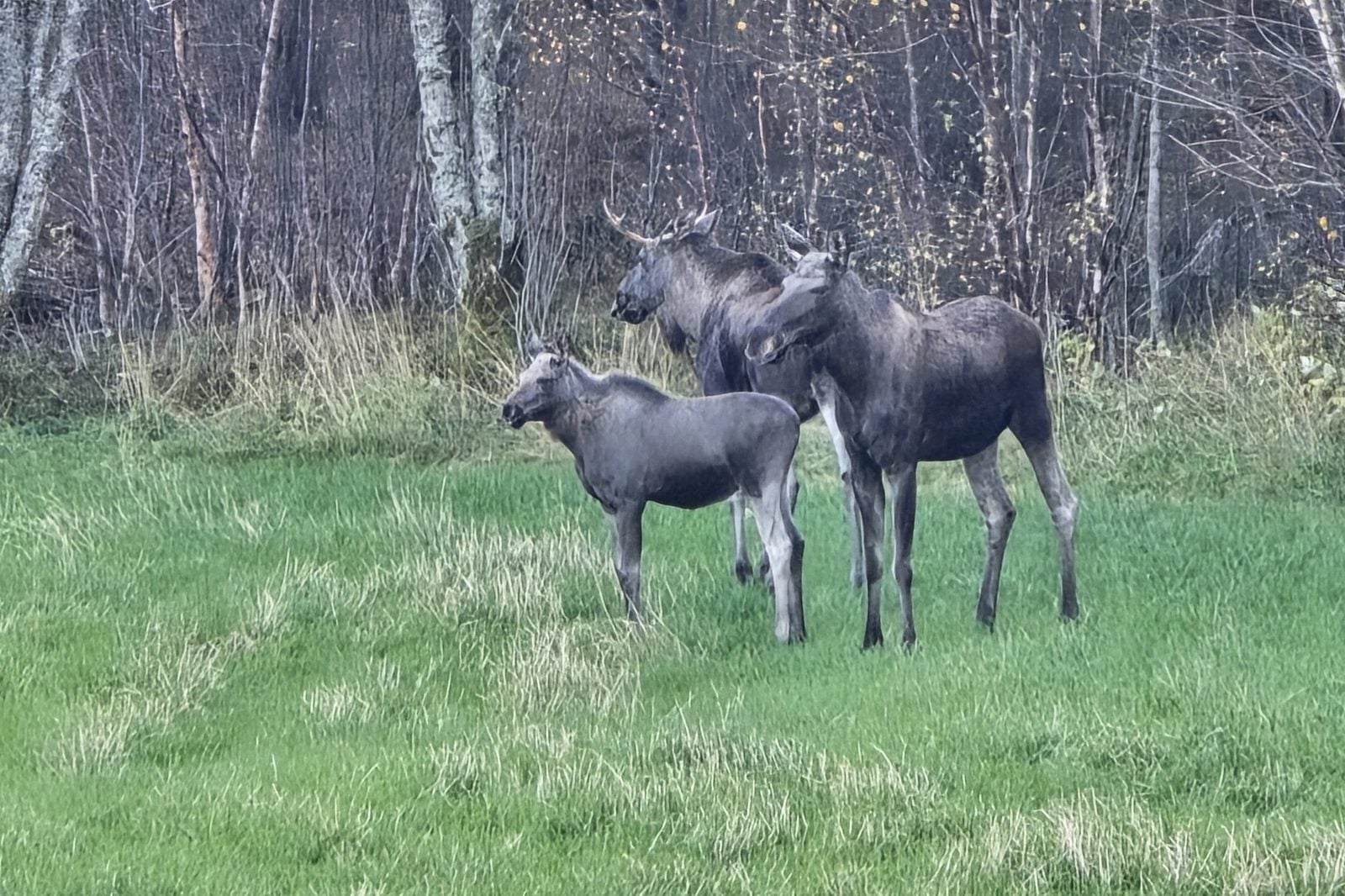
You’ll see the animal crossing warning sign almost everywhere in Norway: there’s always a chance some creature will cross the road.
We saw: moose and reindeer, sheep and cows galore (there are loads of farms) and, among the birds, ravens and eagles.
To see moose or reindeer, you don’t need to go far…we met them right on the road: sightings that make you say “WOW”!
They say the chances of seeing them are higher at dawn and sunset, but we can tell you that you can run into them at any time, especially in the Arctic area! You need a pinch of luck, but not too much 😉
Among the animals we did NOT see are whales, which were Isa’s dream: in this season it’s not their time yet, they start more or less at the end of October and in November there are many more chances to spot them, until January-February.
Seals are also very rare in mainland Norway and you need patience (and a bit of luck – we didn’t have any!). Walruses are even rarer: if you want to see seals, walruses or polar bears, you’d better go to Svalbard (polar bears only live there).
Alternatively, along the road we came across wildlife parks where volunteers protect endangered species and take in/care for injured animals that wouldn’t survive on their own in the wild: a good way to see Arctic species while supporting an environmental sustainability project:)
Mushrooms

If you like mushroom foraging, like I do, in autumn you’ll find plenty of them in this area (“there are loads of them, Gerva!!!” – cit.), especially in the southern half of Norway: porcini and chanterelles literally jump into your basket!
My tip is to look for old-growth forests, the ones with big centuries-old trees and moss, and not too steep: on the steep parts, at least where I walked, I found much less!
The auroras
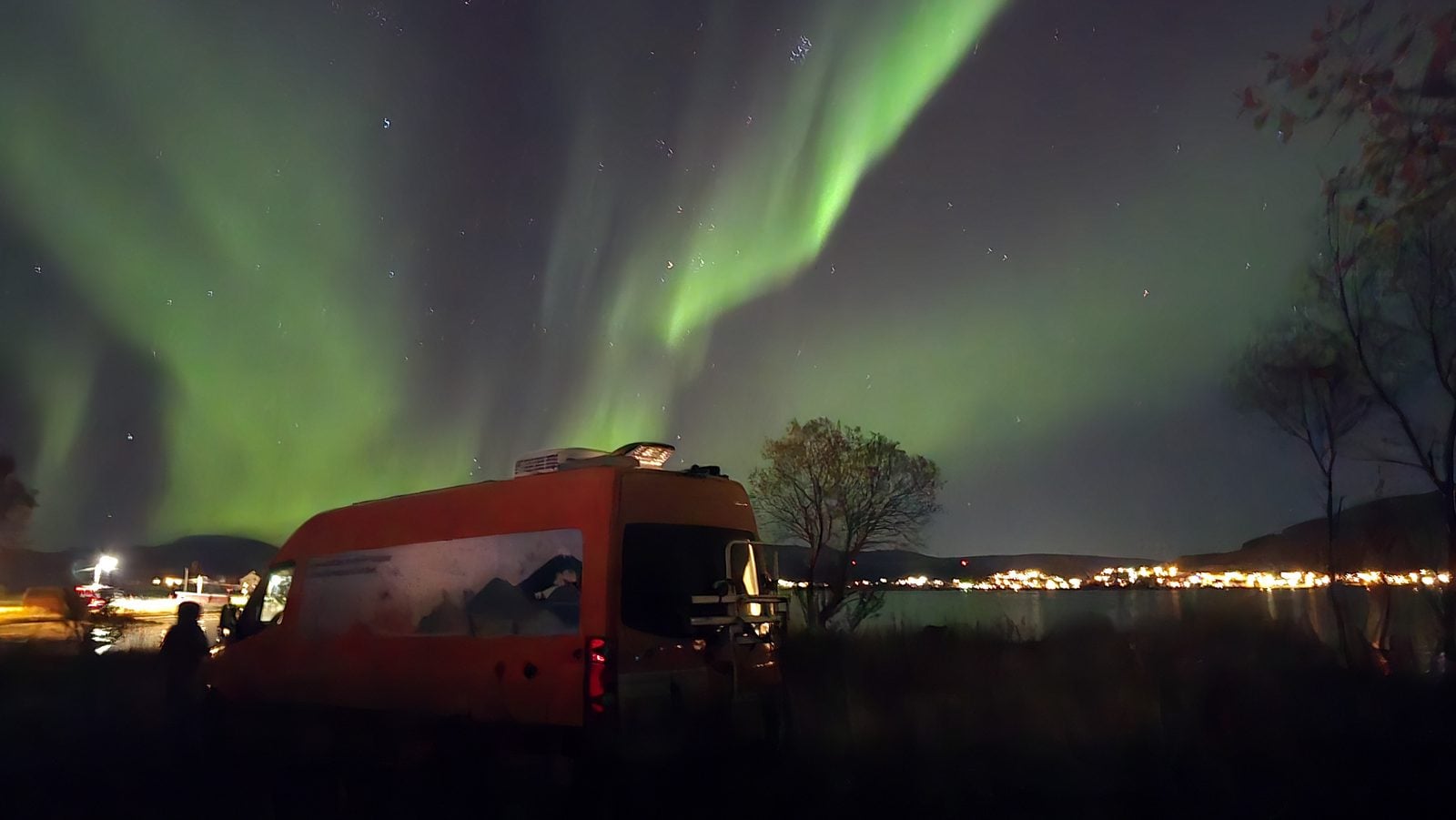
The auroras are one of the reasons why we chose to visit Norway in September: you can visit the fjords in daylight and start seeing the auroras.
Luckily we got quite a few of them!
In this period, once you reach the Arctic area (to give you an idea, from the Lofoten archipelago northwards!) you just need patience and to wait for a cloudless day, then go outside and wait a little…. sooner or later they show up!
To follow them and understand when there was a better chance of seeing them we used three free apps, which you’ll find on the App Store and Play Store: Aurora Now, My Aurora and Aurora Compass.
Together, they give you data on clouds, solar magnetism and the probability of a sighting (0%, 20%, 50%…) in your area (you can set them up with geolocation to get automatic alerts!).
Remember: The further north you go, the more likely they are: from the Lofoten northwards they become very likely, one day out of two in the Lofoten and almost every evening with clear skies around Tromsø, Alta or the North Cape.
You need the right combination of darkness, clear cloudless sky and good solar magnetism, and it’s better to stay away from light pollution, in somewhat isolated places (and here too, like with the mushrooms, there are loads of isolated little spots! 😉 ).
For us, the auroras alone are an experience worth the whole trip to Norway!
But there’s much, much, much more! Now let us show you our favourite stops:)
5. Places to See: Our Favourite Stops

Before we start, two premises: we didn’t see all of Norway (because we were there only 30 days, and to see it all without rushing you’d need at least 4-5 months!), and there are so many beautiful places that choosing feels like having a gun pointed at you.
The ones you’ll find here aren’t the most beautiful ever: they’re the ones we liked and were lucky enough to see, and there will be thousands of others!
An important warning: in Norway you’ll feel like stopping at every other bend, and all the scenic roads take more than twice the time Google Maps tells you, keep that in mind!
1. Oslo
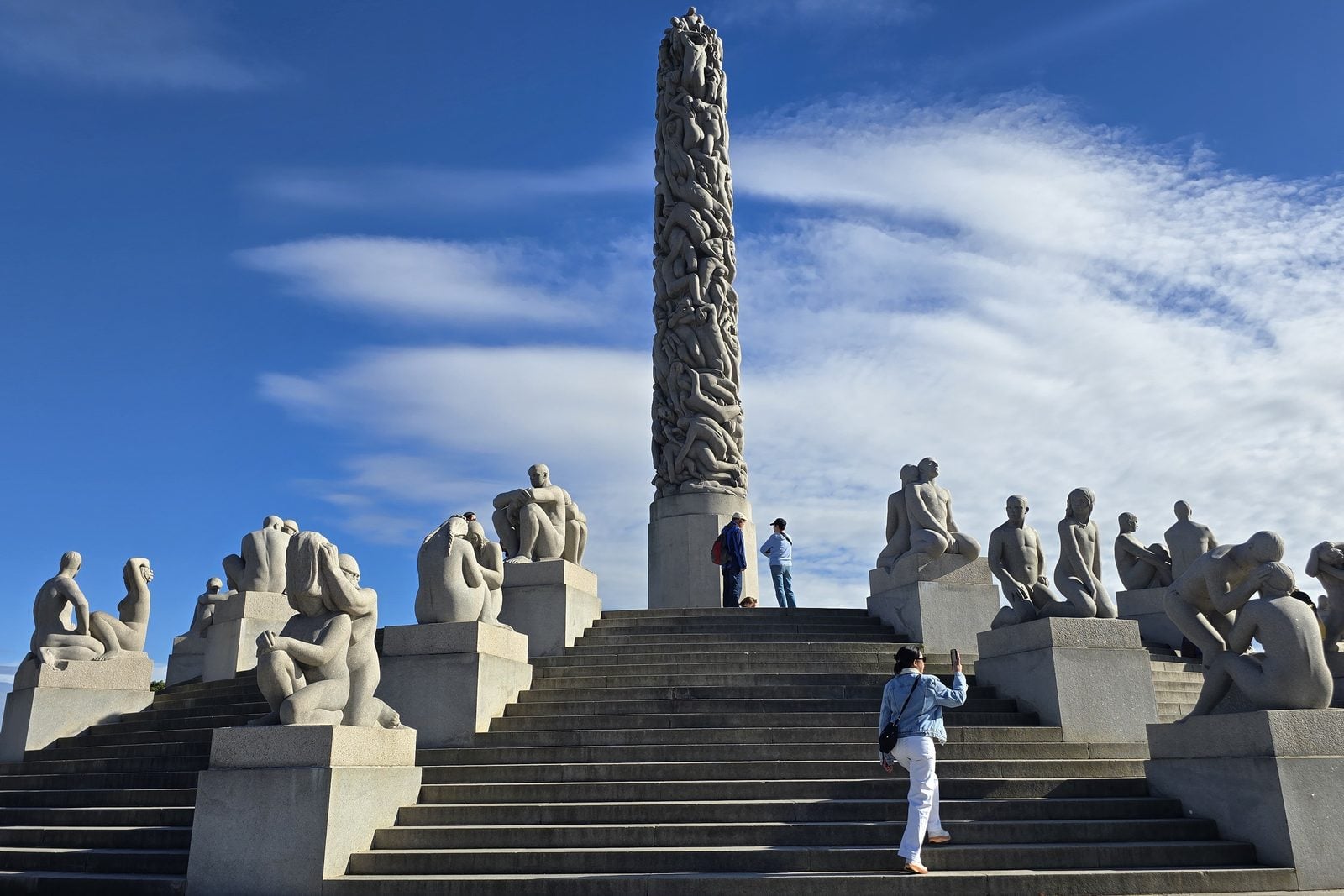
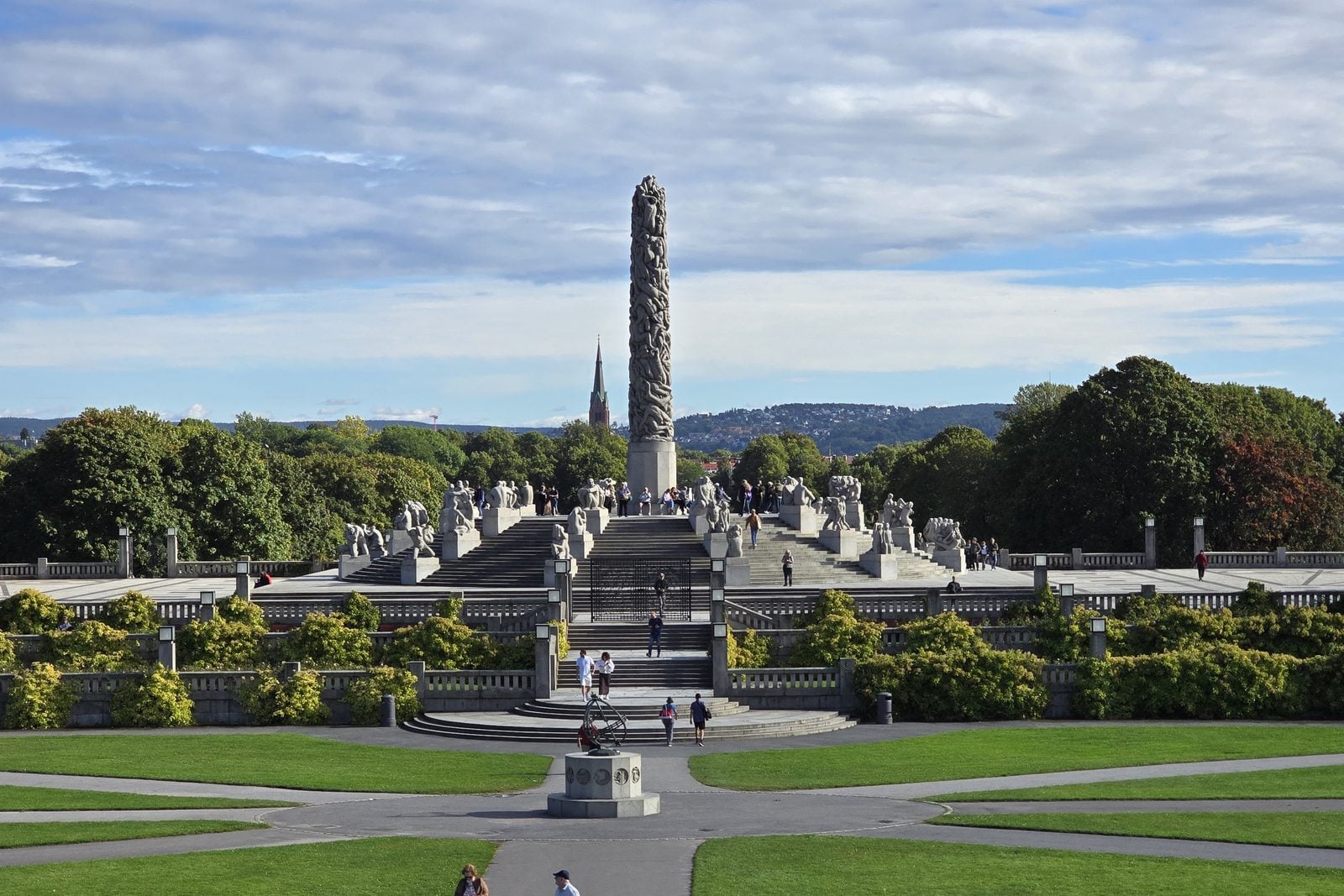
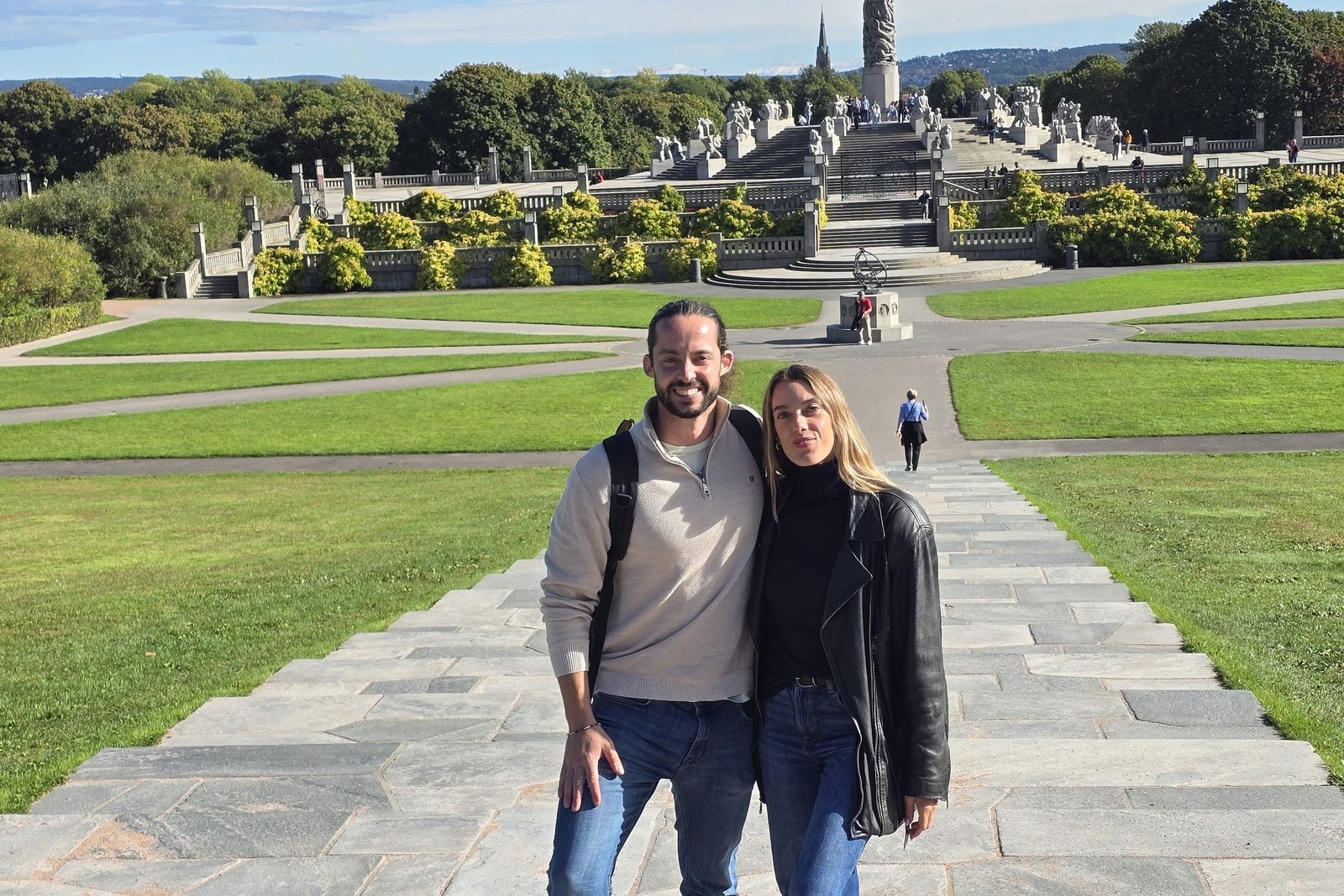
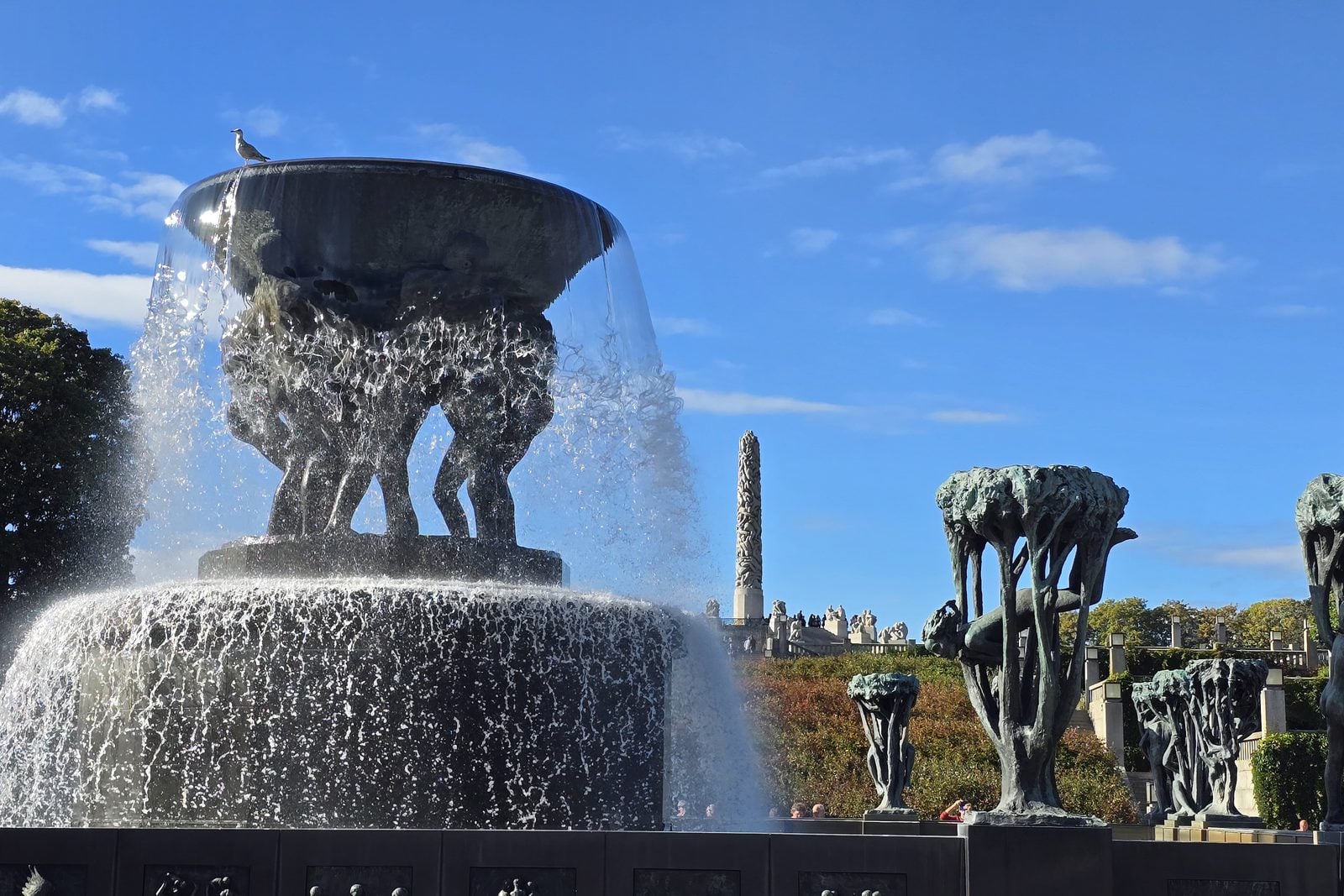
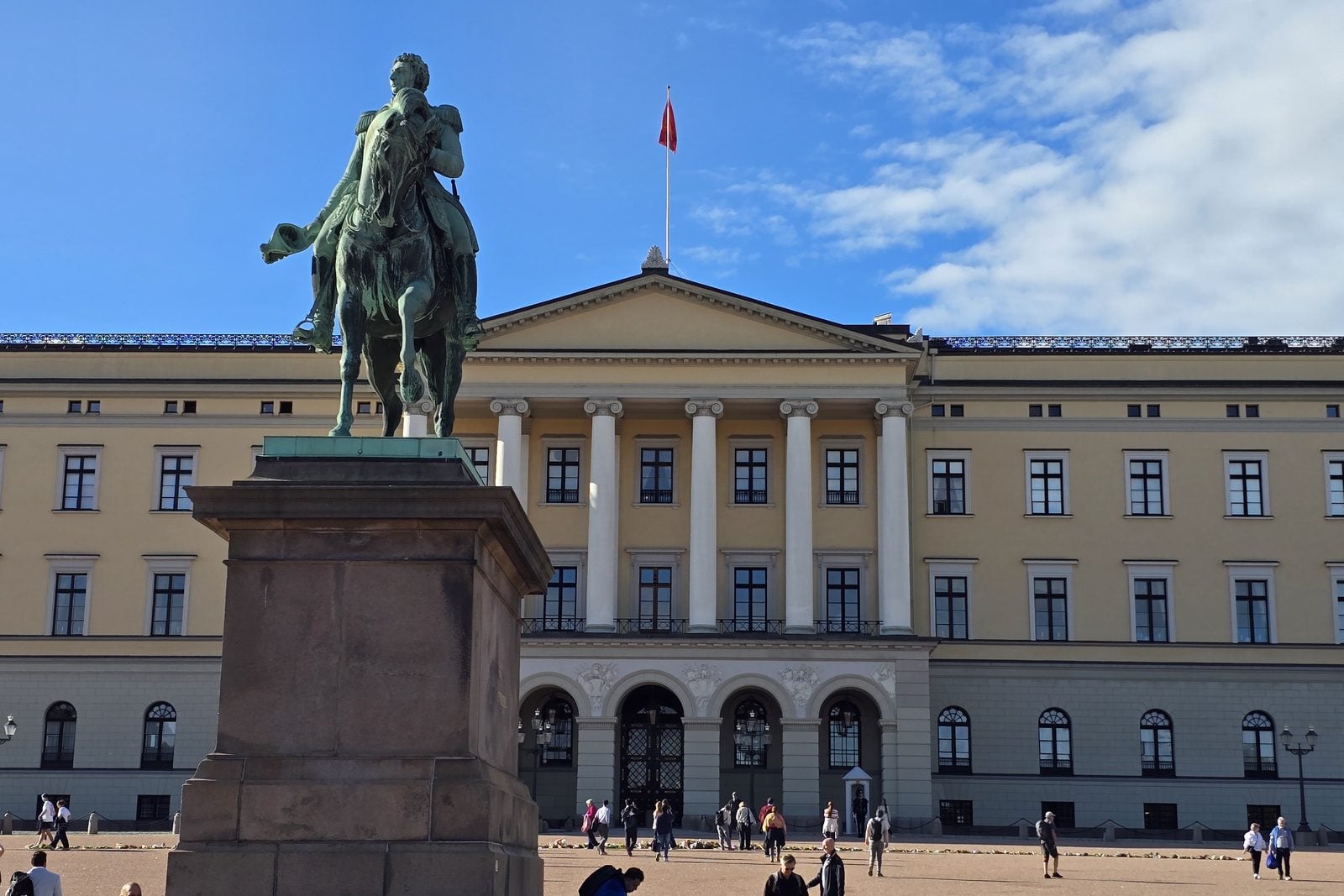
Coming from the south you reach Oslo, a beautiful capital you can visit in one full day, or two at a slower pace.
A must-see is Vigeland Park, a gigantic park of statues and plants designed by the sculptor Gustav Vigeland, lovely to walk around and free.
Then the Royal Palace and another great experience: walking on the roof of the Opera House, where you get a nice view over the whole city (recommended at sunset!!).
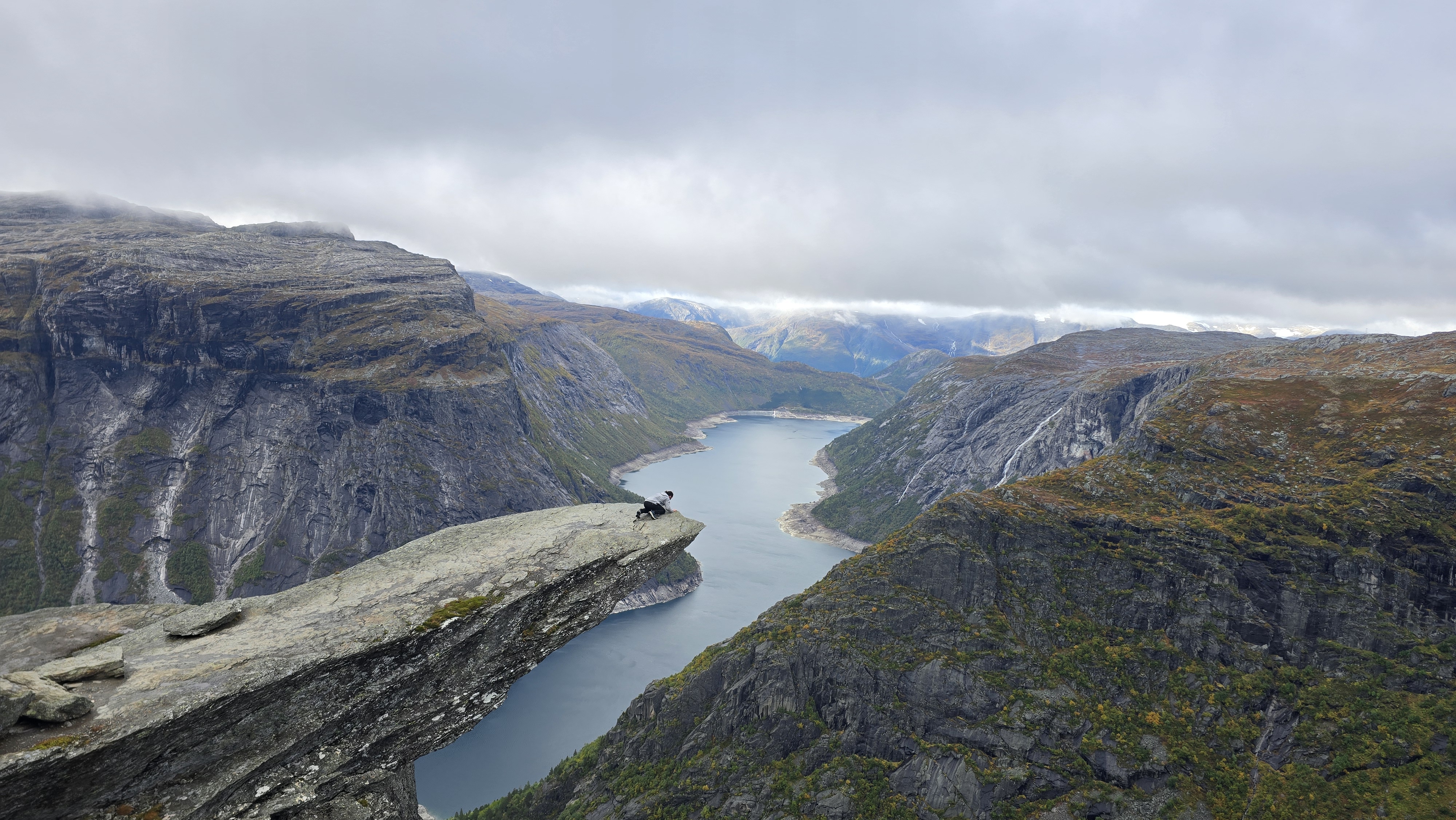
2. Trolltunga
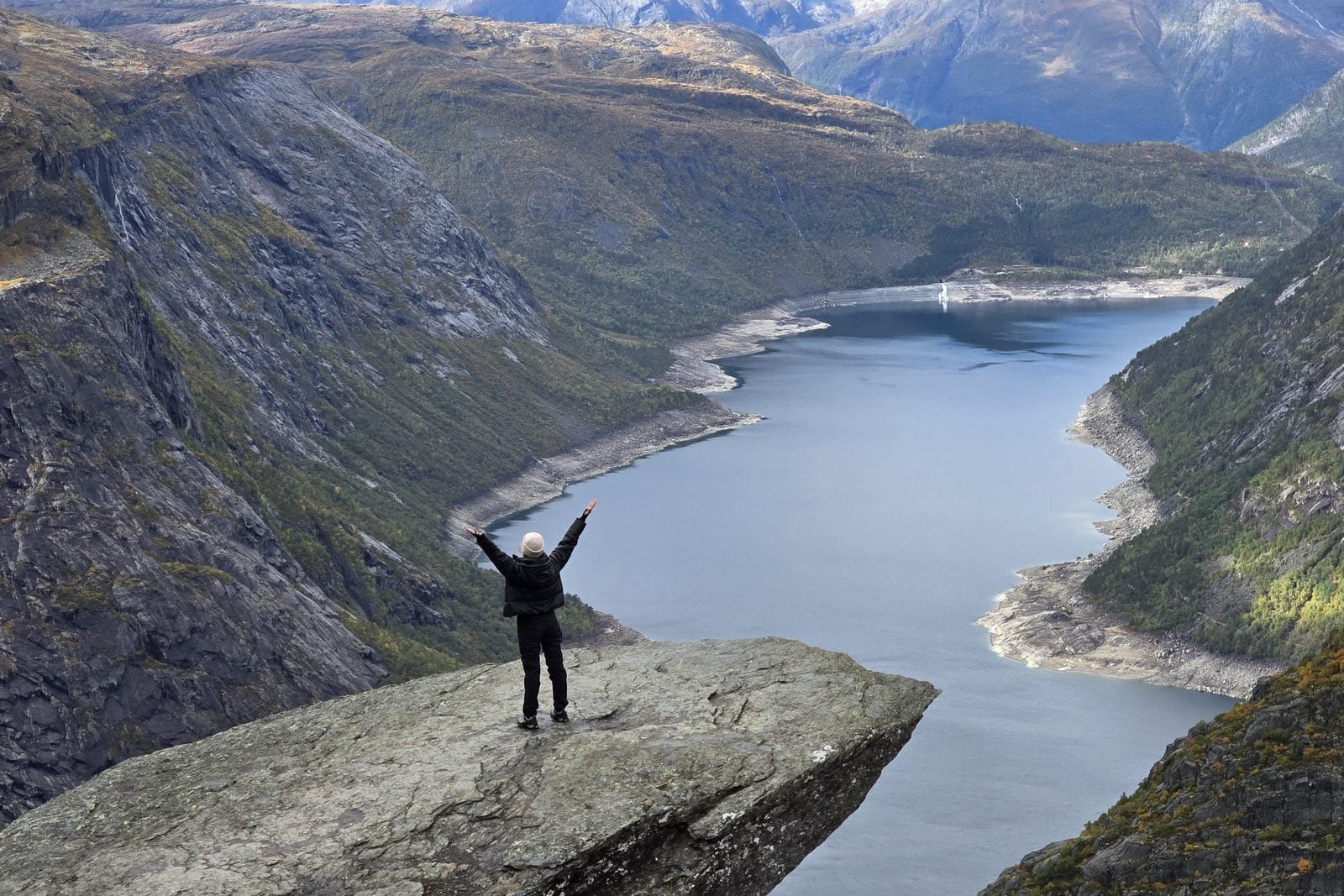
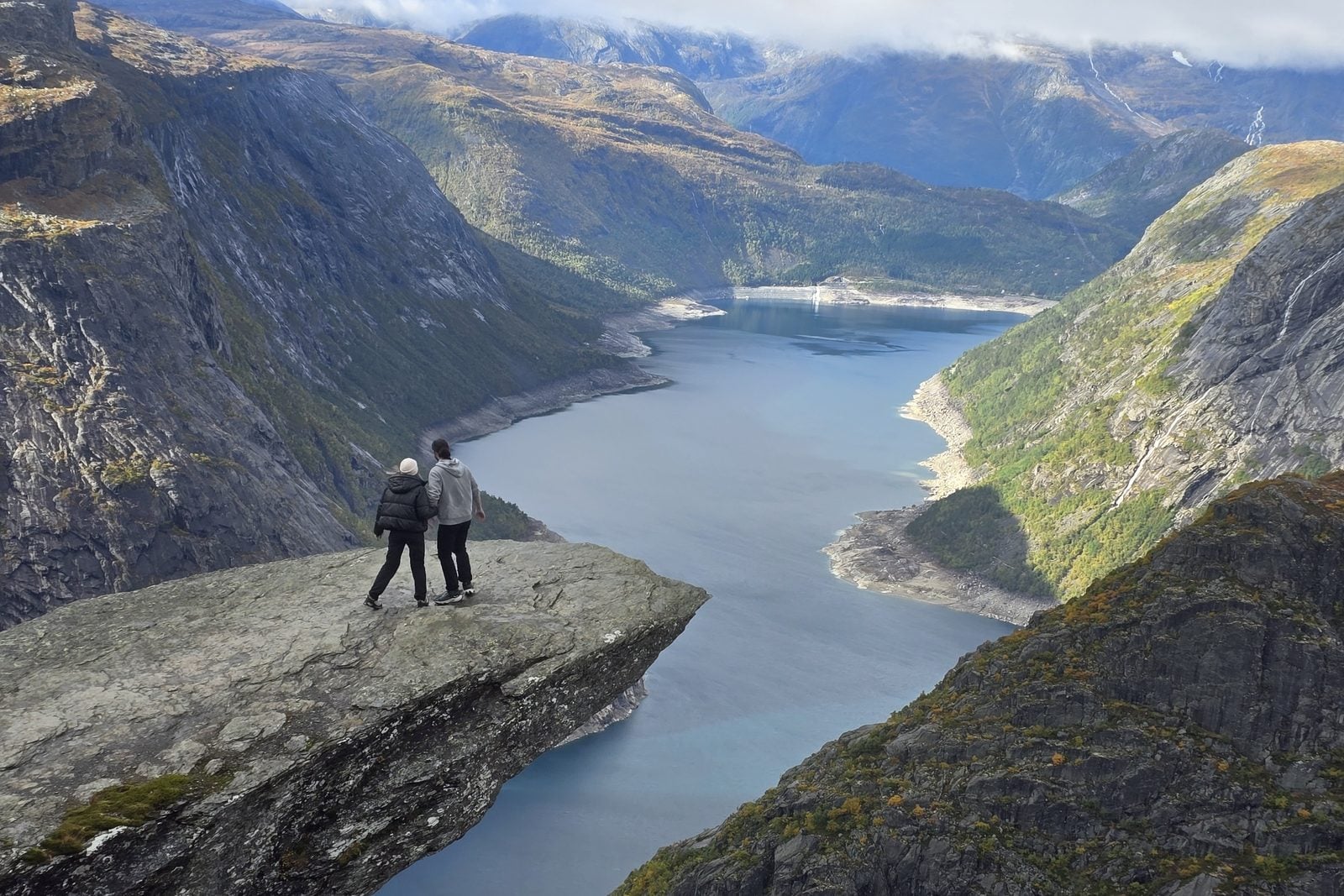
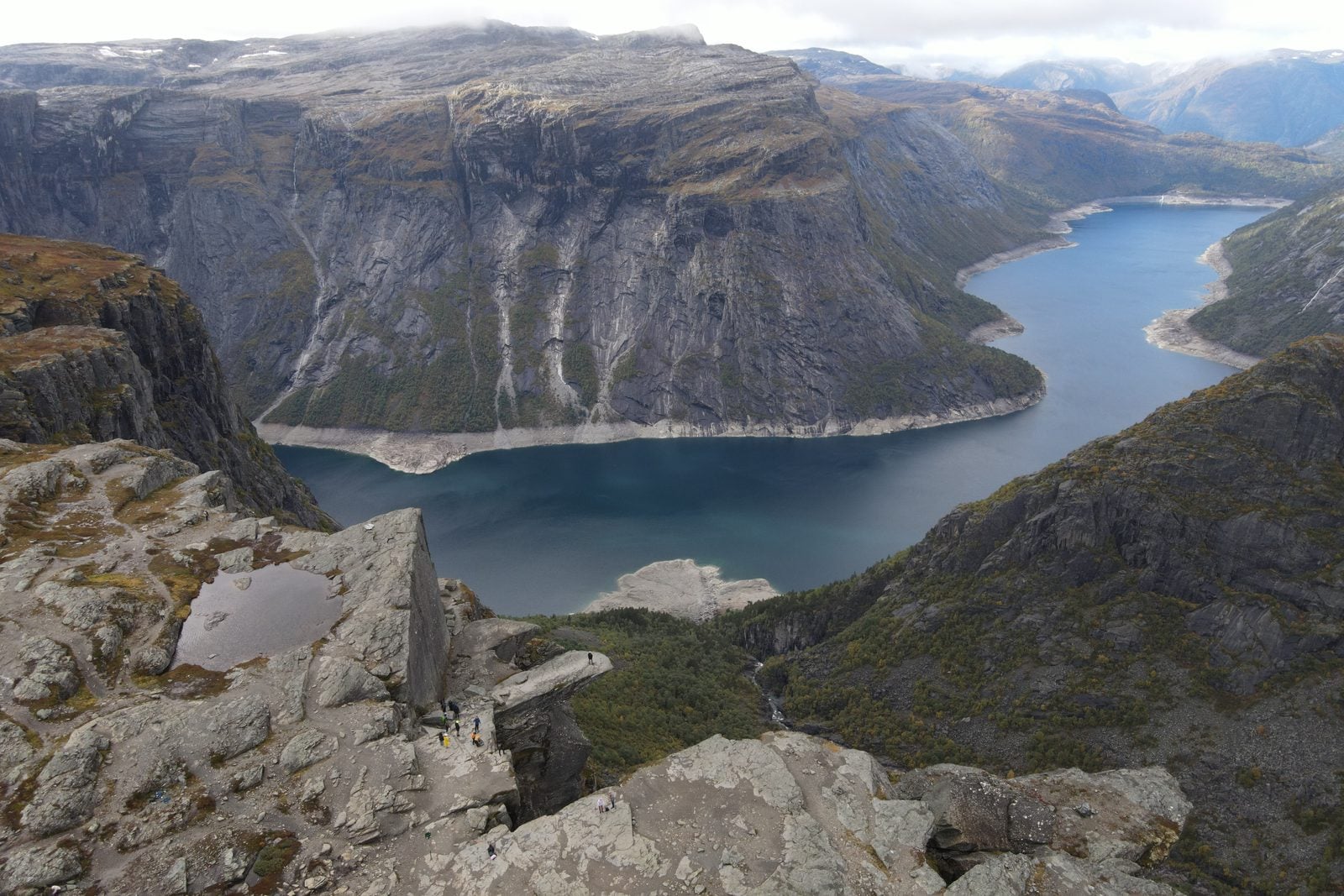
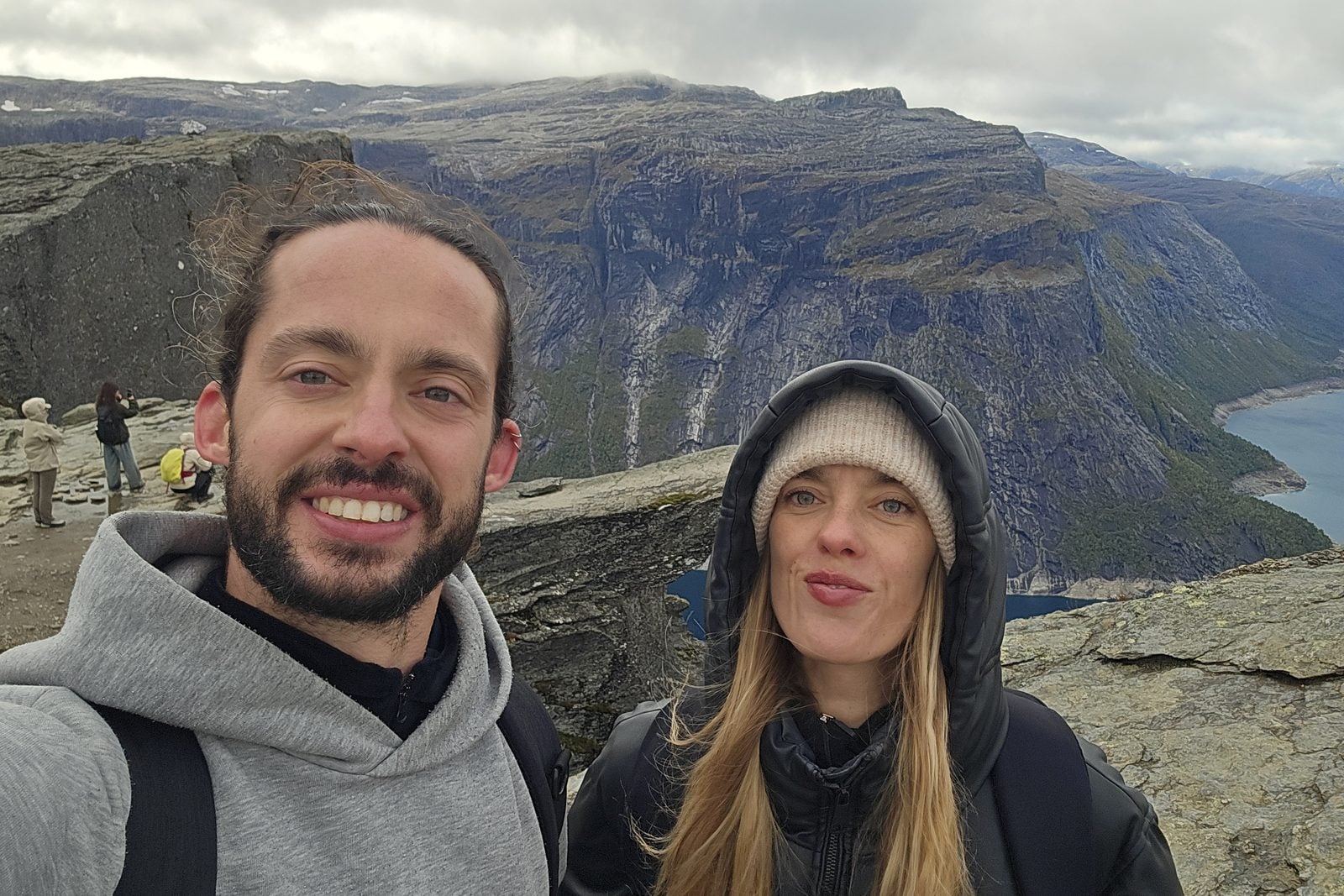
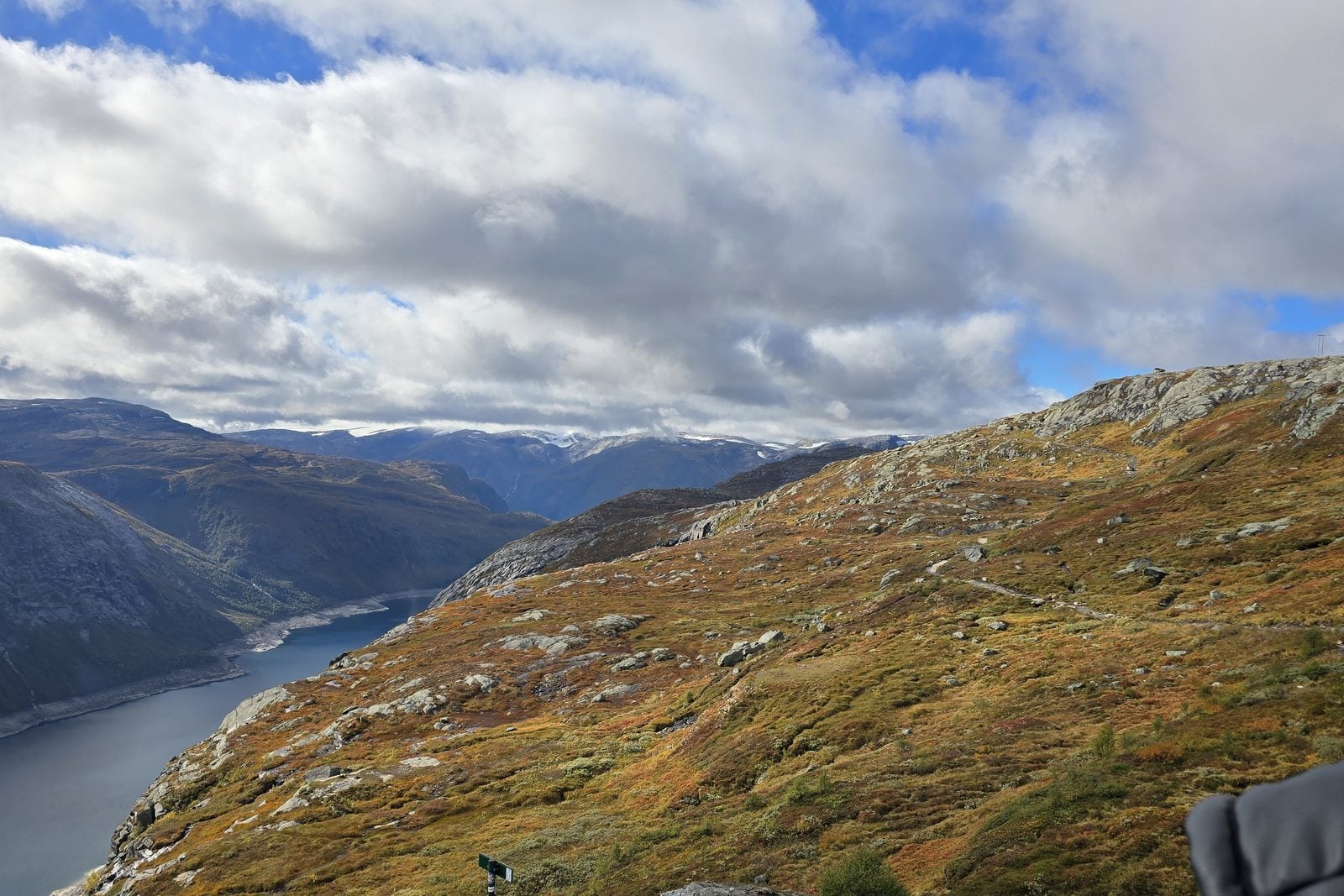
Probably the best-known postcard spot in all of Norway, but there’s a reason: a spur of rock hanging over a magnificent lake.
The hike is tough and takes the whole day: about 20 km in the mountains, 4-5 hours up and 4-5 back (in total, for us, walking at a fairly slow pace but without stopping, 10 hours).
It’s hard, but the views are worth all the effort: we’ll soon write about it in detail on the blog, with all the tips to fully enjoy the day.
For now, here’s a practical tip if you’re planning this hike: the walk is free, but parking and shuttles are paid. With a camper/van taller than 2.2 m, the best option is to leave it at the P1 Tyssedal car park, and take the 2 shuttles from P1 to P2, and from P2 to P3, where the walk starts.
With a large camper you’re not allowed to drive up to P2 (you’d block the traffic!), and the shuttle will save you hundreds of metres (and hours) of climbing: it’s worth every one of the 30 euros it costs (and this comes from someone who loves walking!!!).
3. Aurlandsfjellet and Stegastein
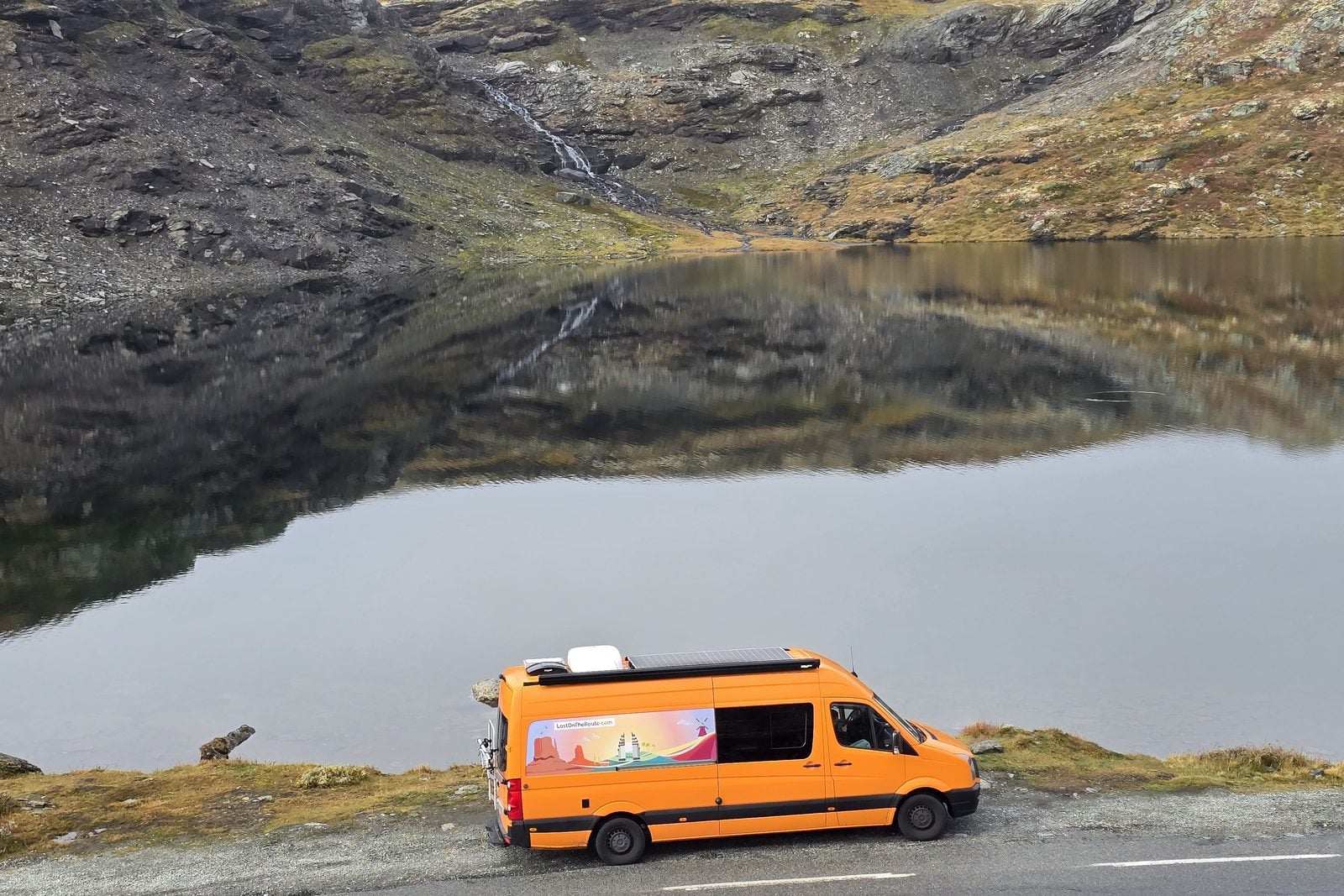
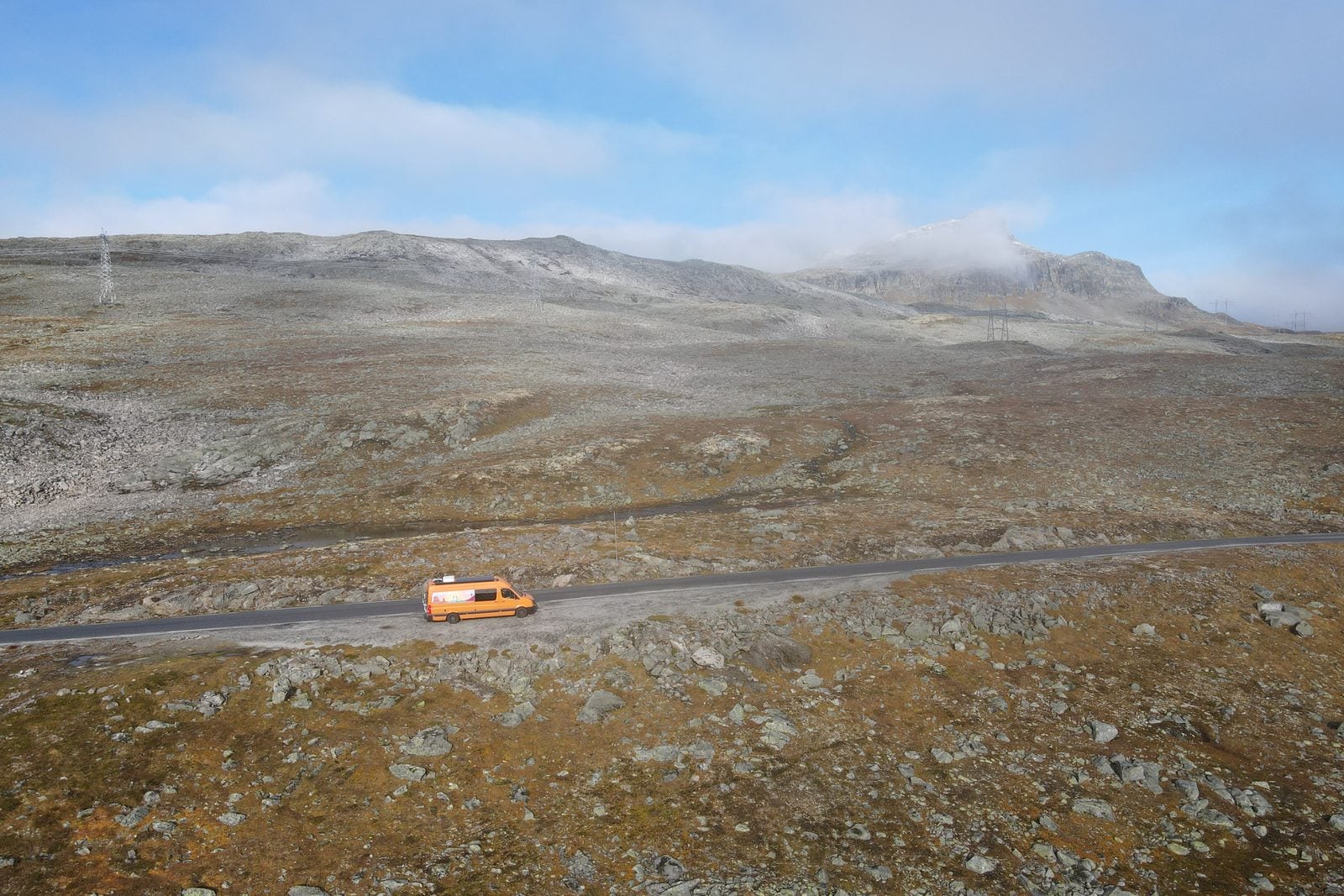
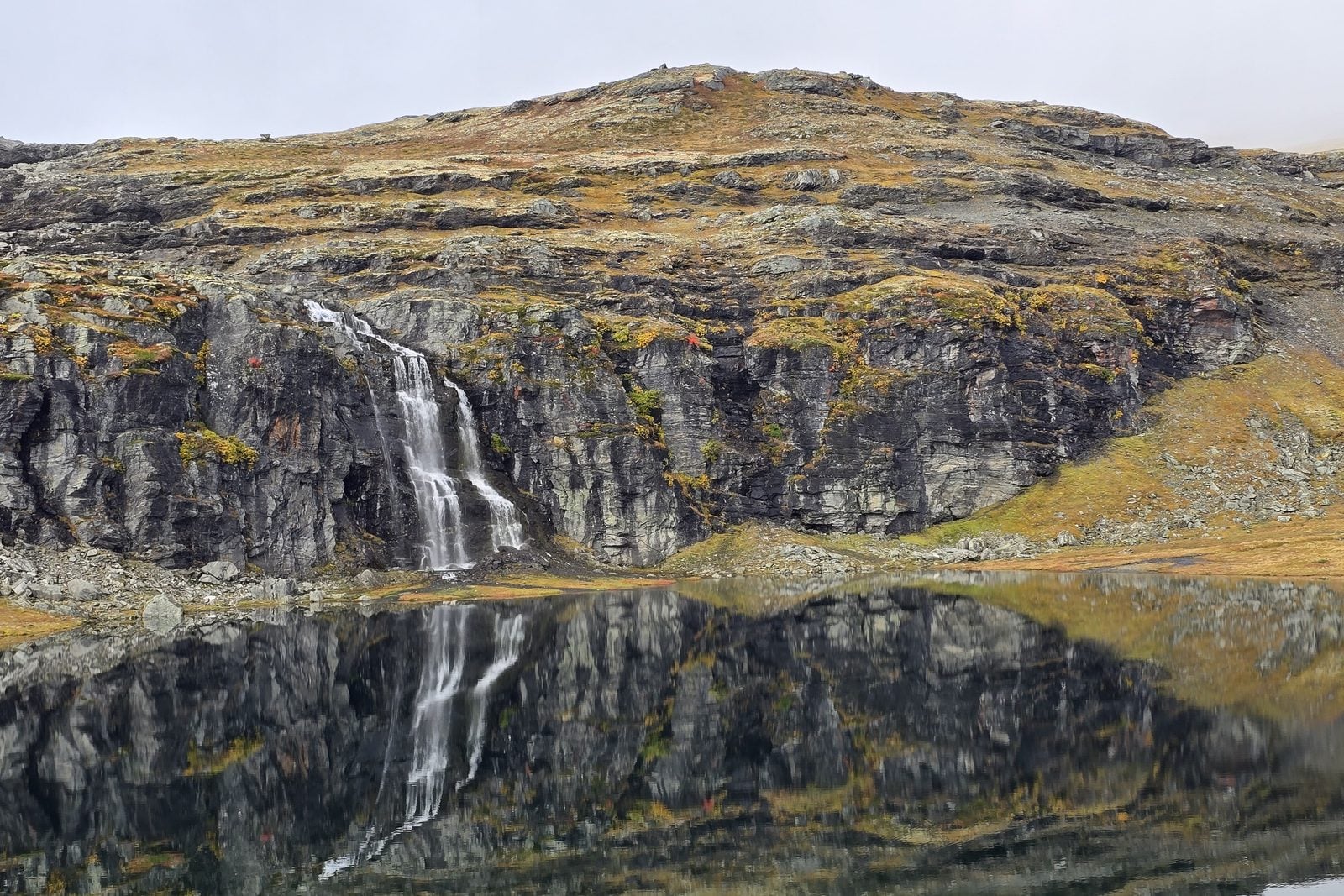
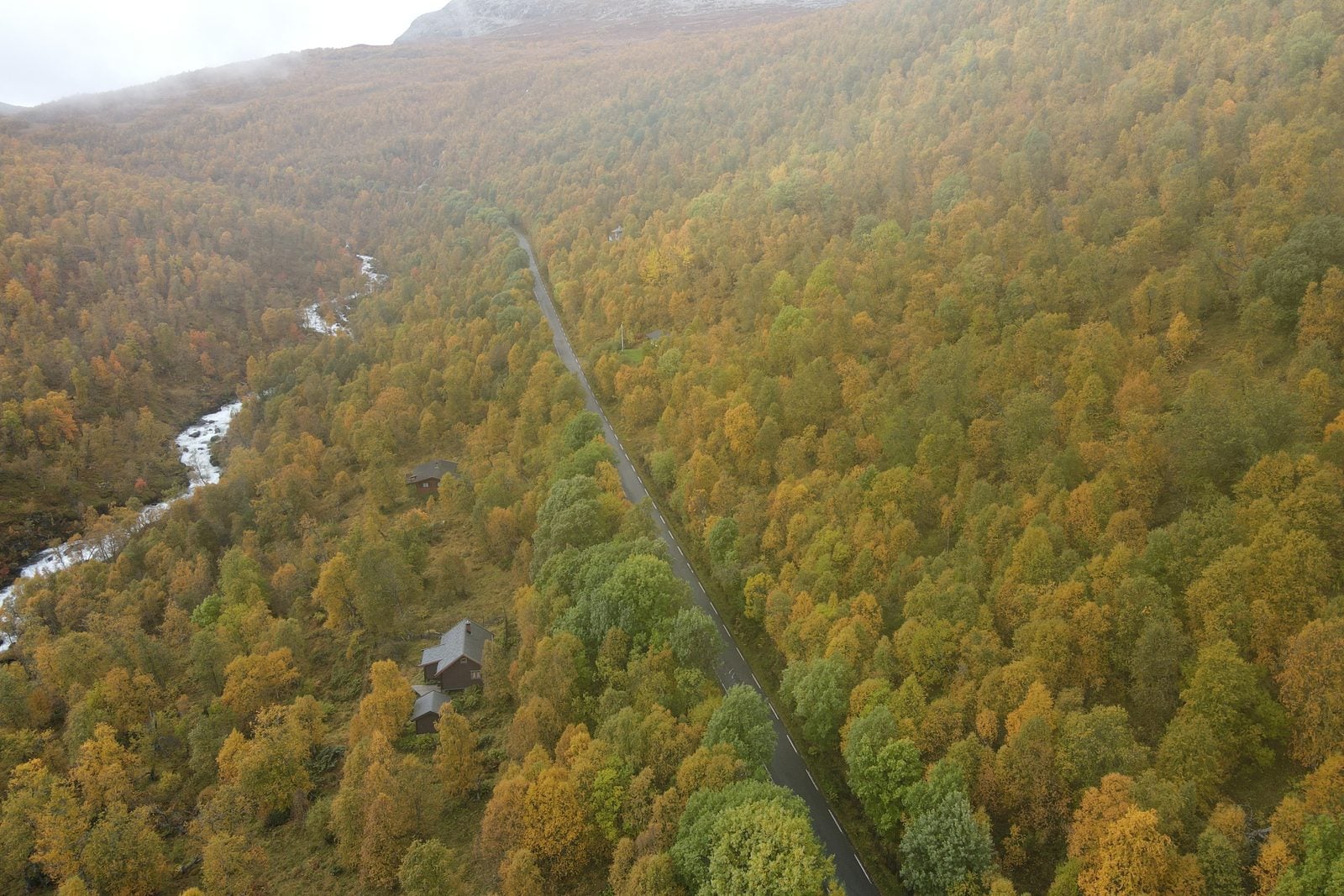
A beautiful high-altitude scenic road, among rocks and views that look like they came from Mars.
Along the road there’s also one of the most famous viewpoints in Norway, the Stegastein Viewpoint: when we got there it was wrapped in clouds and we couldn’t see anything, but coming up from below we saw what the fjord looked like underneath, and the view is probably beautiful.
It takes about 3 hours to drive it all, among lakes, waterfalls and bare rocks; on the way down you find trees with tons of foliage, among the roads with the most beautiful autumn colours we’ve seen.
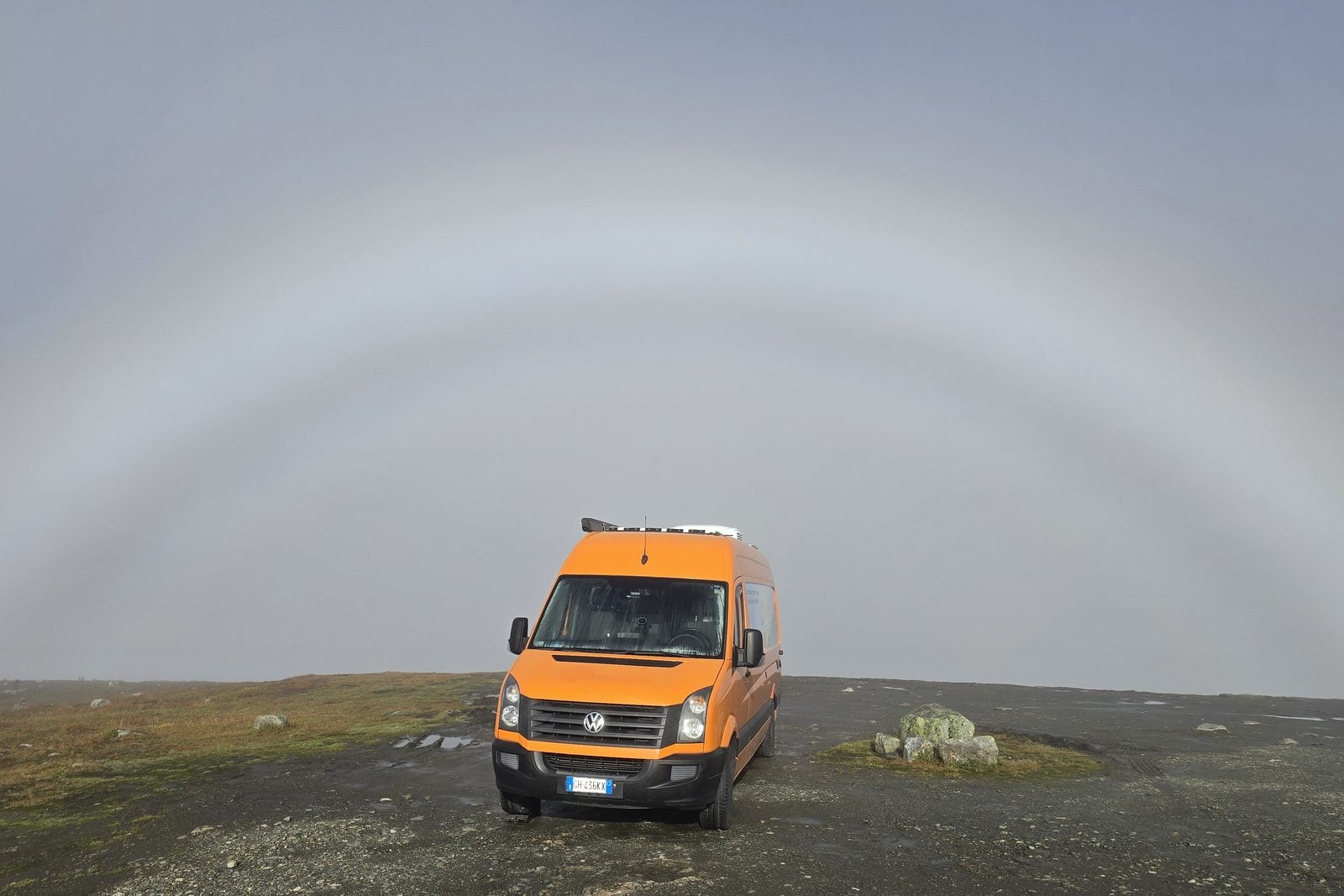
One morning we even woke up inside a fogbow (in the first photo above), a kind of rainbow that sometimes forms inside the fog, with our Arancino right in the middle: what a crazy place!
4. Sognefjellet
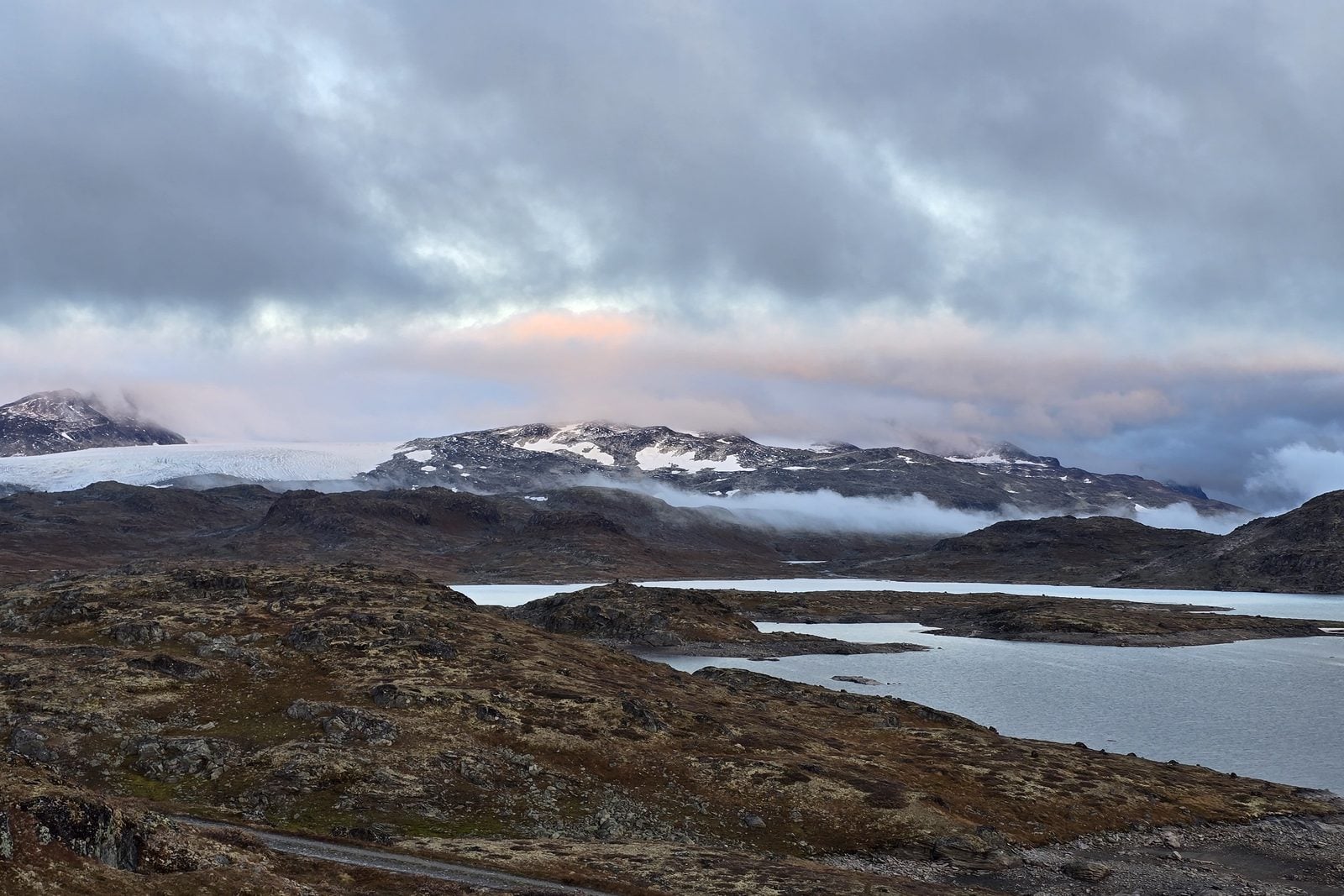
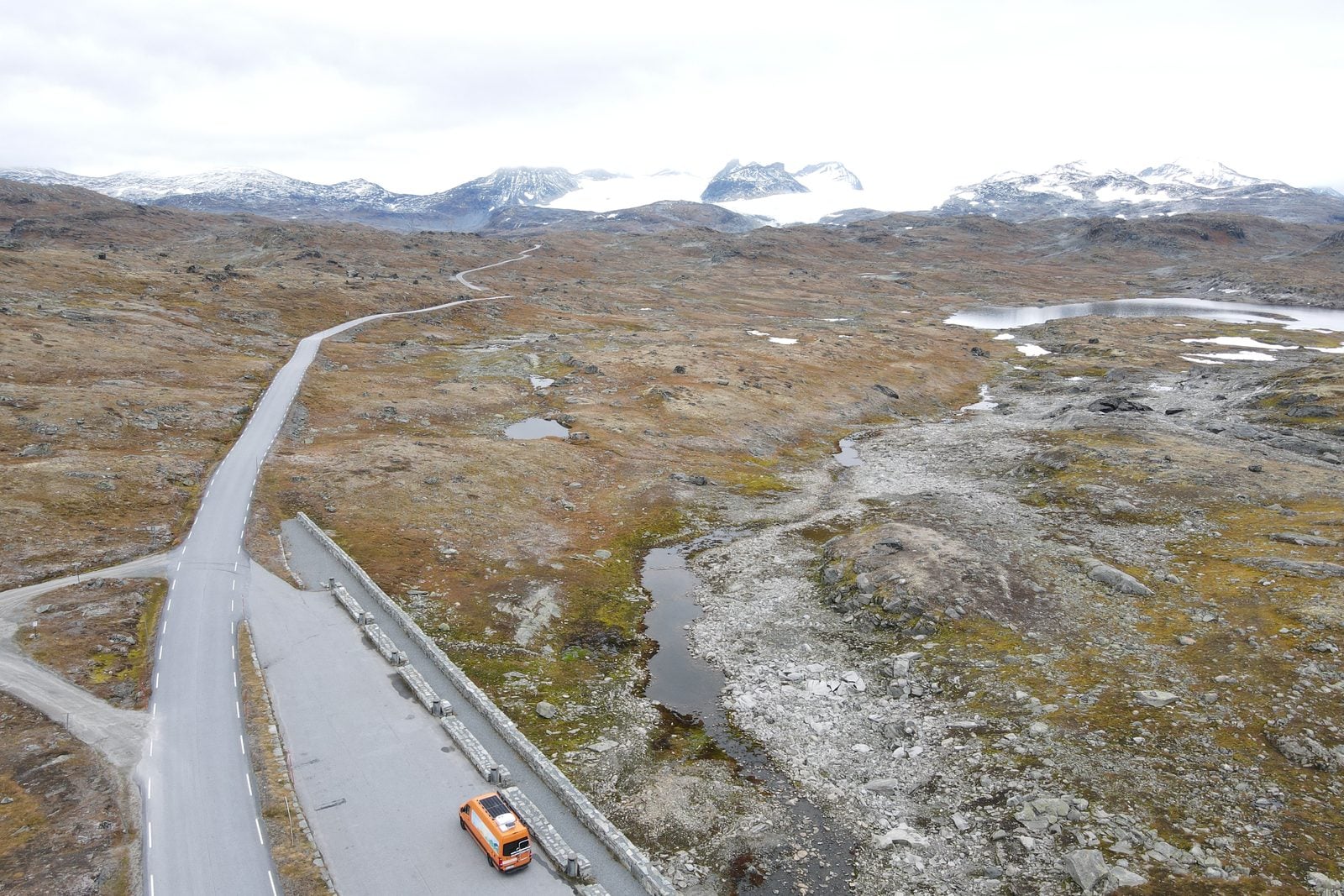
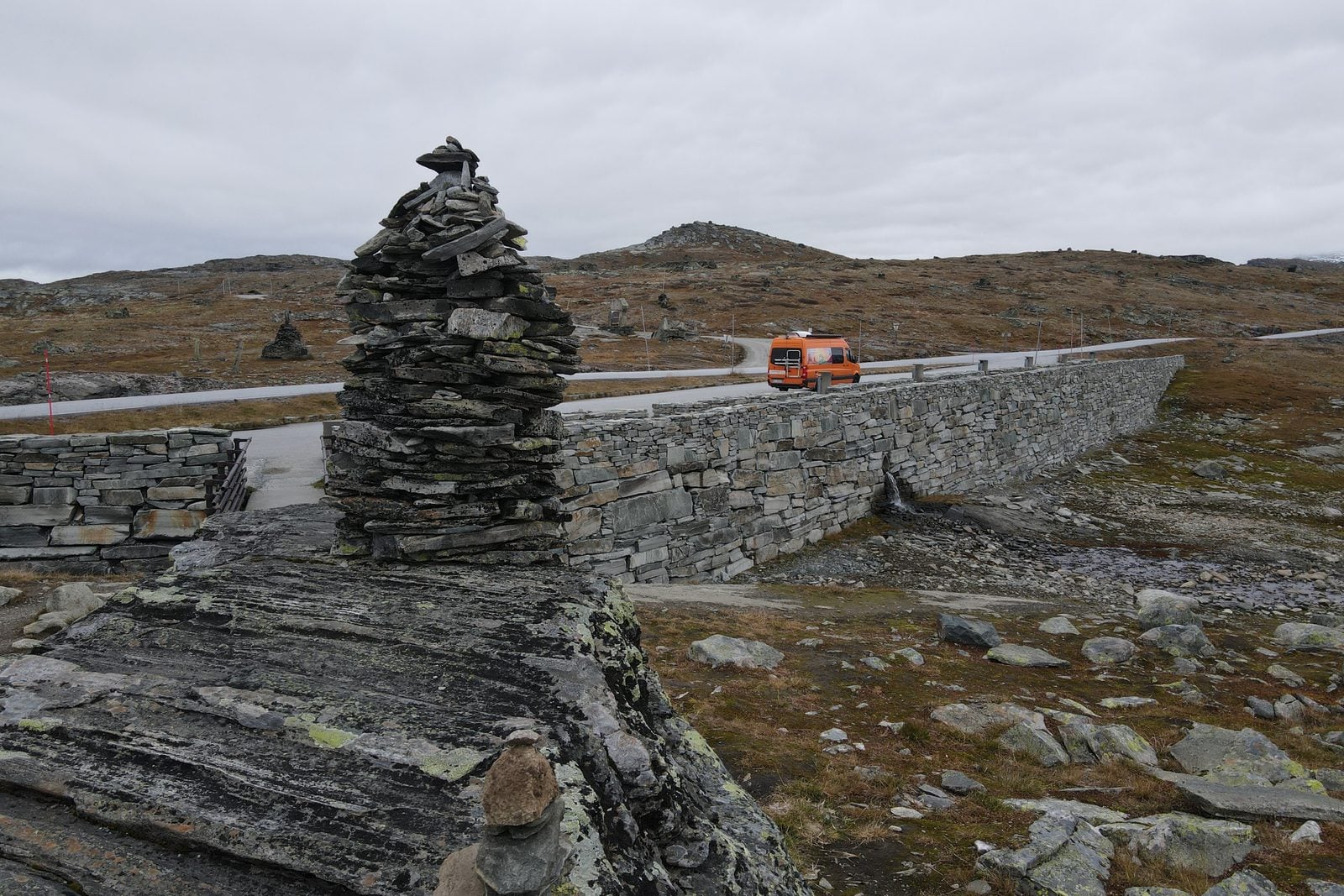
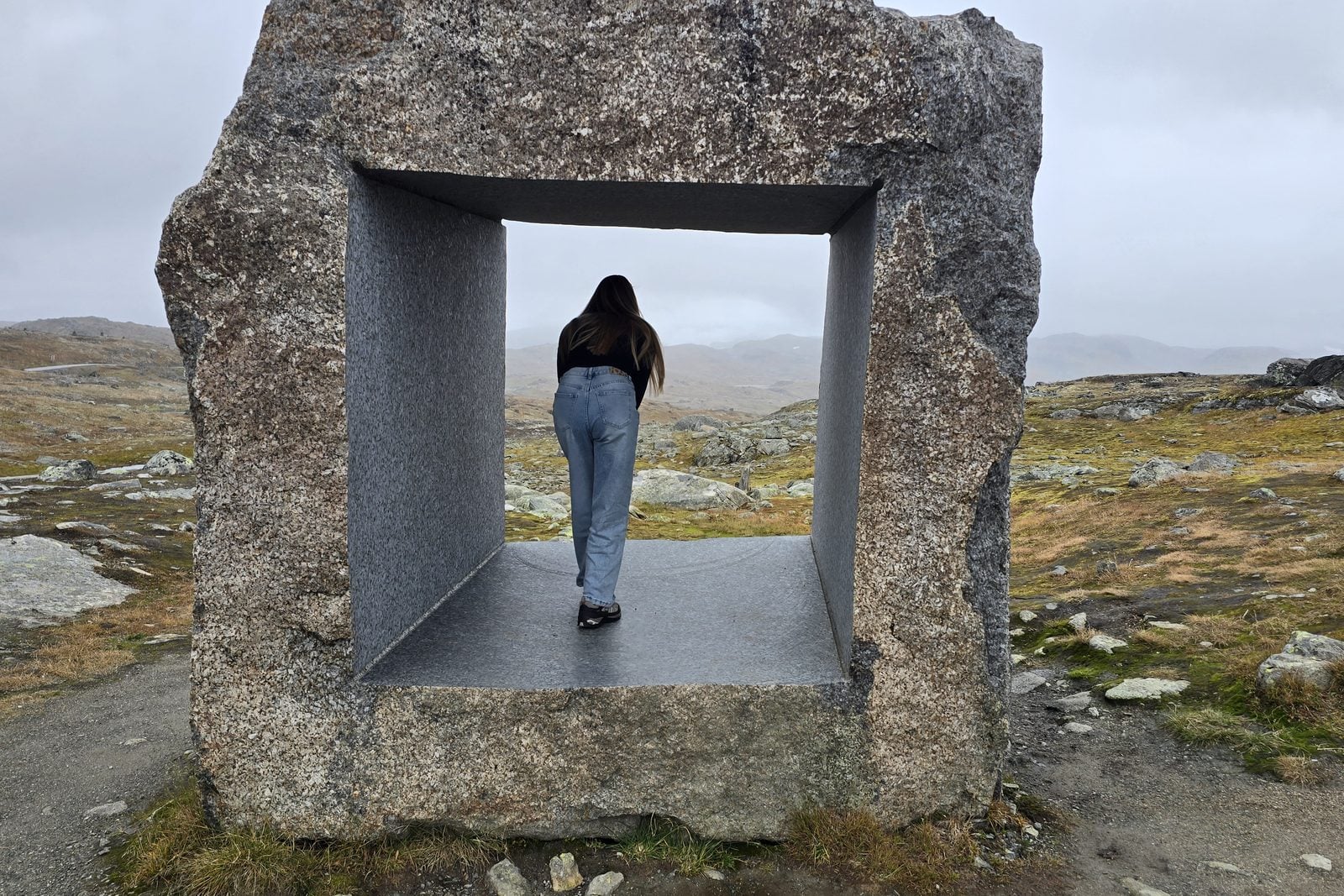
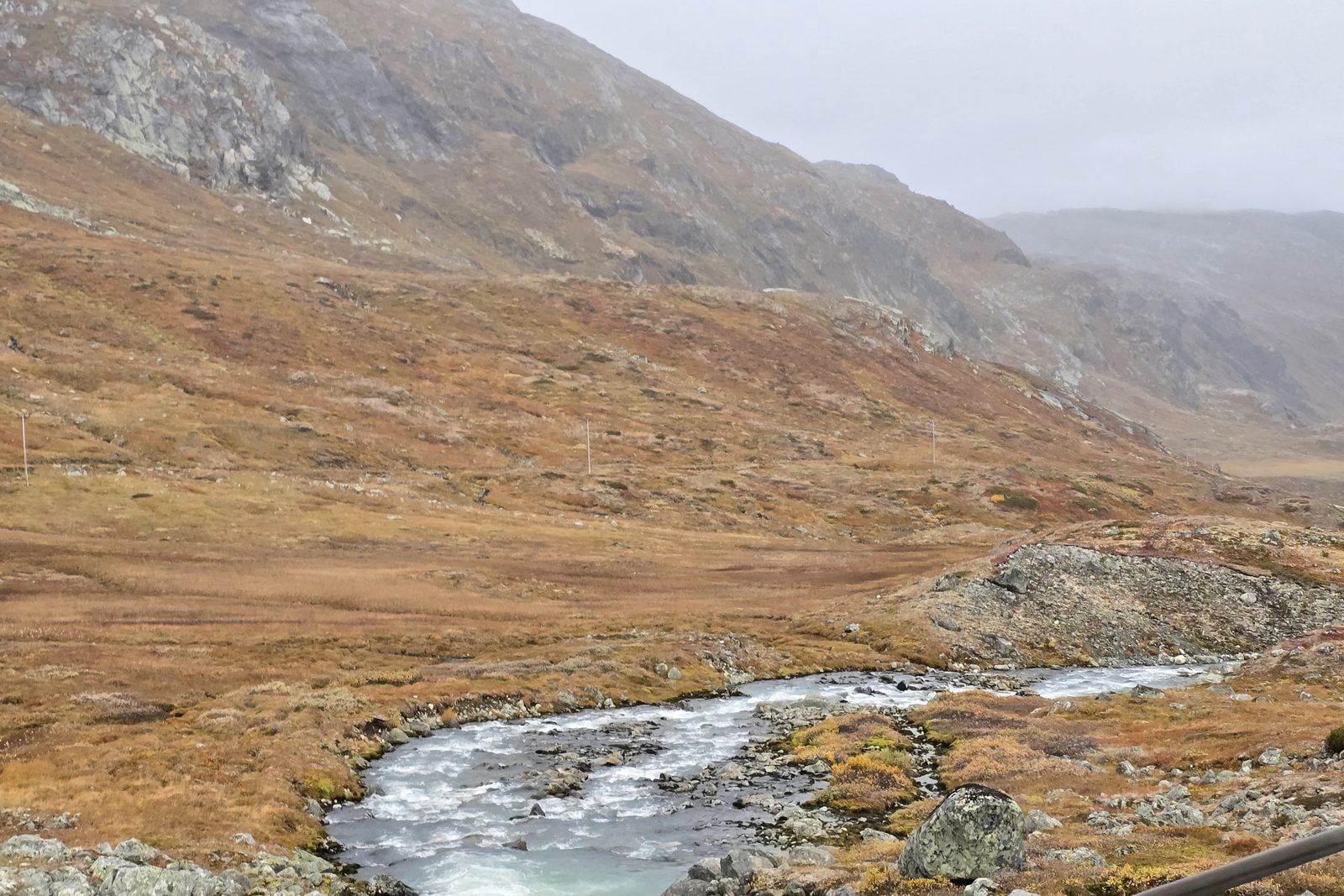
Another mountain road that passes close to a glacier.
It’s beautiful to drive it in a campervan because you can sleep up there, wake up in the morning and see untouched views with practically nobody around: views that in Europe, in our opinion, you only find in Norway.
5. Geirangerfjord
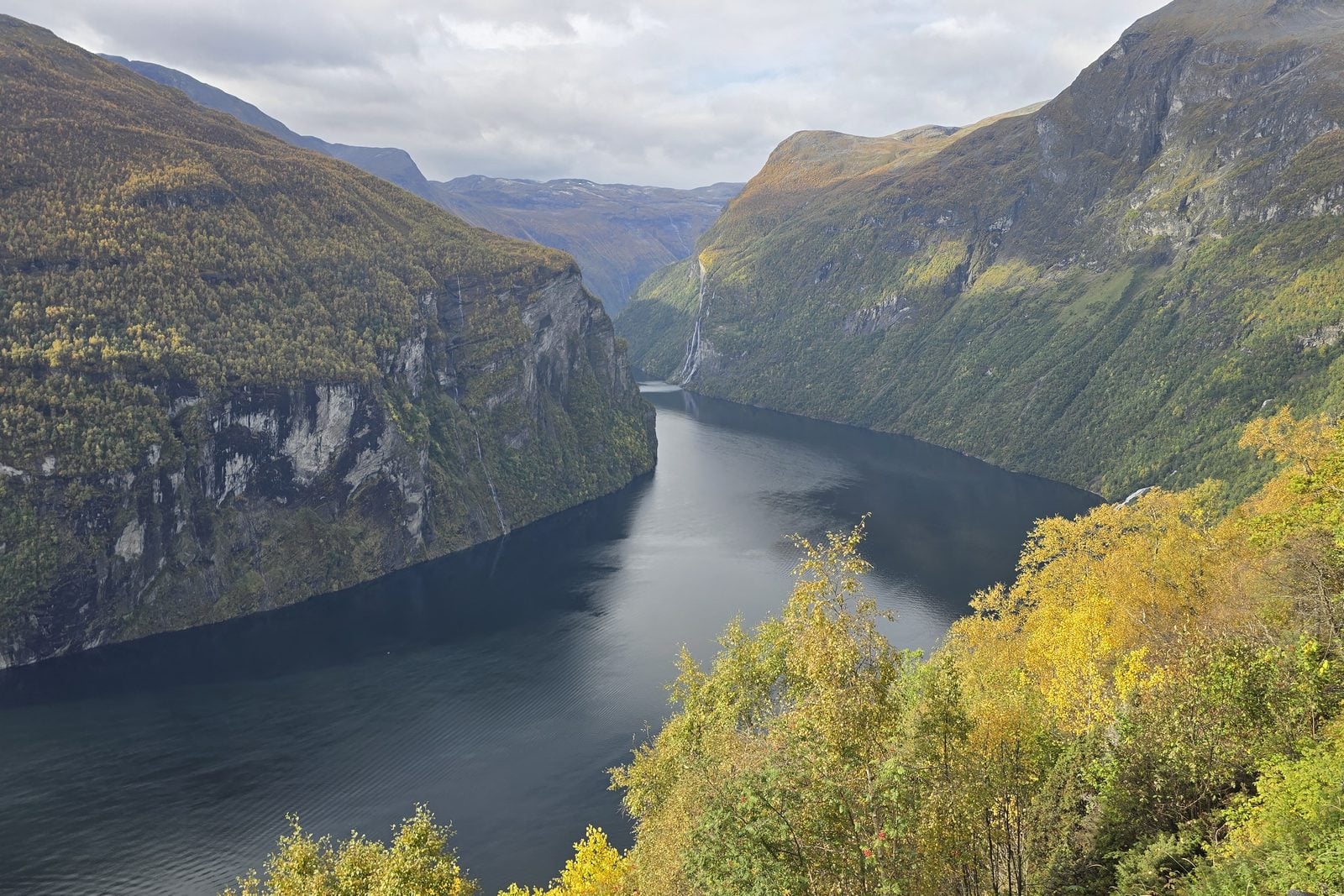
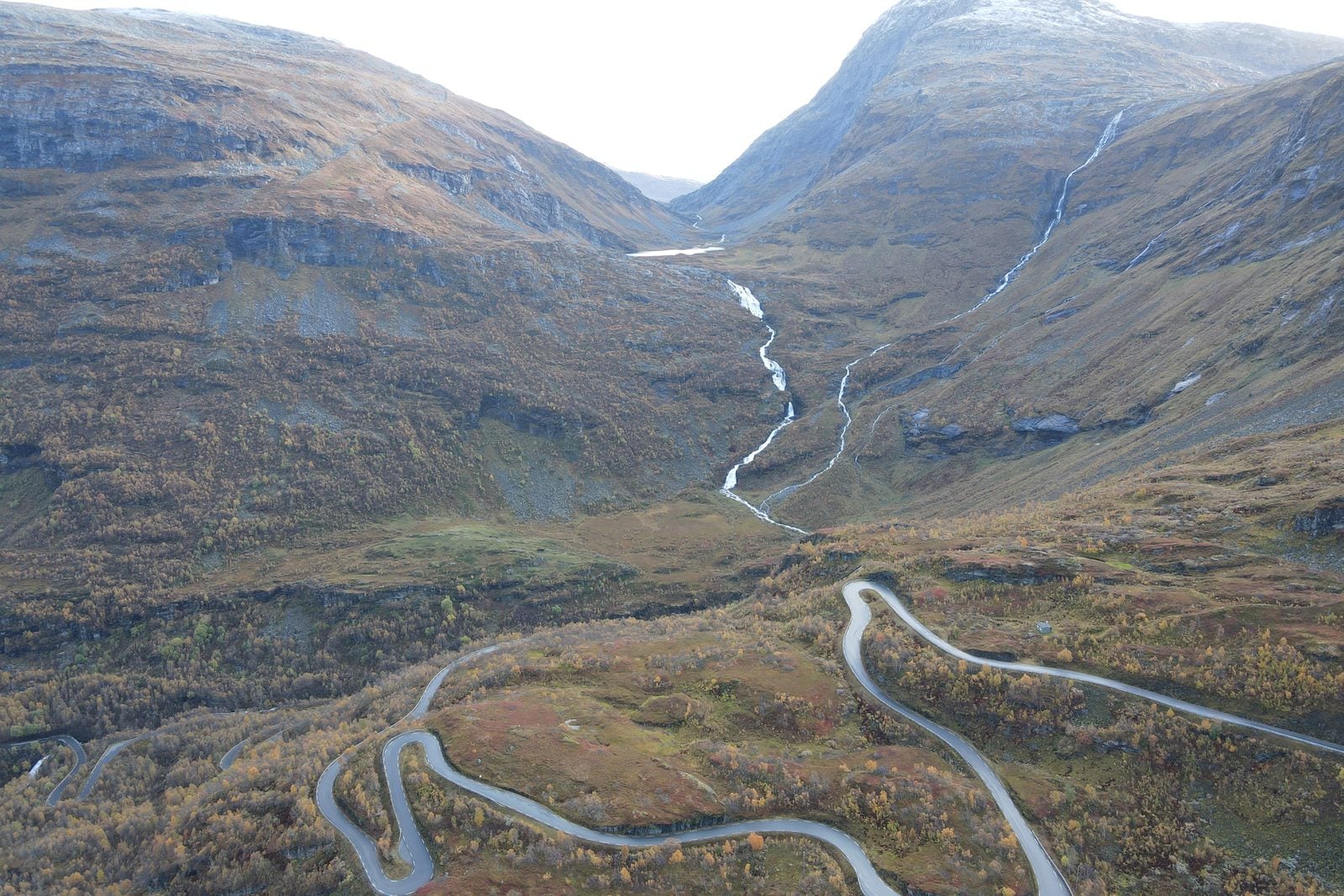
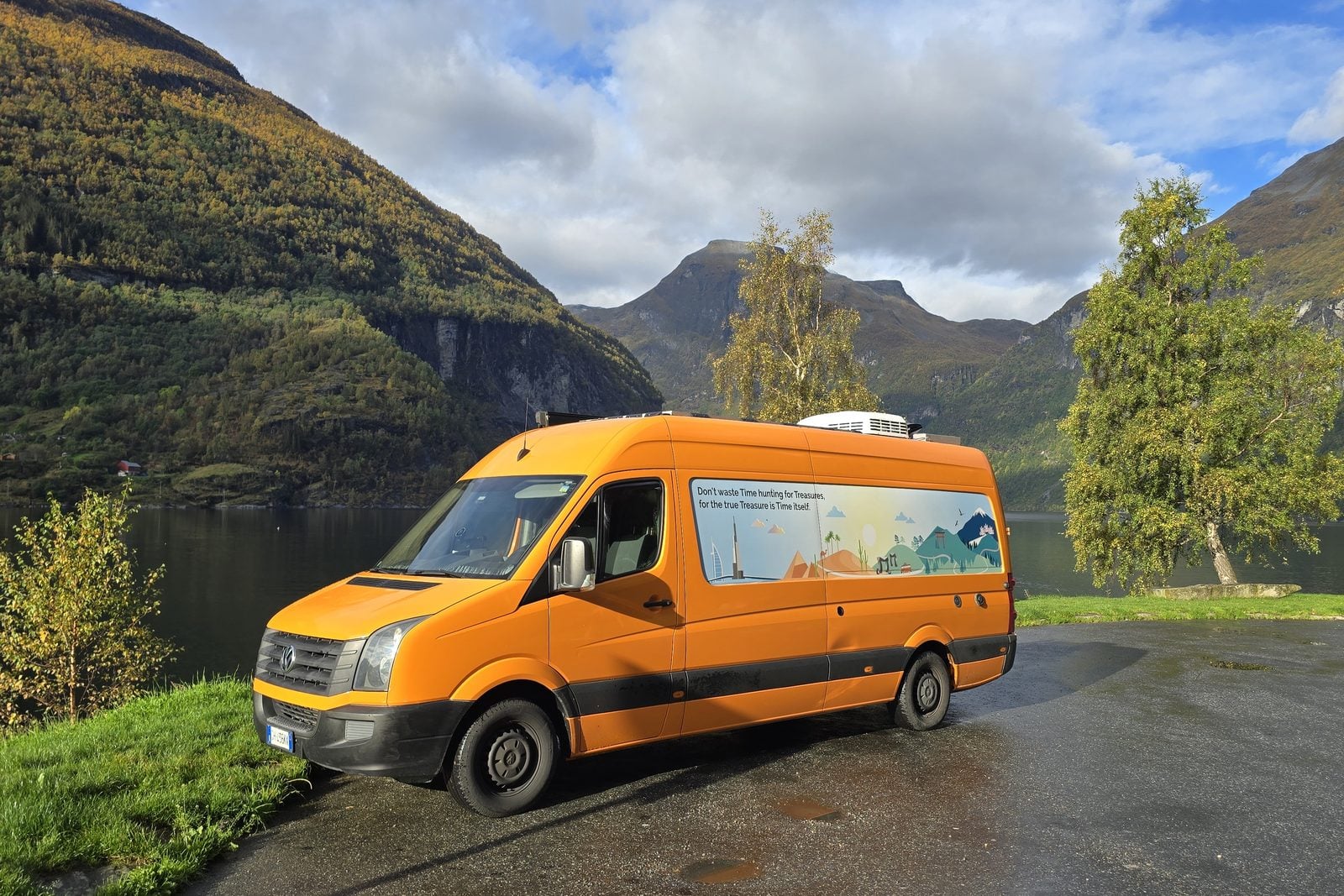
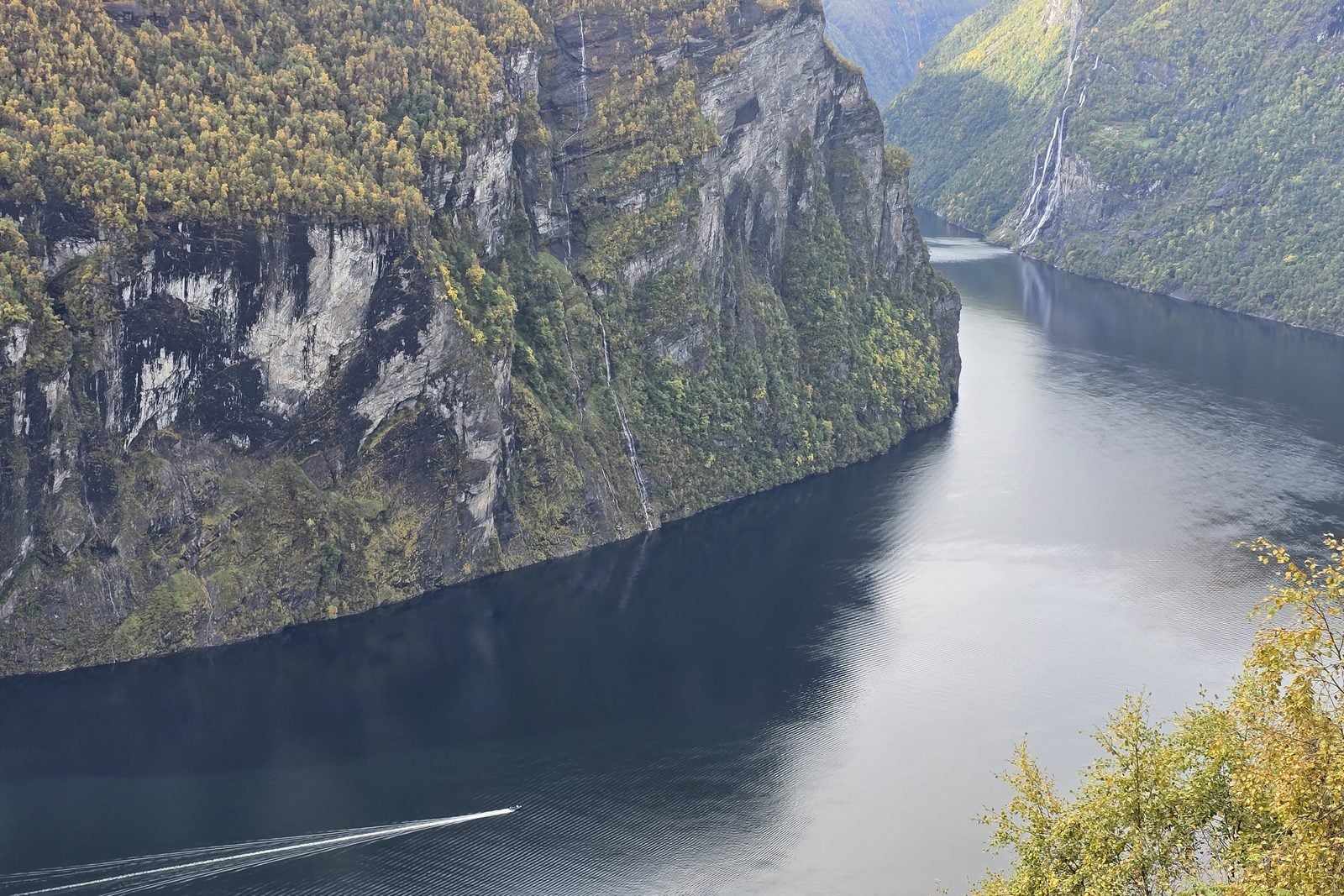
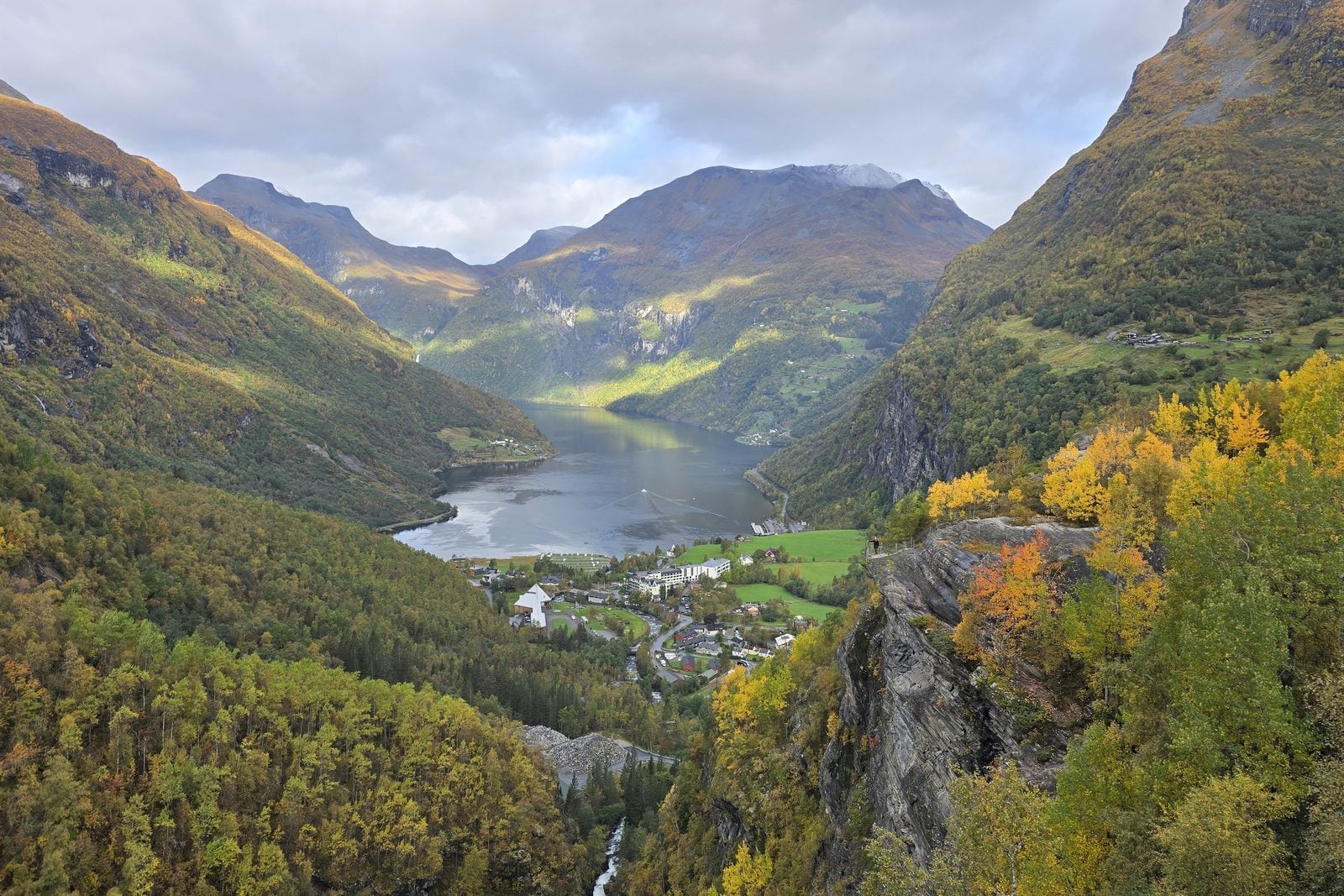
One of the most famous fjords, because of the many cruise ships that dock here, with very high cliffs and a narrow access, on a very winding road that’s beautiful to drive.
Coming from the south, you don’t necessarily need to stop for long: it’s a nice road to drive, scenic, zigzagging, with a couple of interesting viewpoints.
In summer it surely offers more options for hikes.
6. Atlantic Road
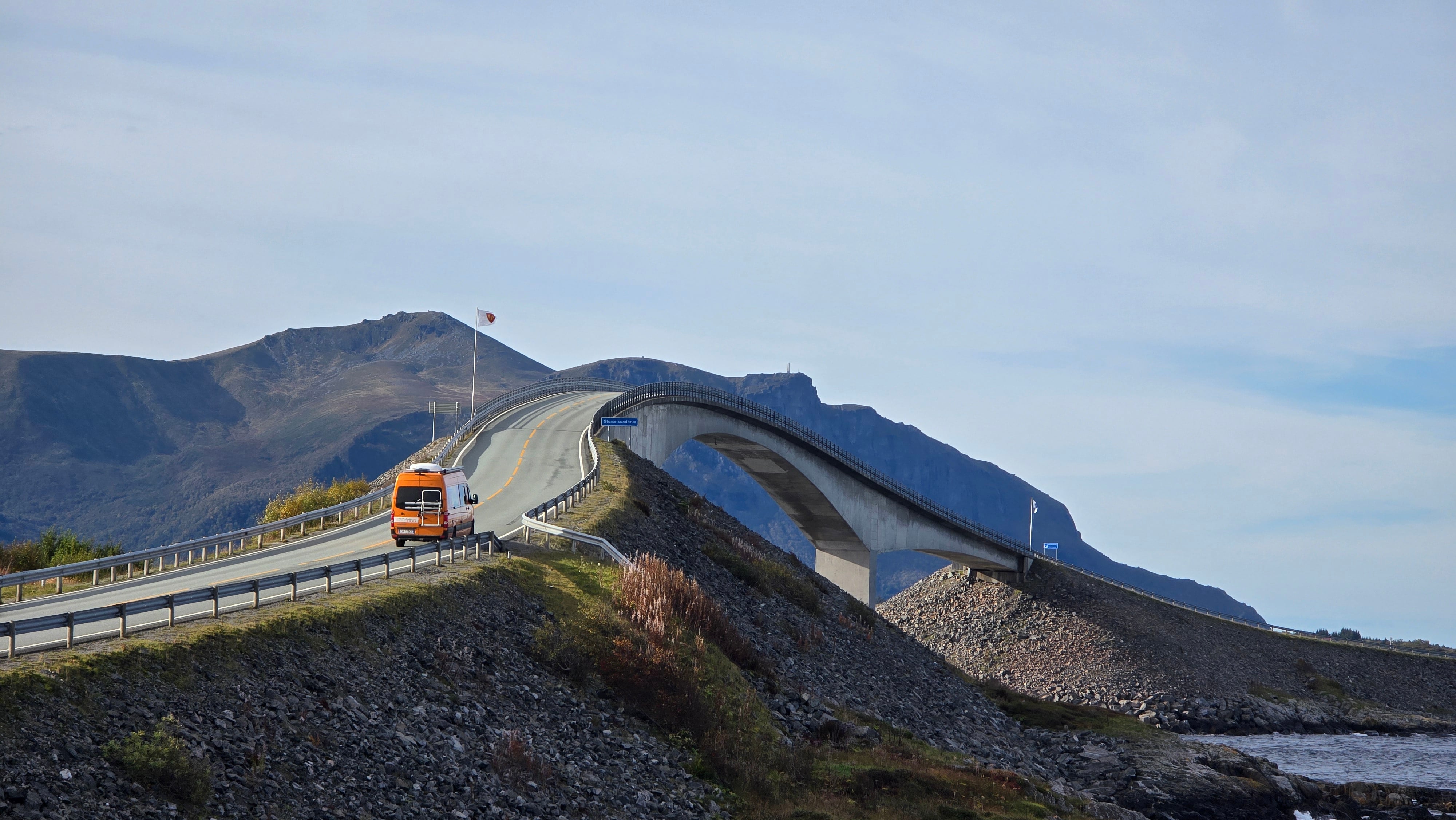
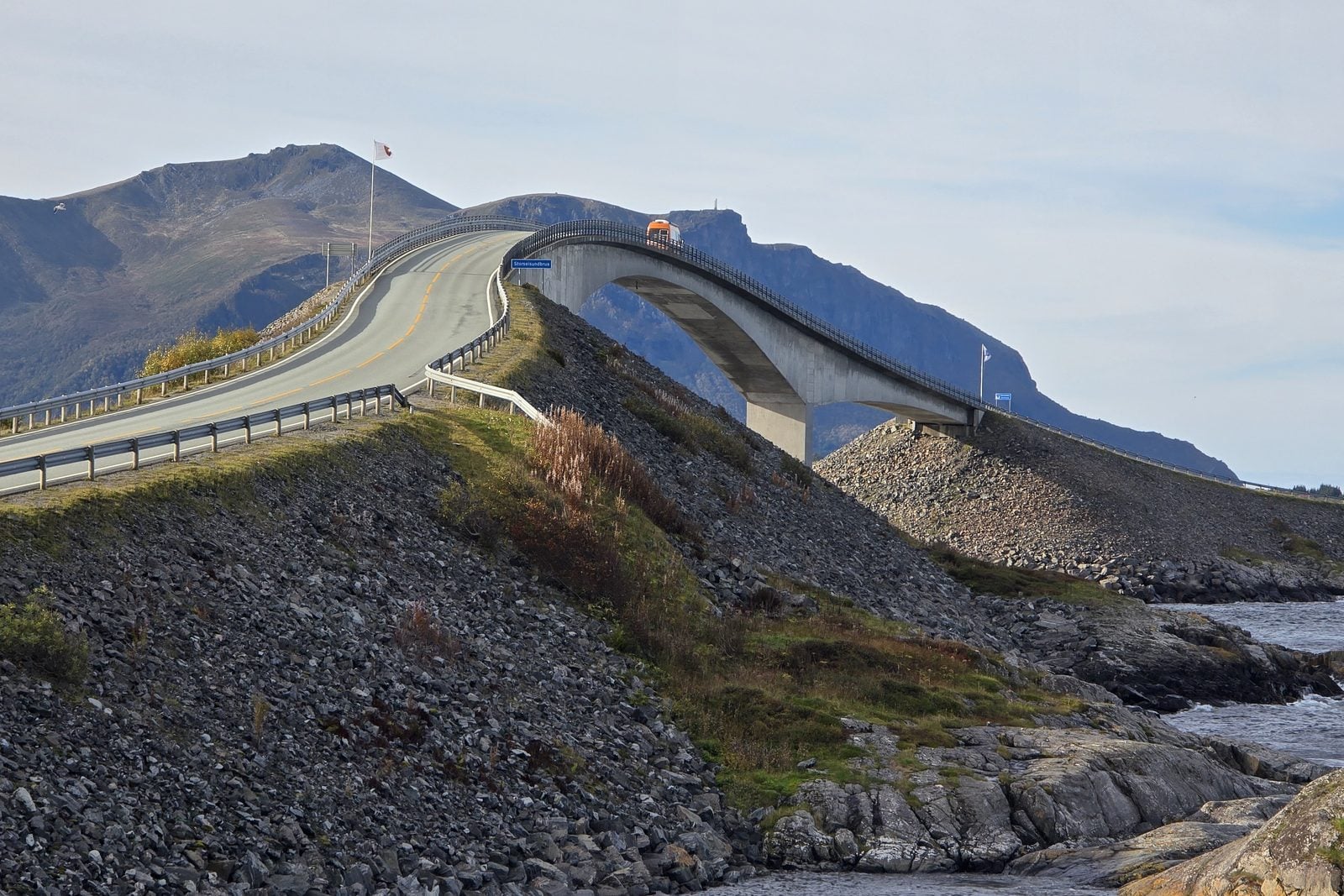
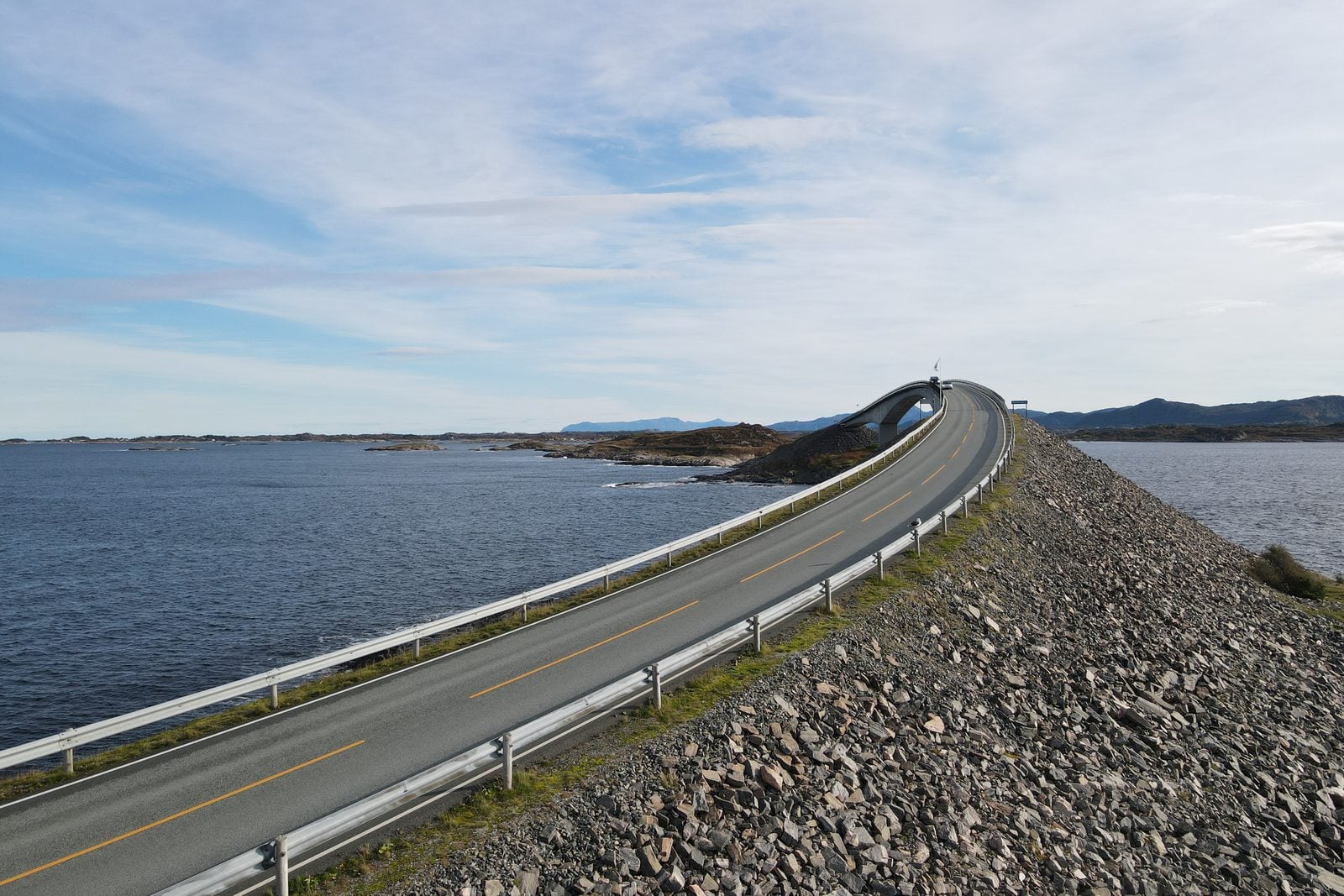
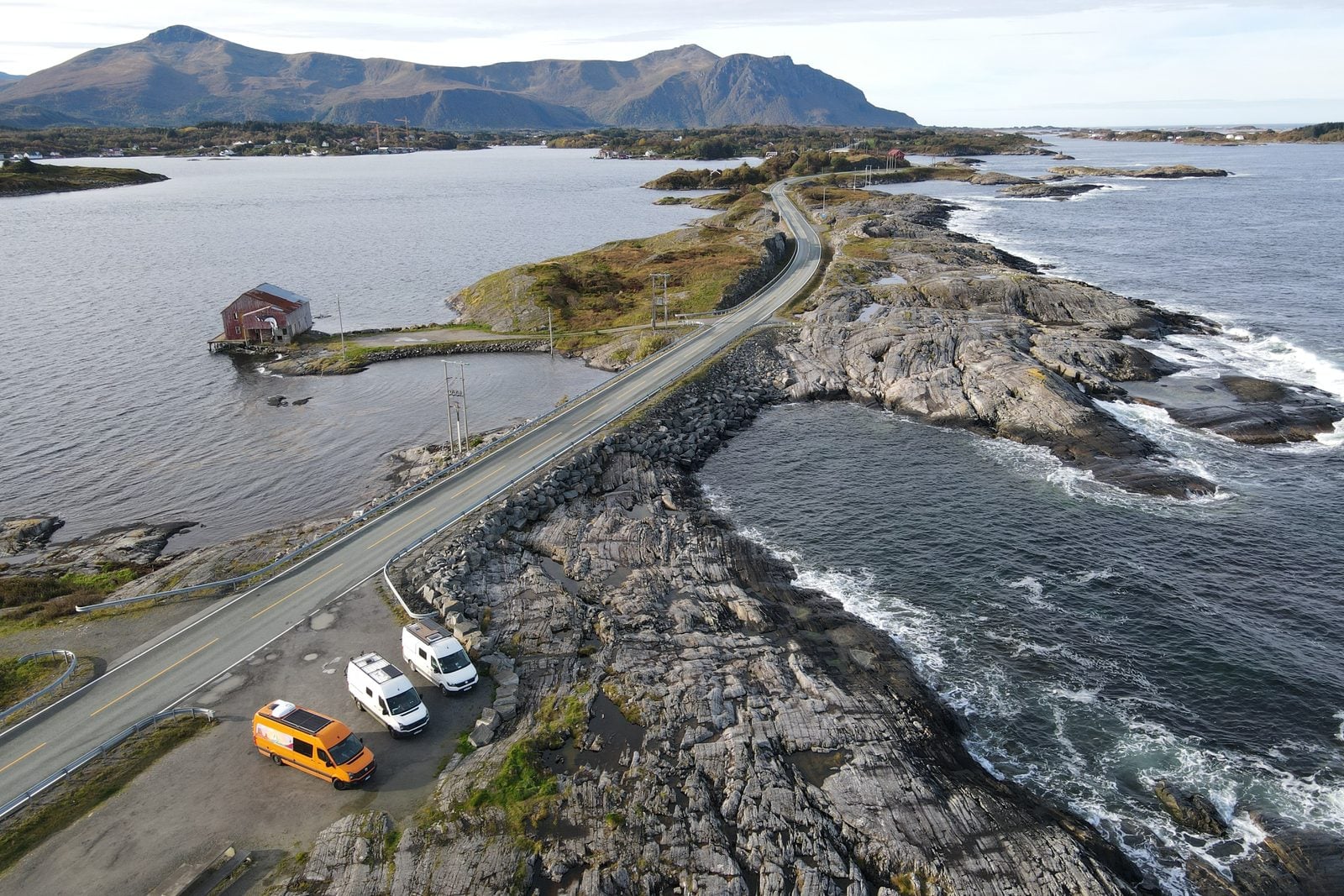
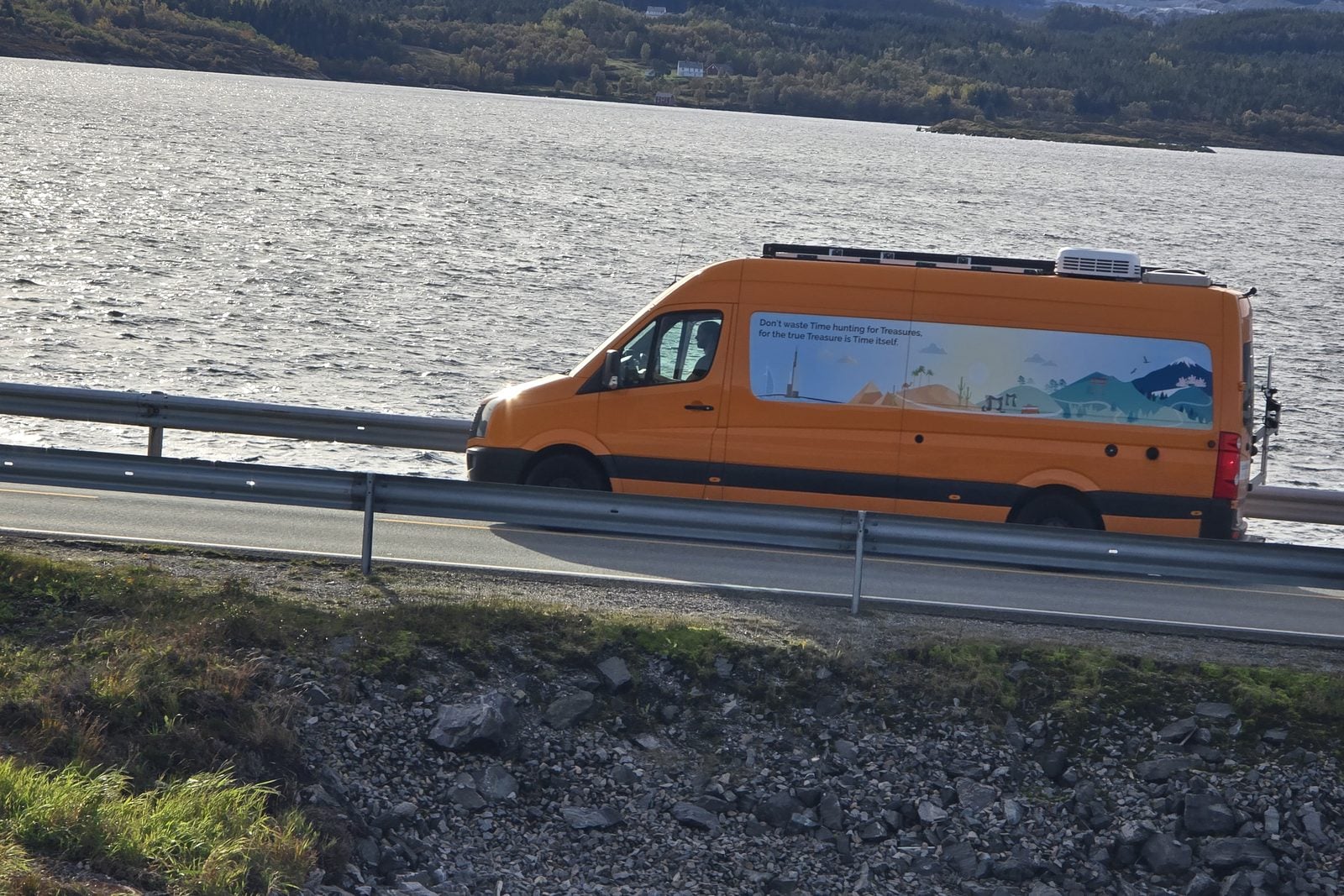
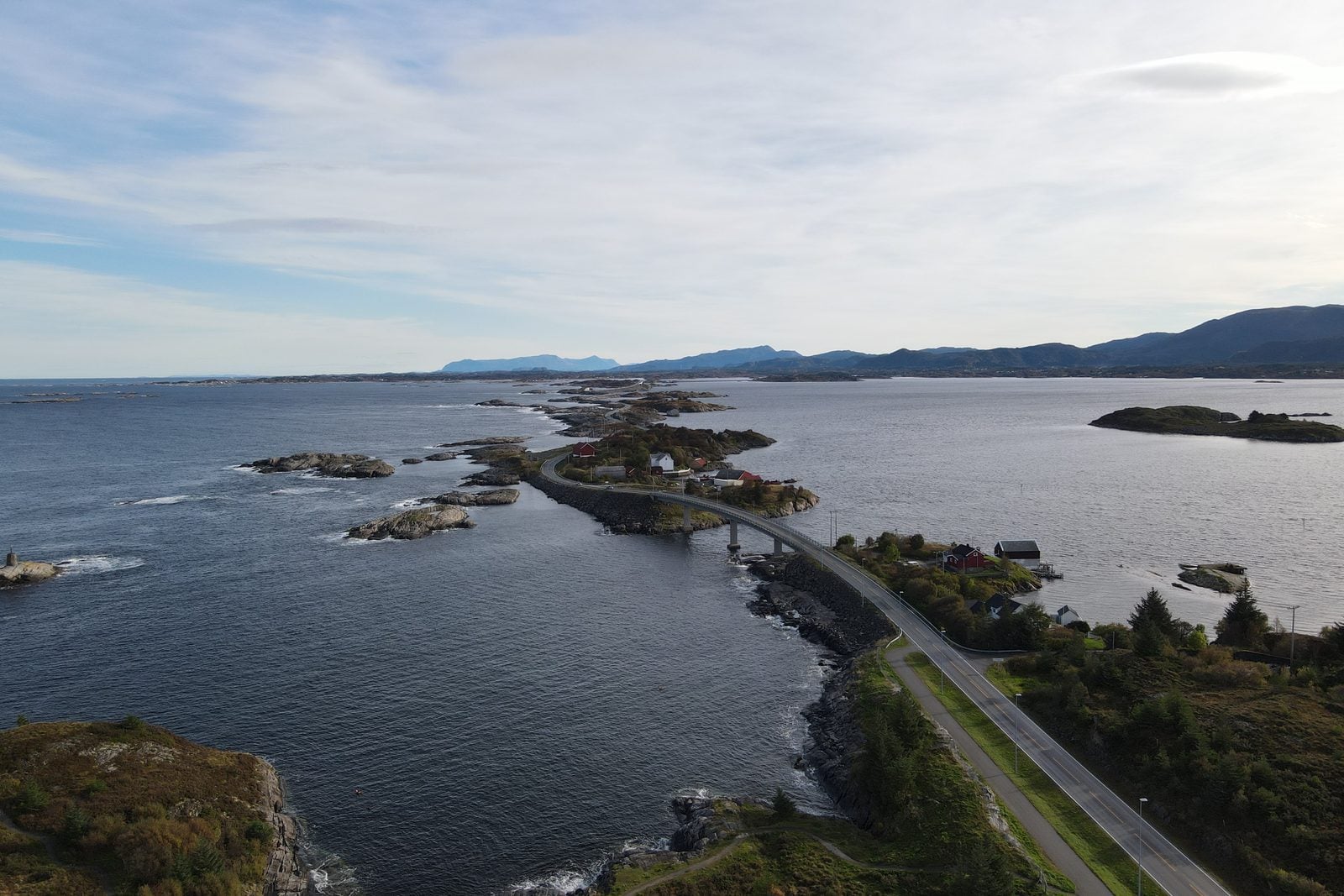
A small, fully scenic road, about 30-40 km long, that connects lots of little islands facing the Atlantic Ocean.
It’s famous for the Storseisundet Bridge, a really unusual and thrilling bridge: on a nice day you can drive it in about an hour and a half! 🙂
7. Trondheim
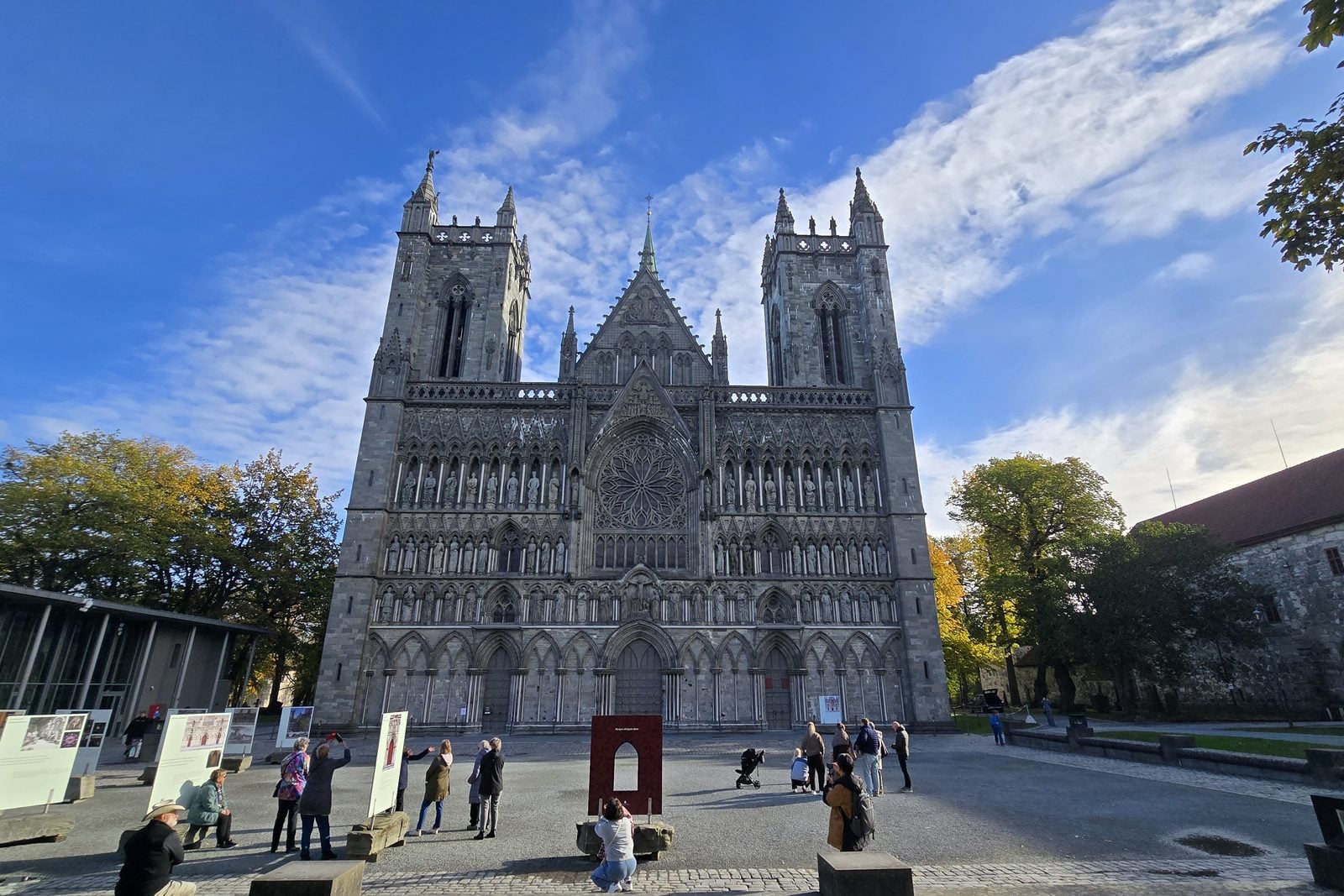
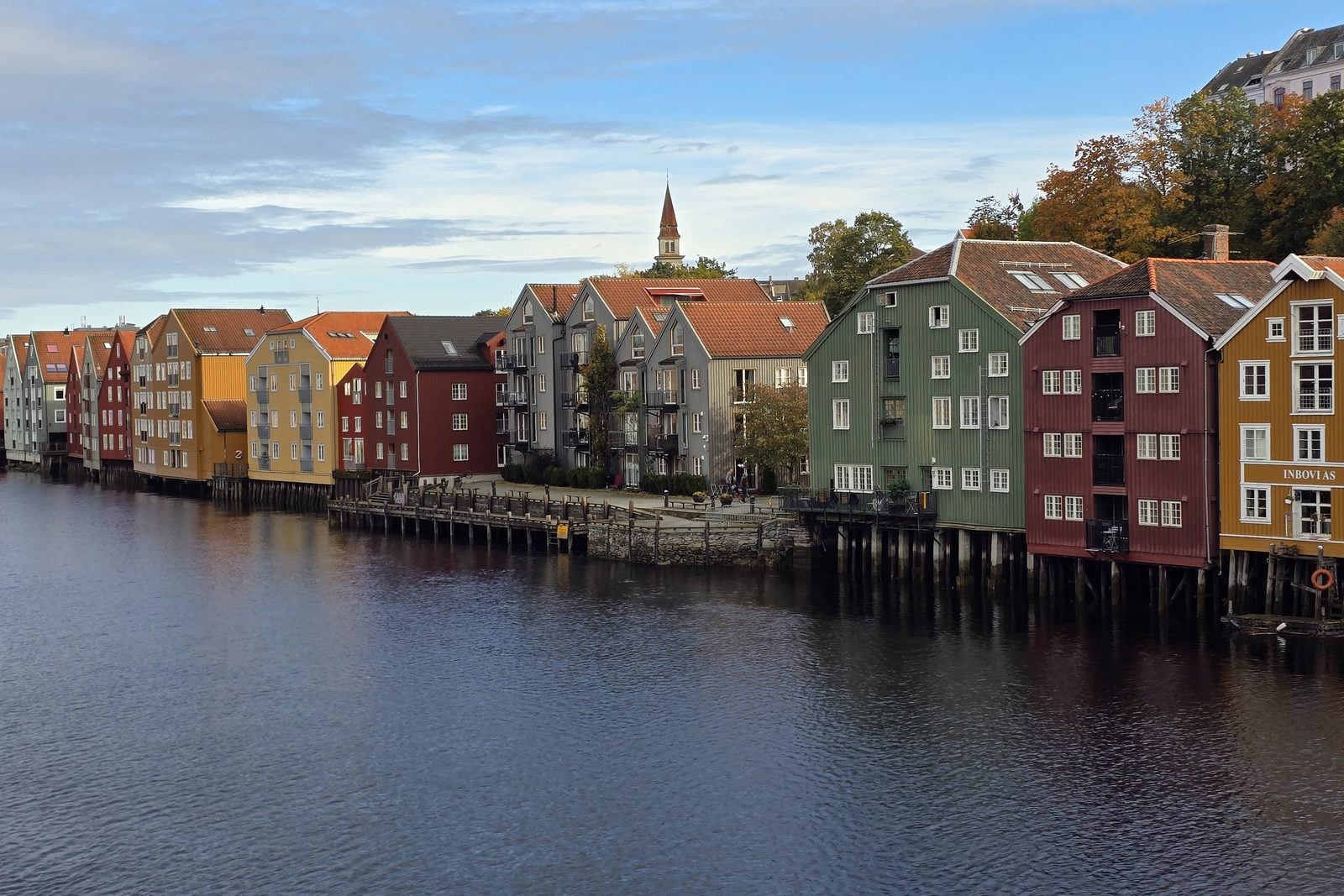
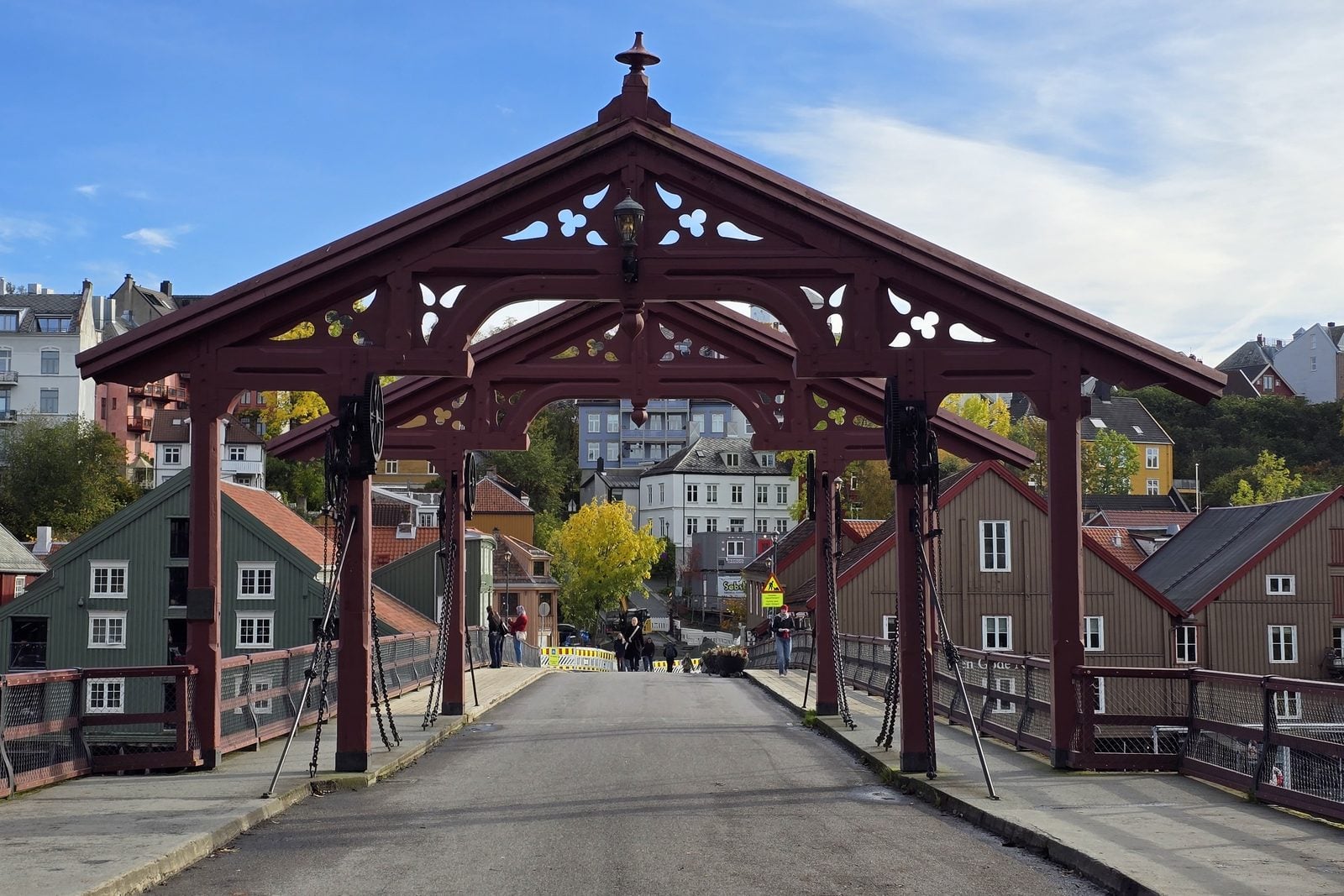
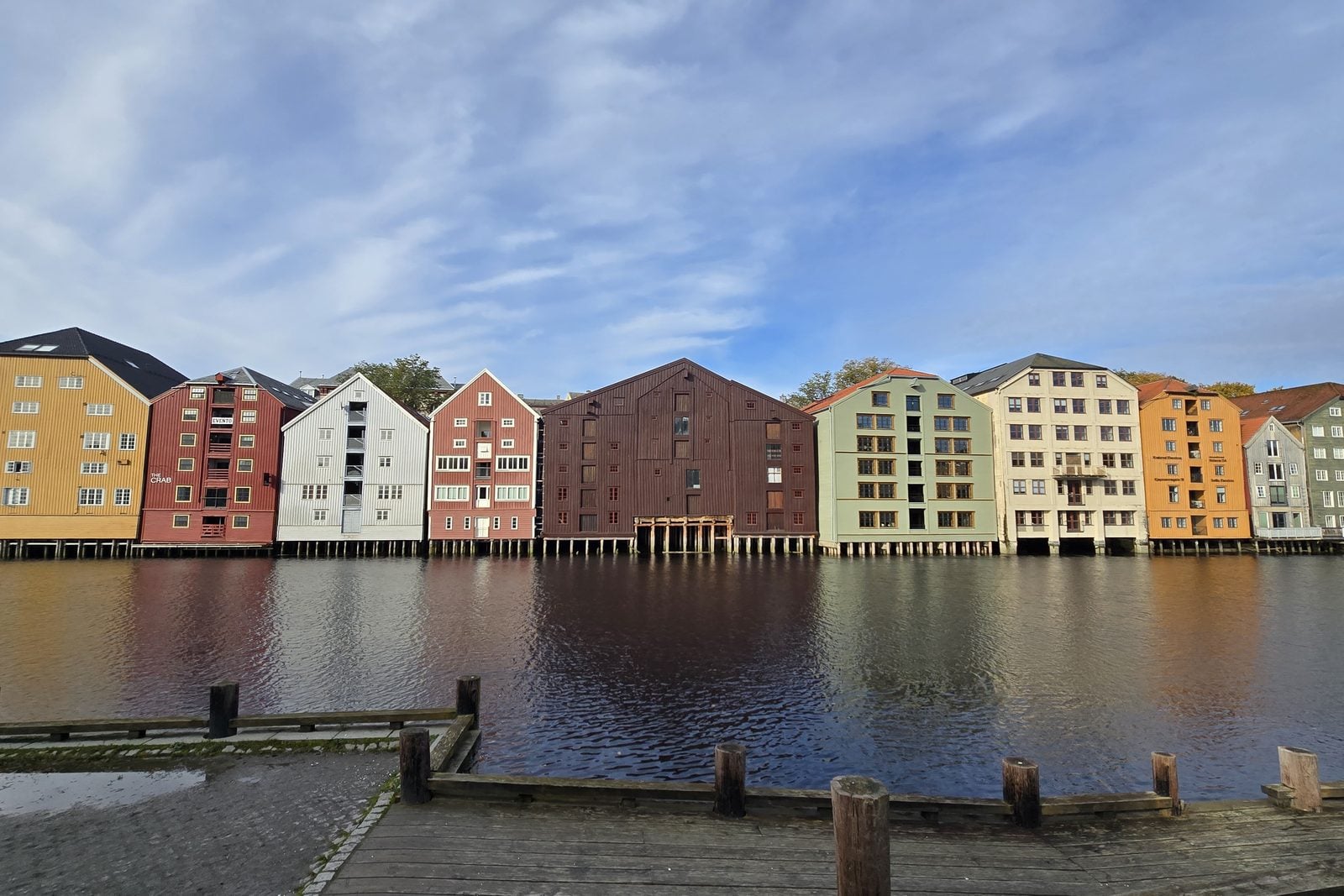
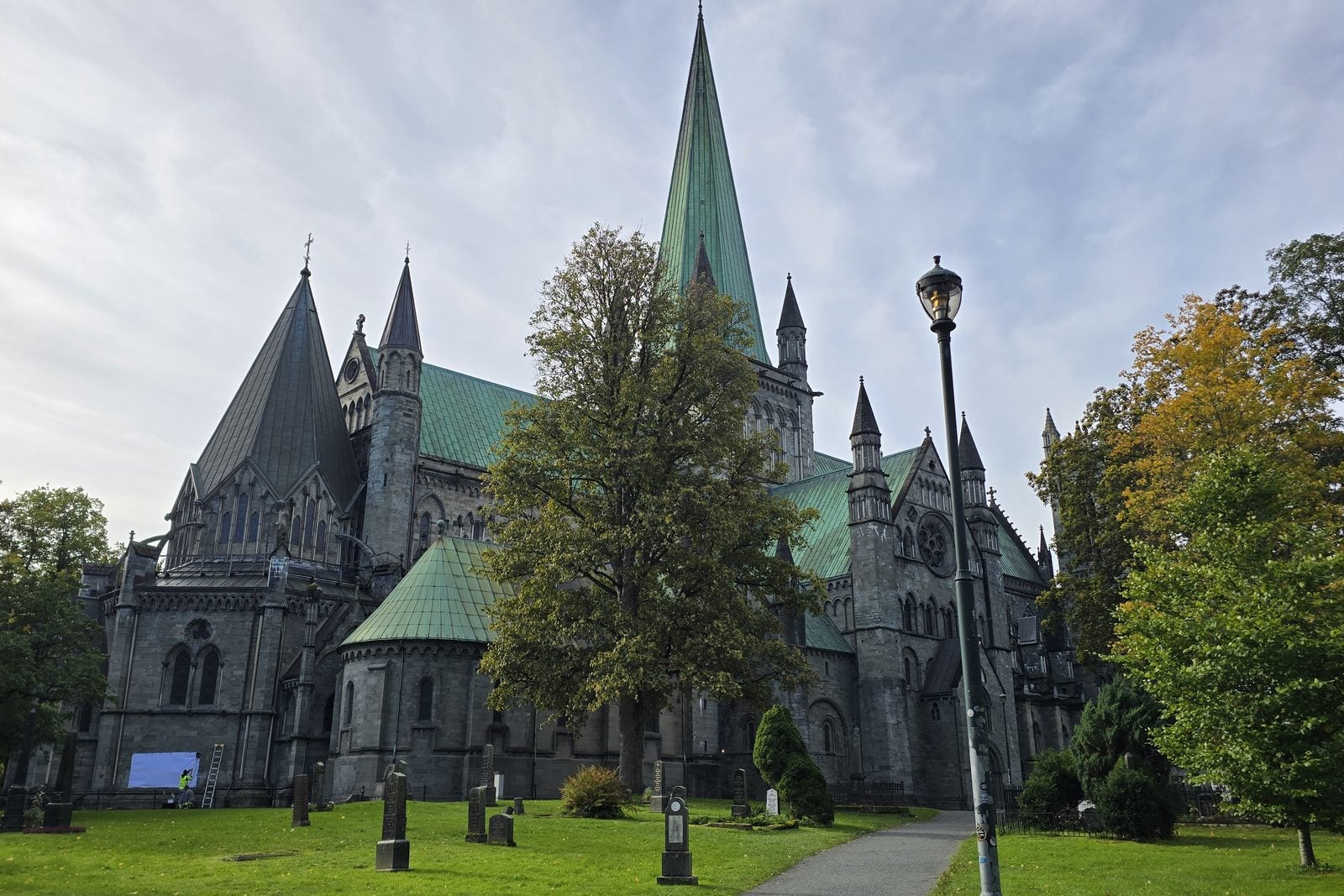
A beautiful city halfway up Norway, a great stop especially after so much nature and so many fjords without big towns.
There’s a beautiful cathedral and there are colourful little houses: one day to explore Trondheim on foot felt just right to us. Here you’ll also find gyms (more on that later), self-service laundromats, and bigger supermarkets!
8. Torghatten
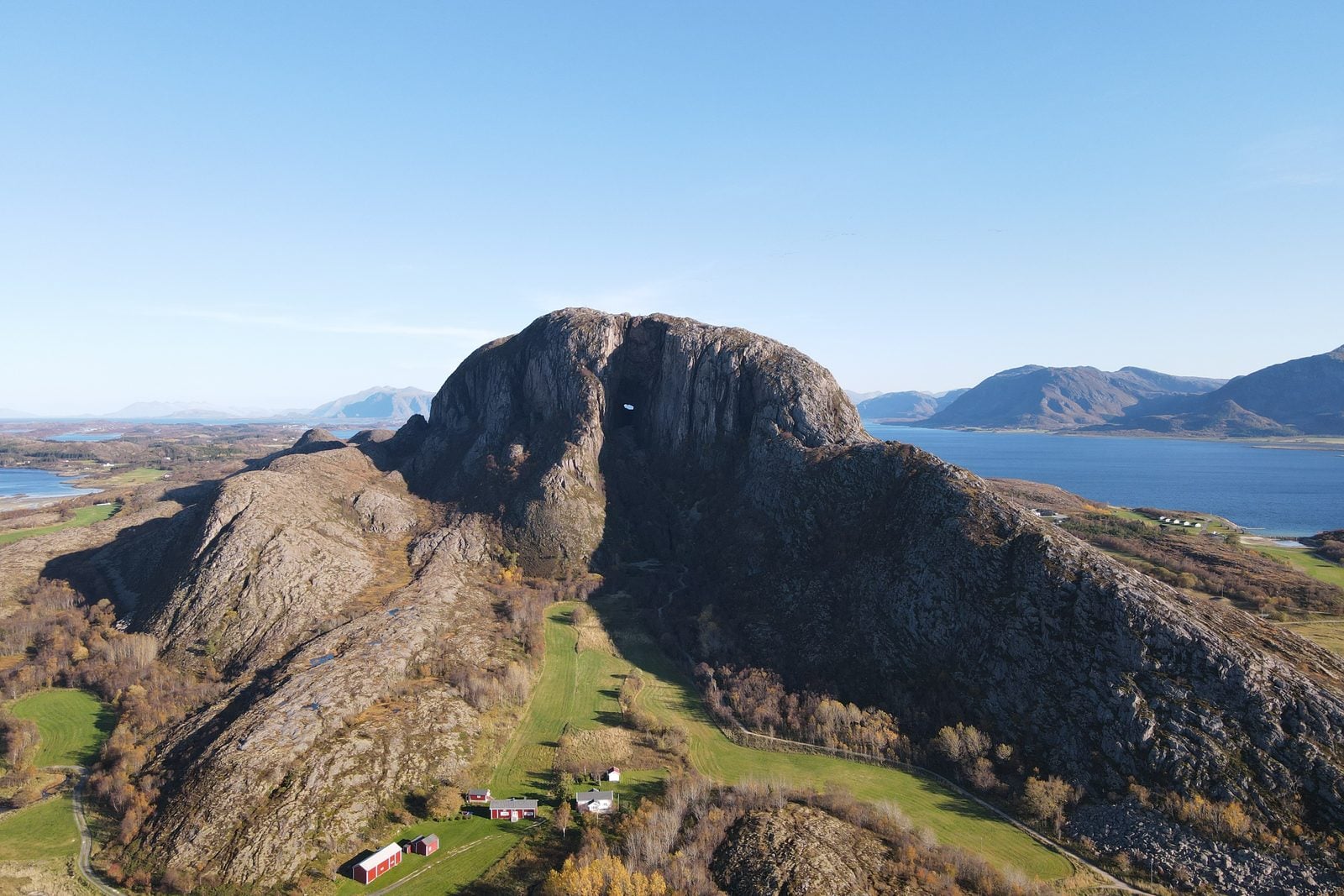
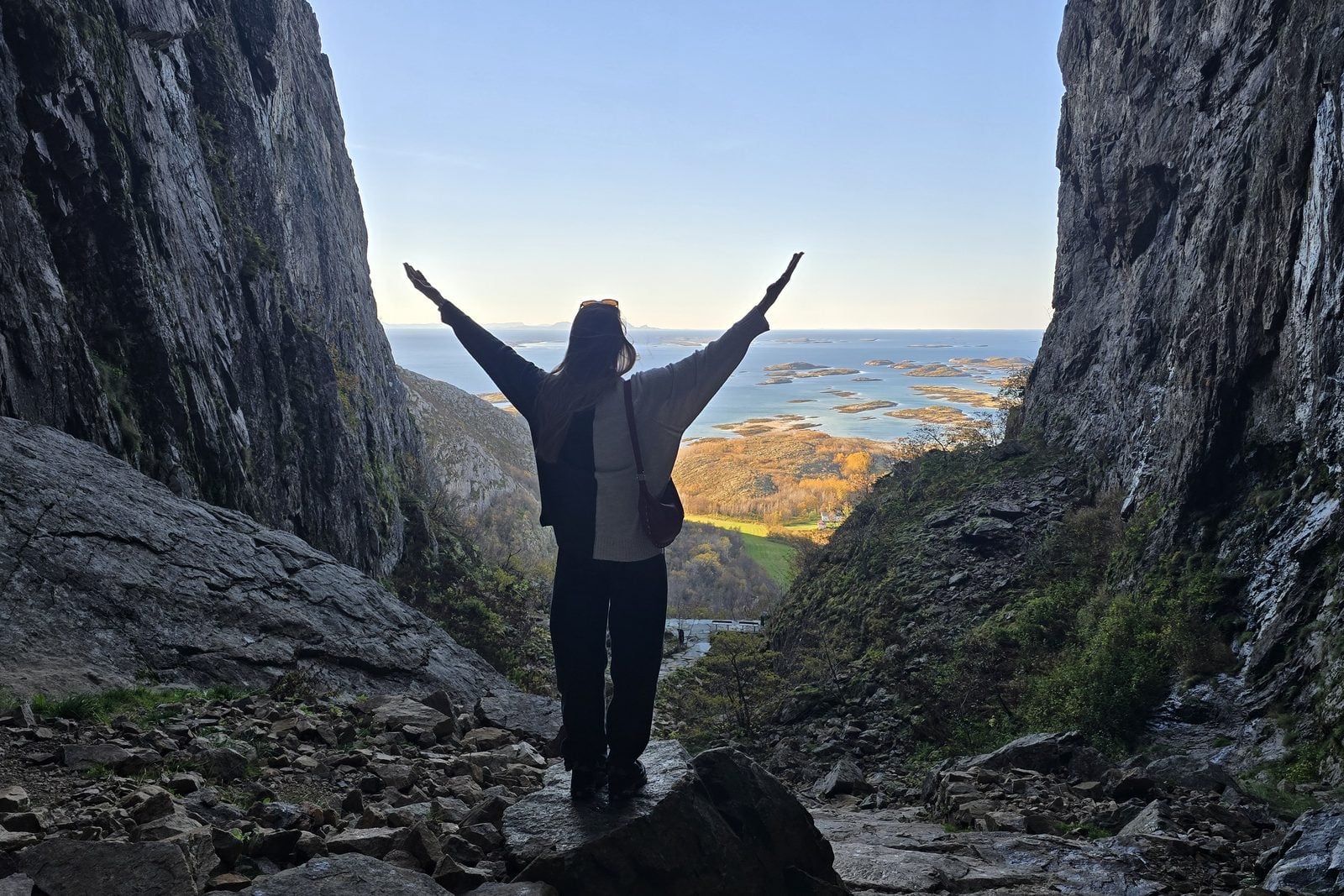
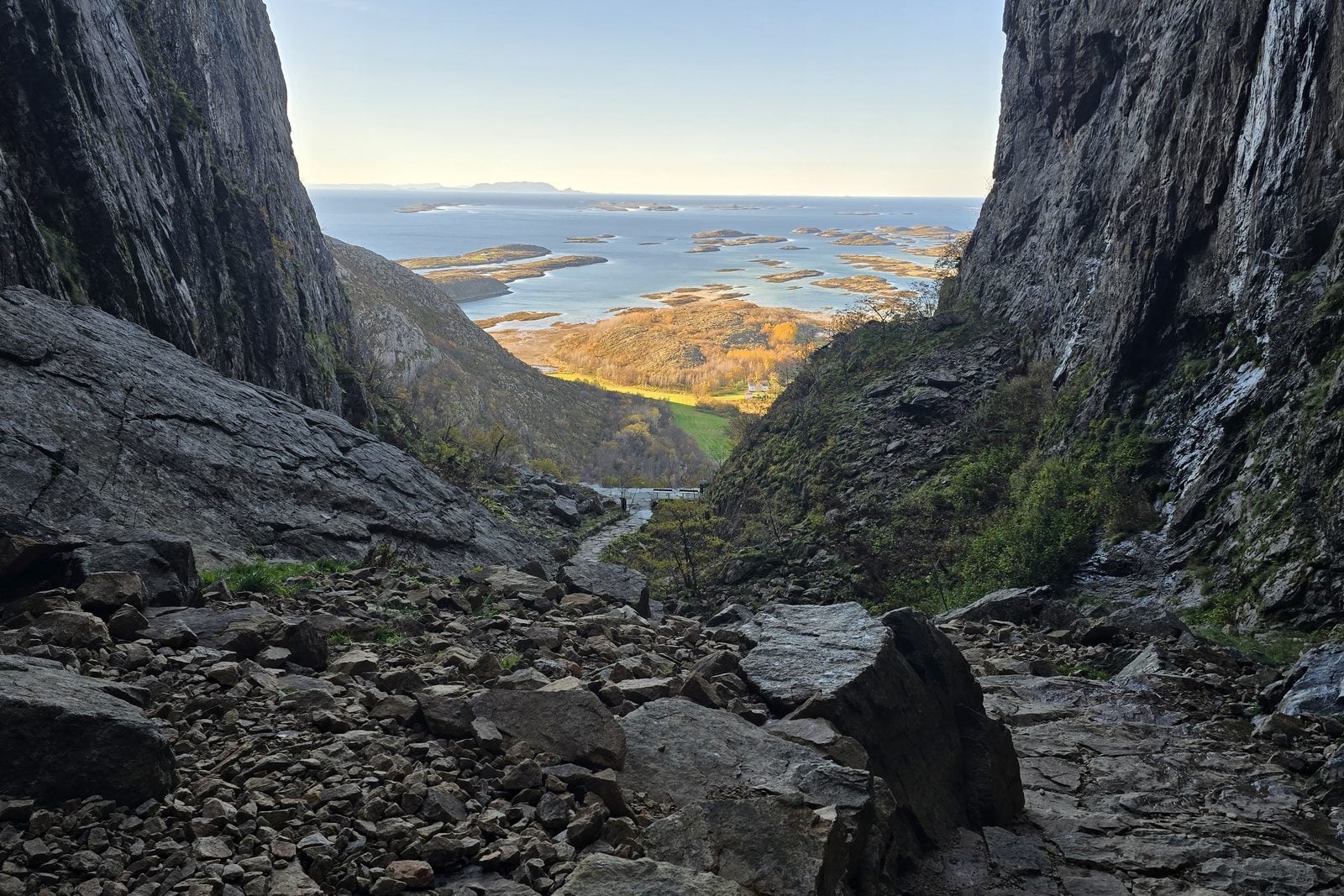
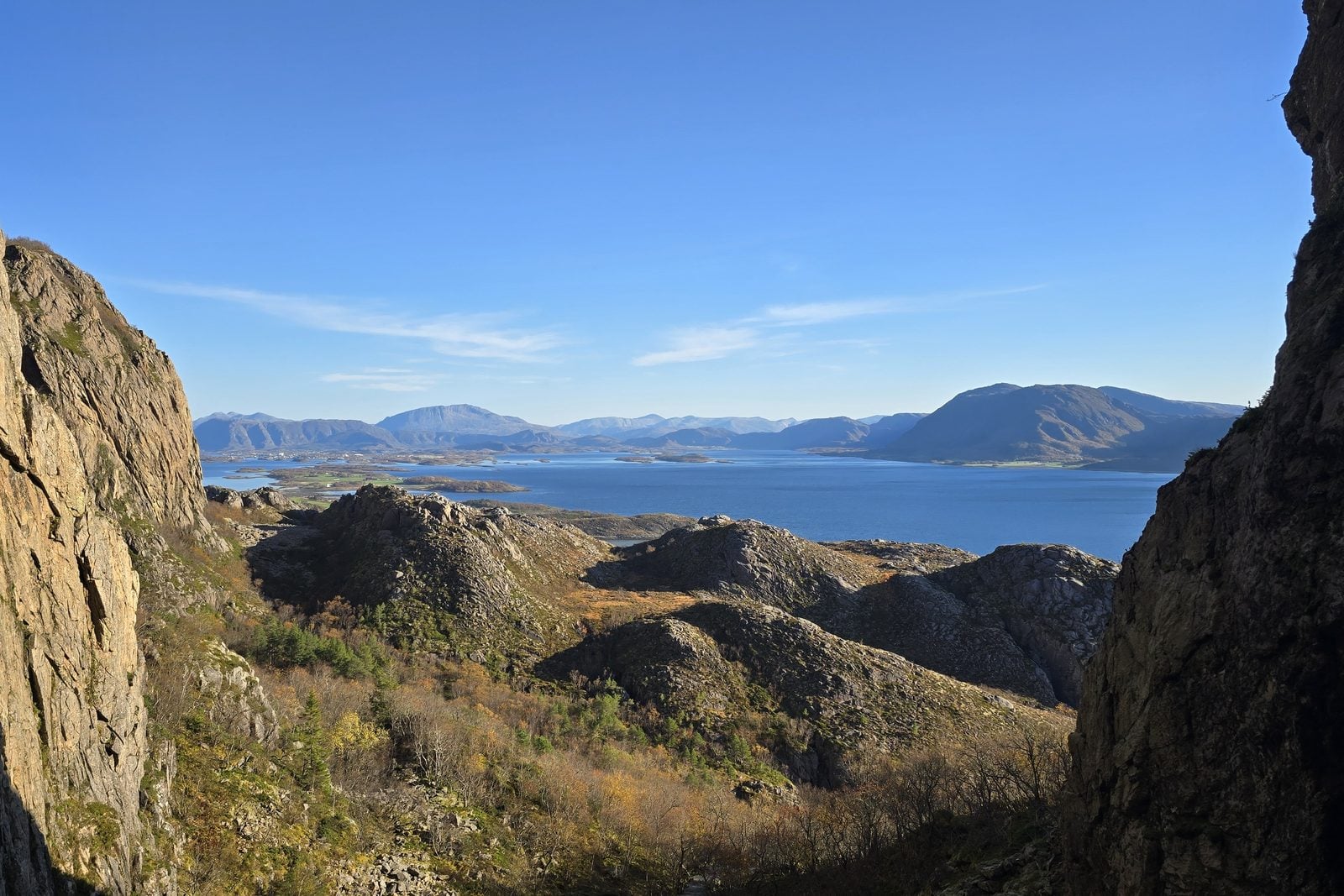
Driving north towards Bodø, the natural shows follow one another among forests, sea and hundreds of little spots where you feel like stopping the van and staying for a week!
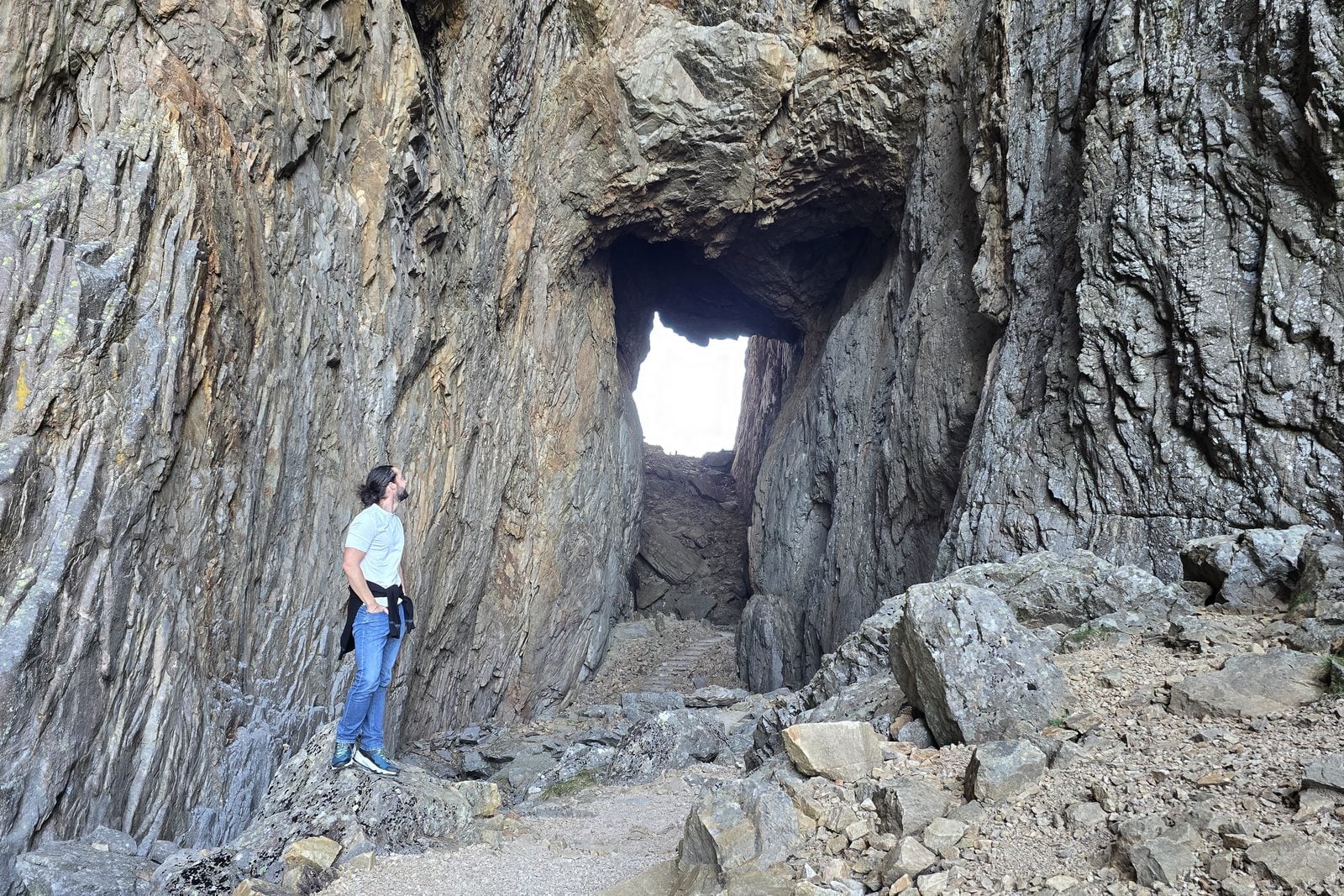
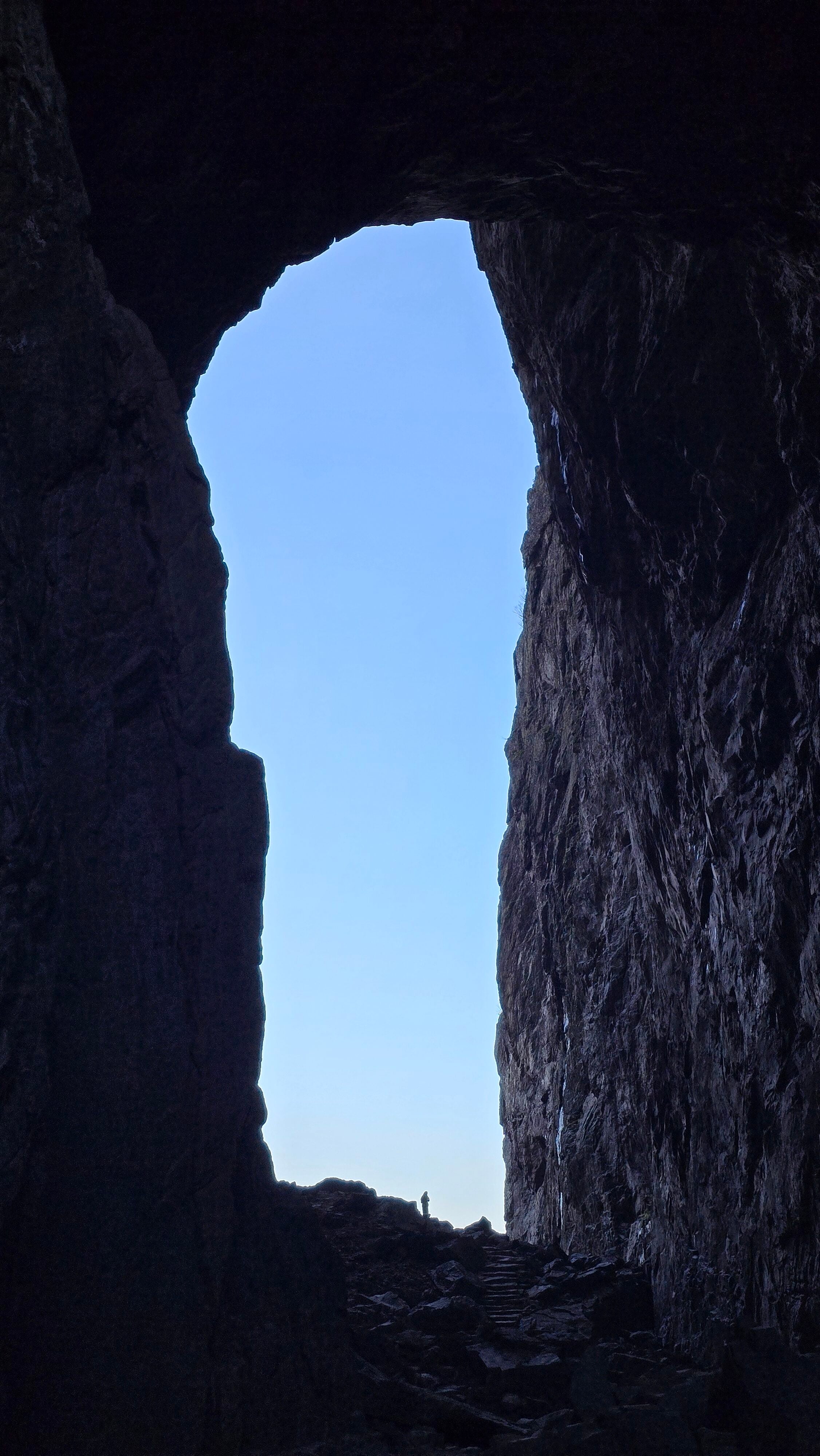
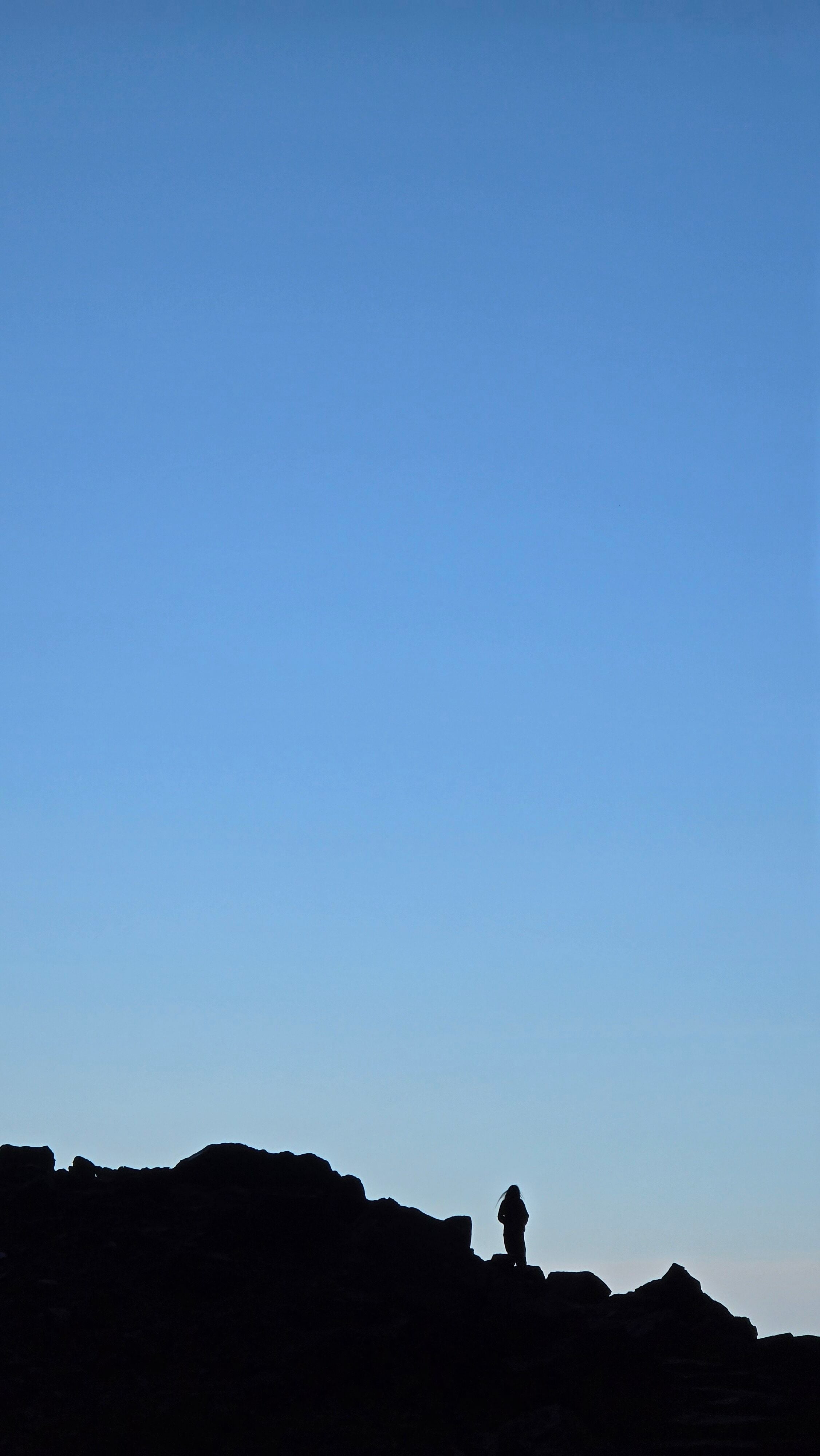
Among these, an incredible place is Torghatten: a mountain with a hole inside it that looks tiny from afar, but when you get there and look at it from inside… it’s gigantic!
There’s a car park very close by and the hike takes about an hour, an hour and a half for the full loop, on stairs that lead up to the entrance.
Warning: when you walk in underneath, it almost gives you a bit of vertigo!
9. Saltstraumen (near Bodø)
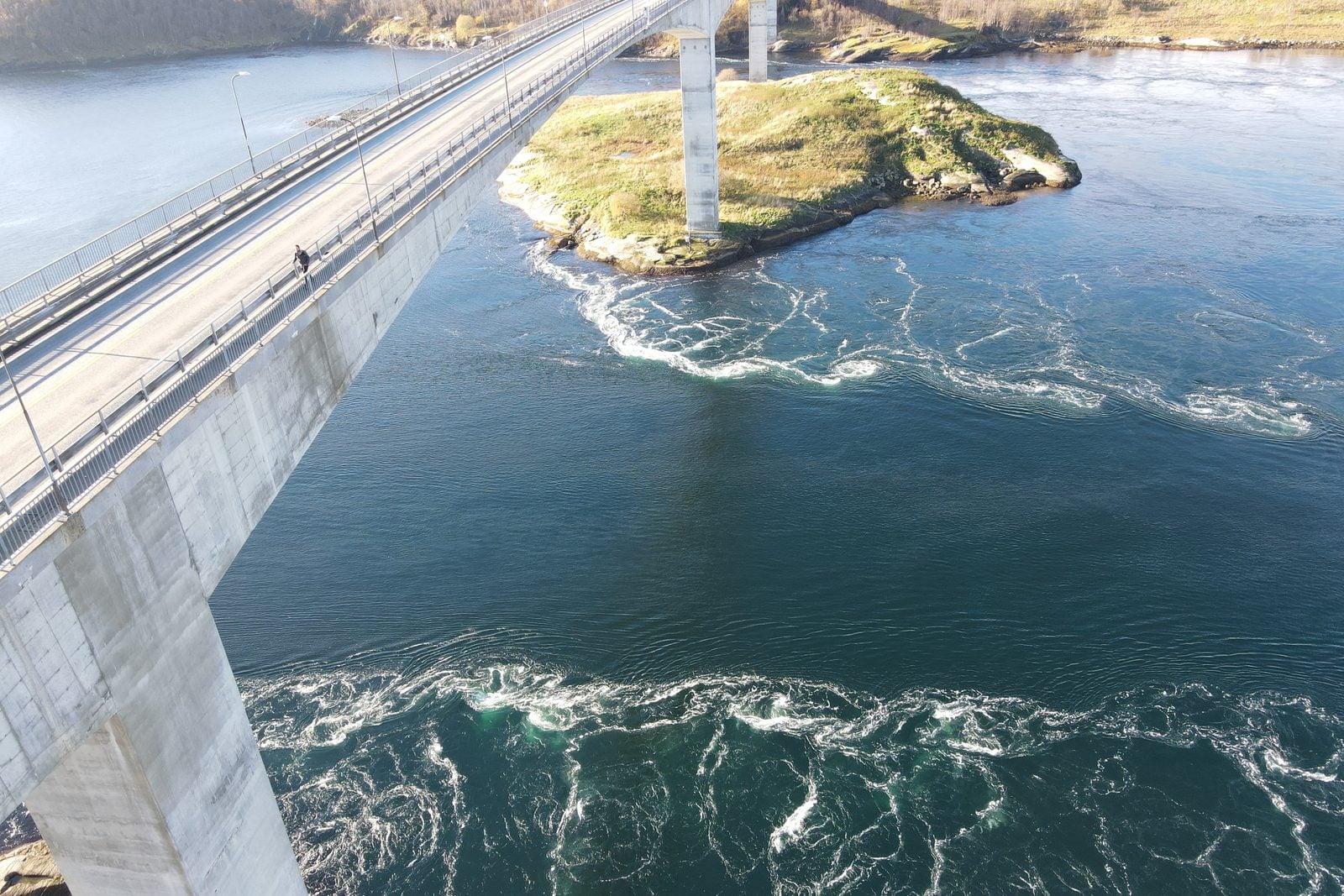
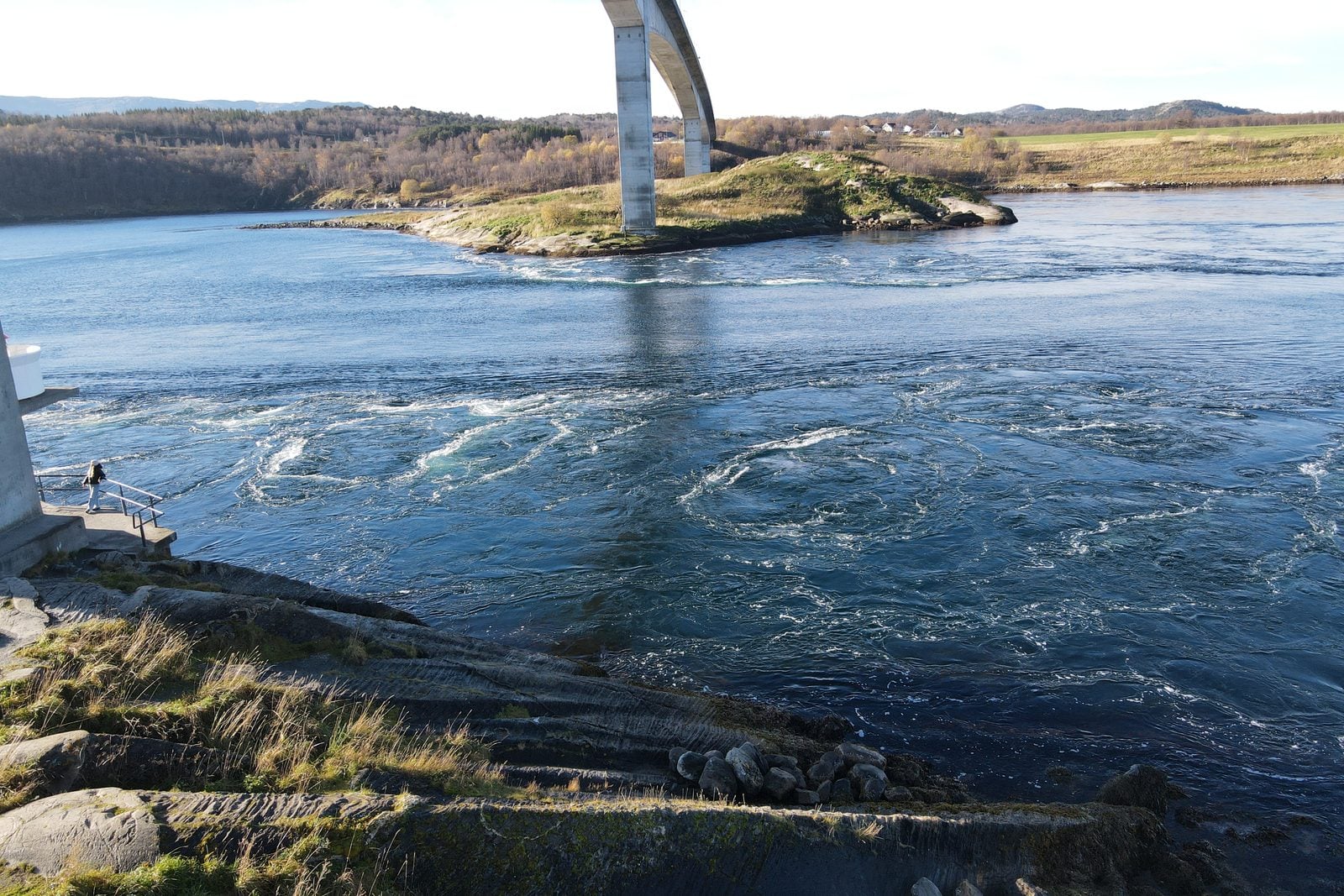
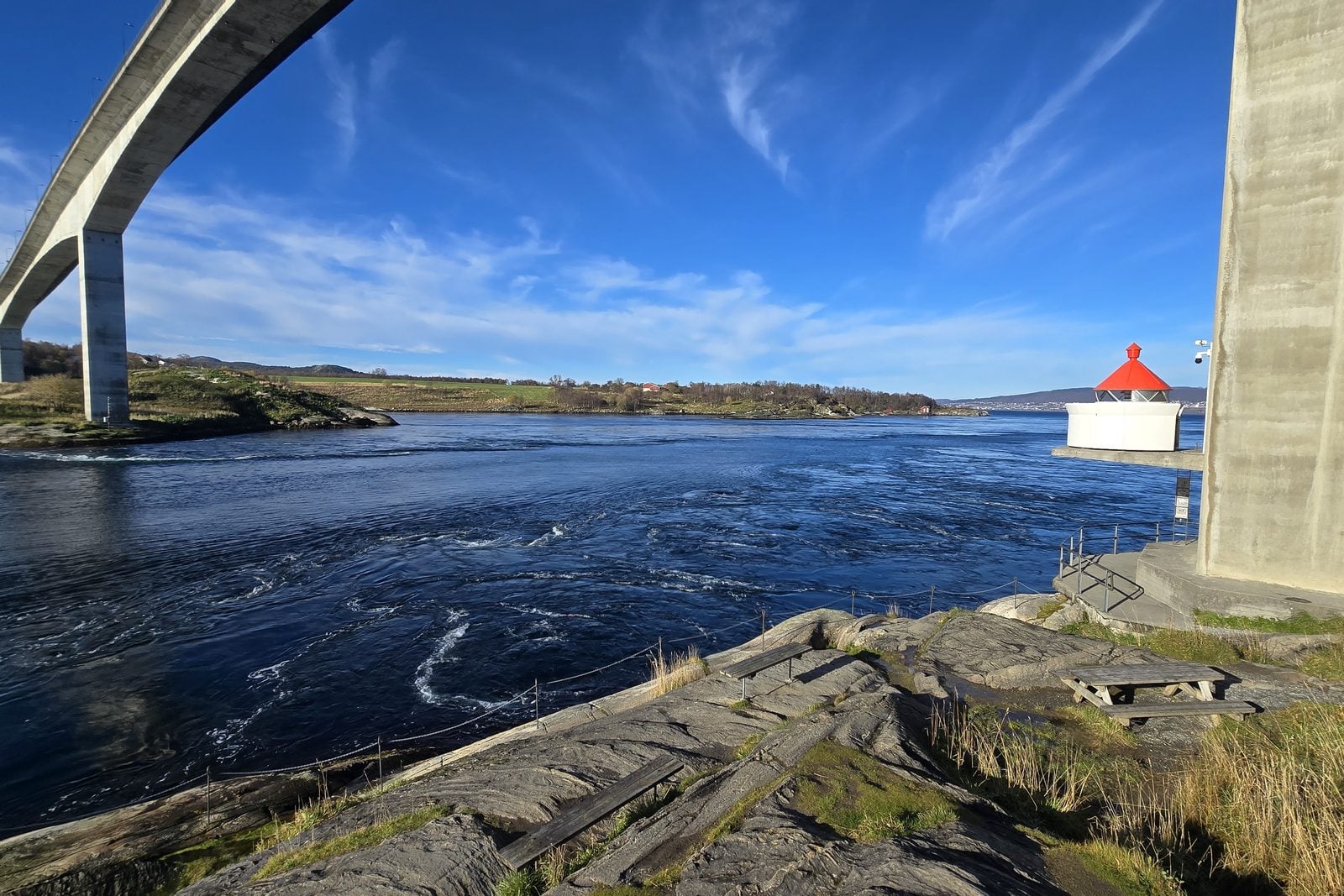
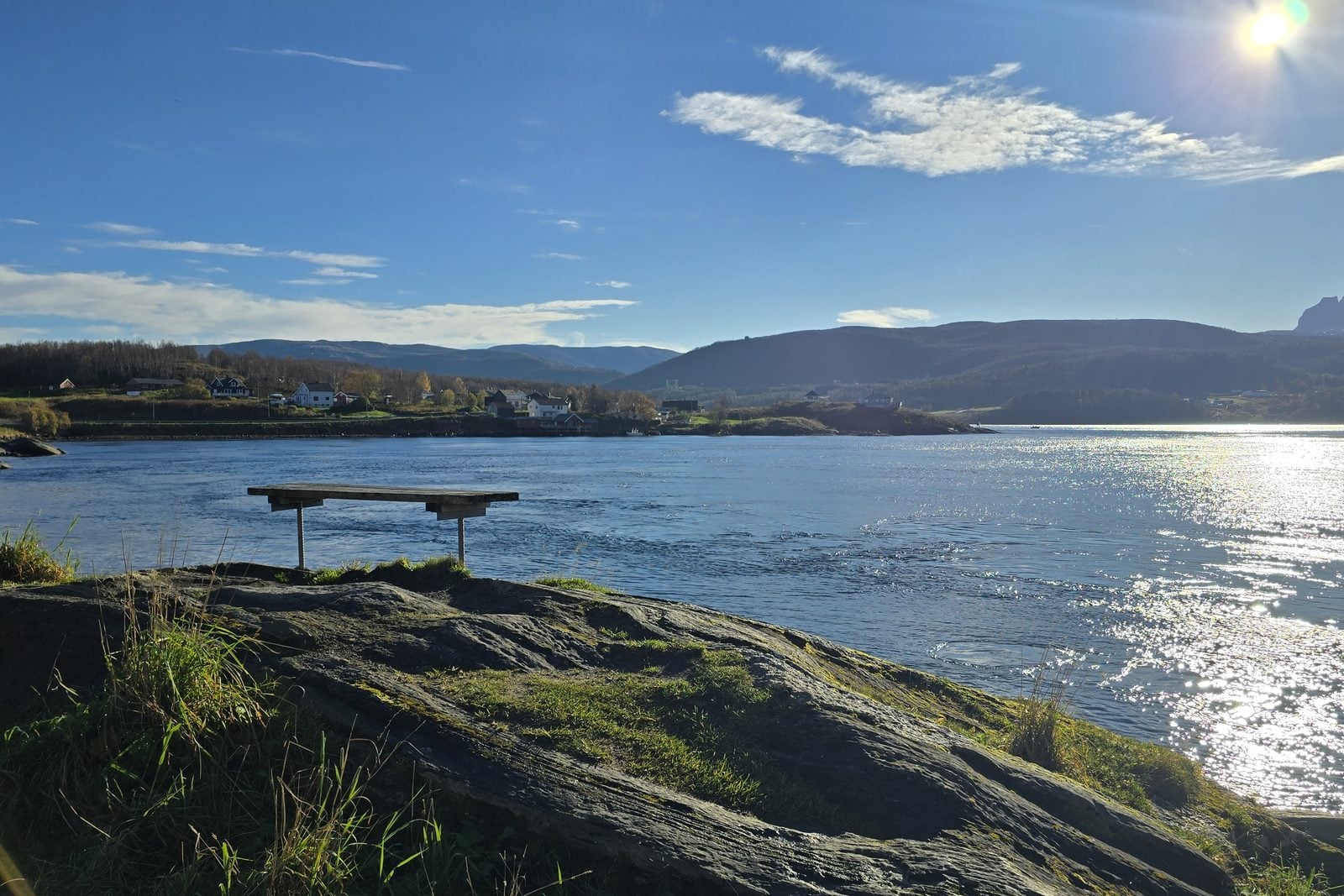
A bridge under which flow the strongest tidal currents in the world: four times a day the water rushes in from the sea towards the inner fjord and then back out, creating big whirlpools.
If you arrive at the right time (check the times online for the day you visit!), about half an hour is enough to see it: very interesting to understand the power of the tides in a bottleneck like this small fjord!
10. Lofoten Islands
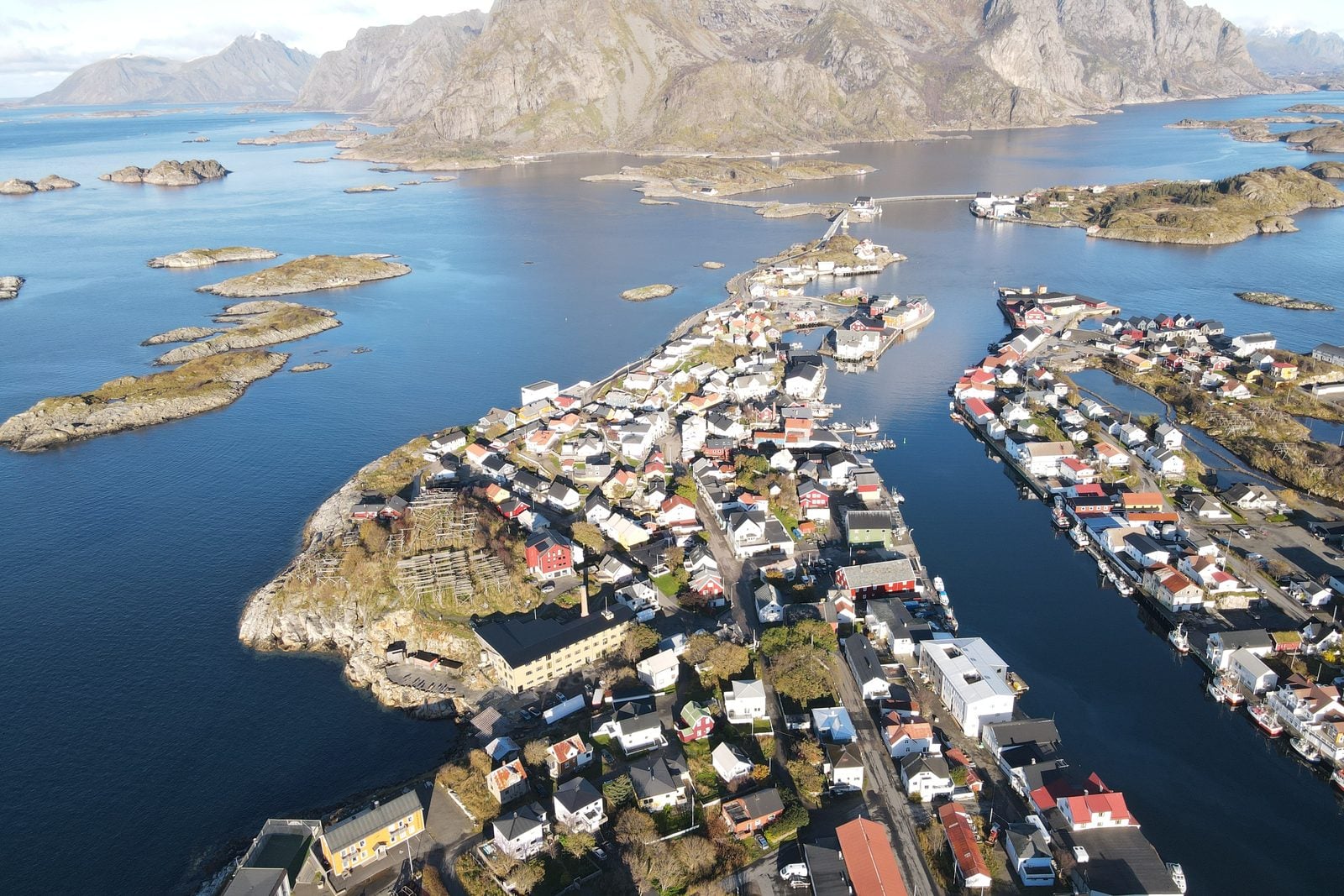
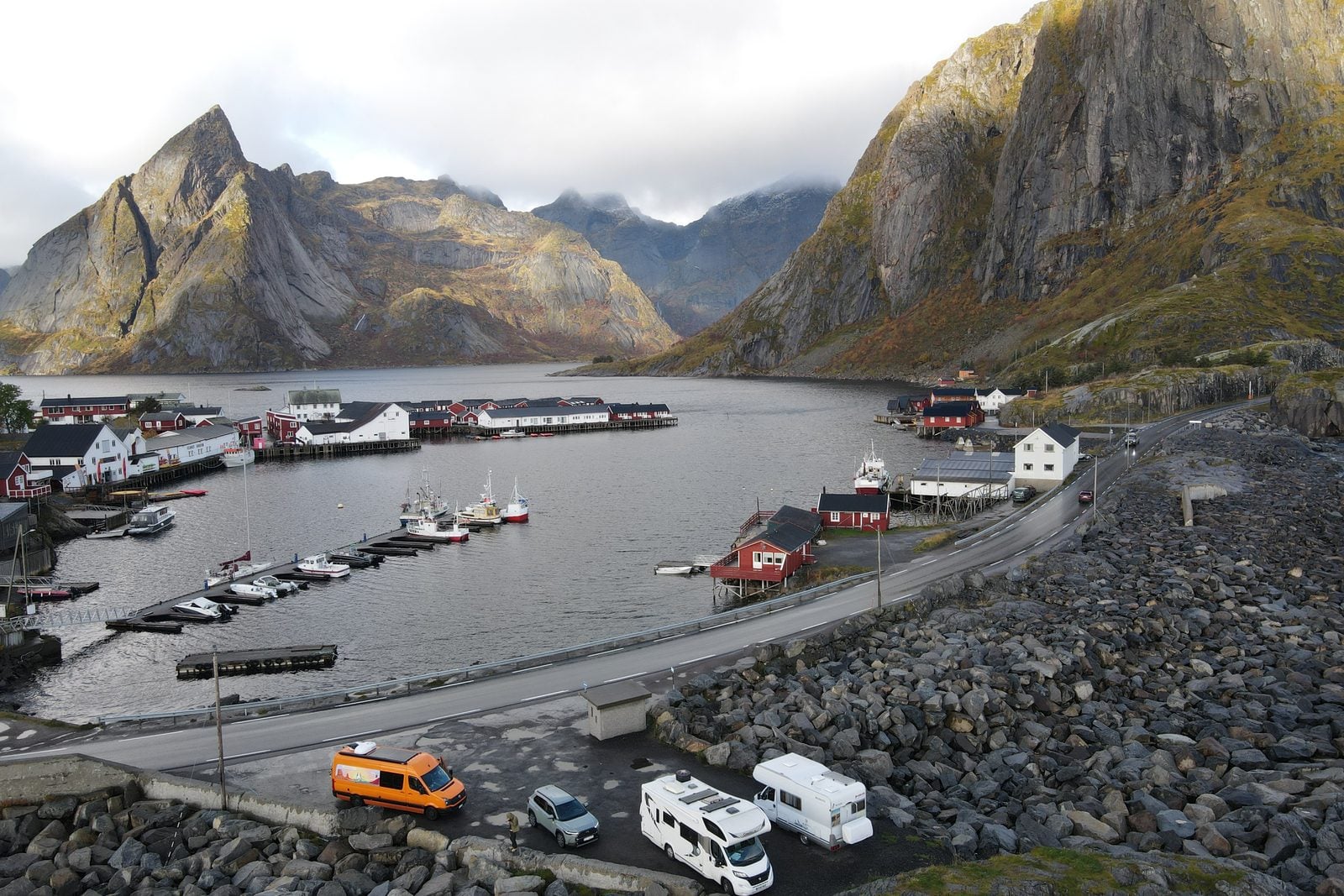
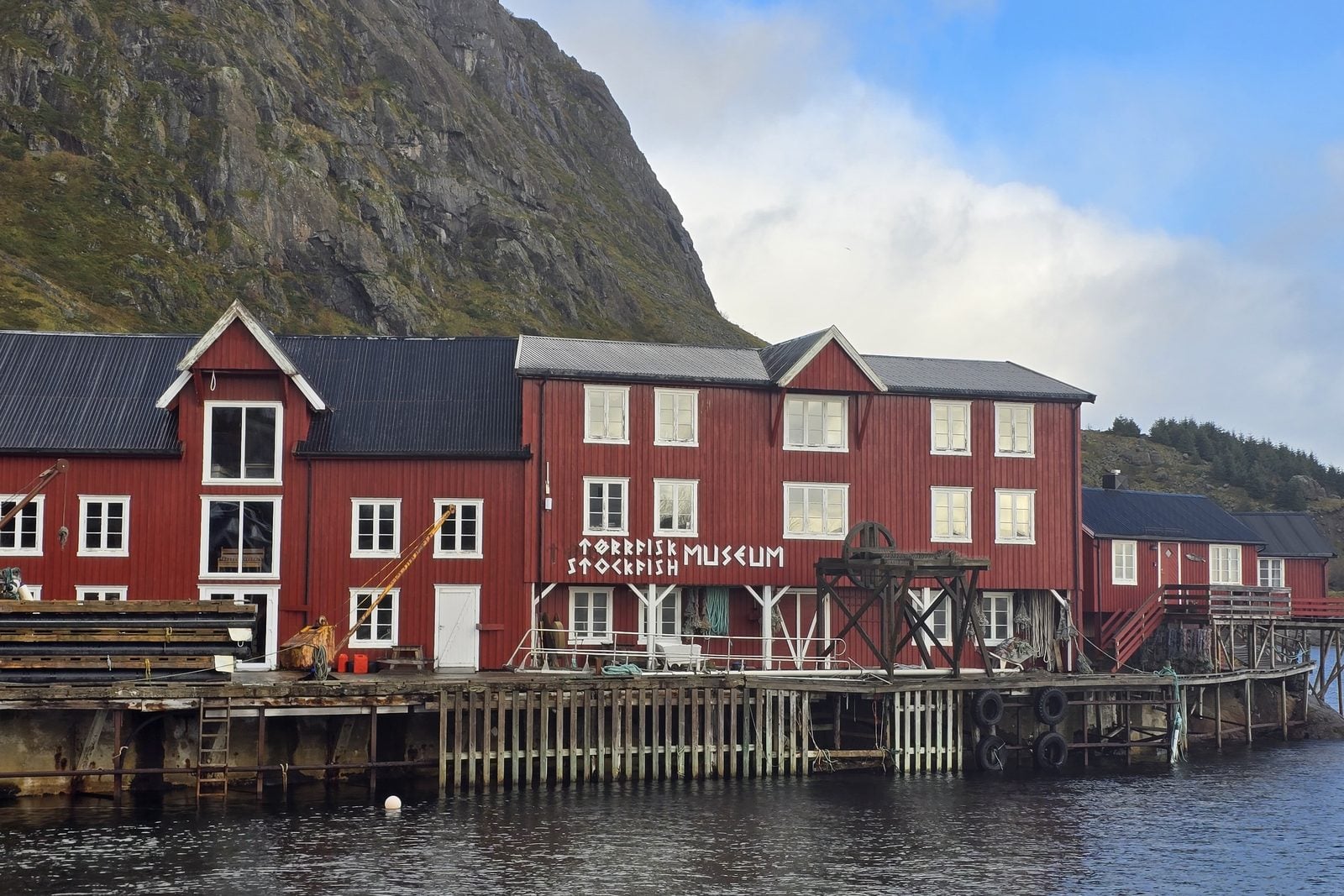
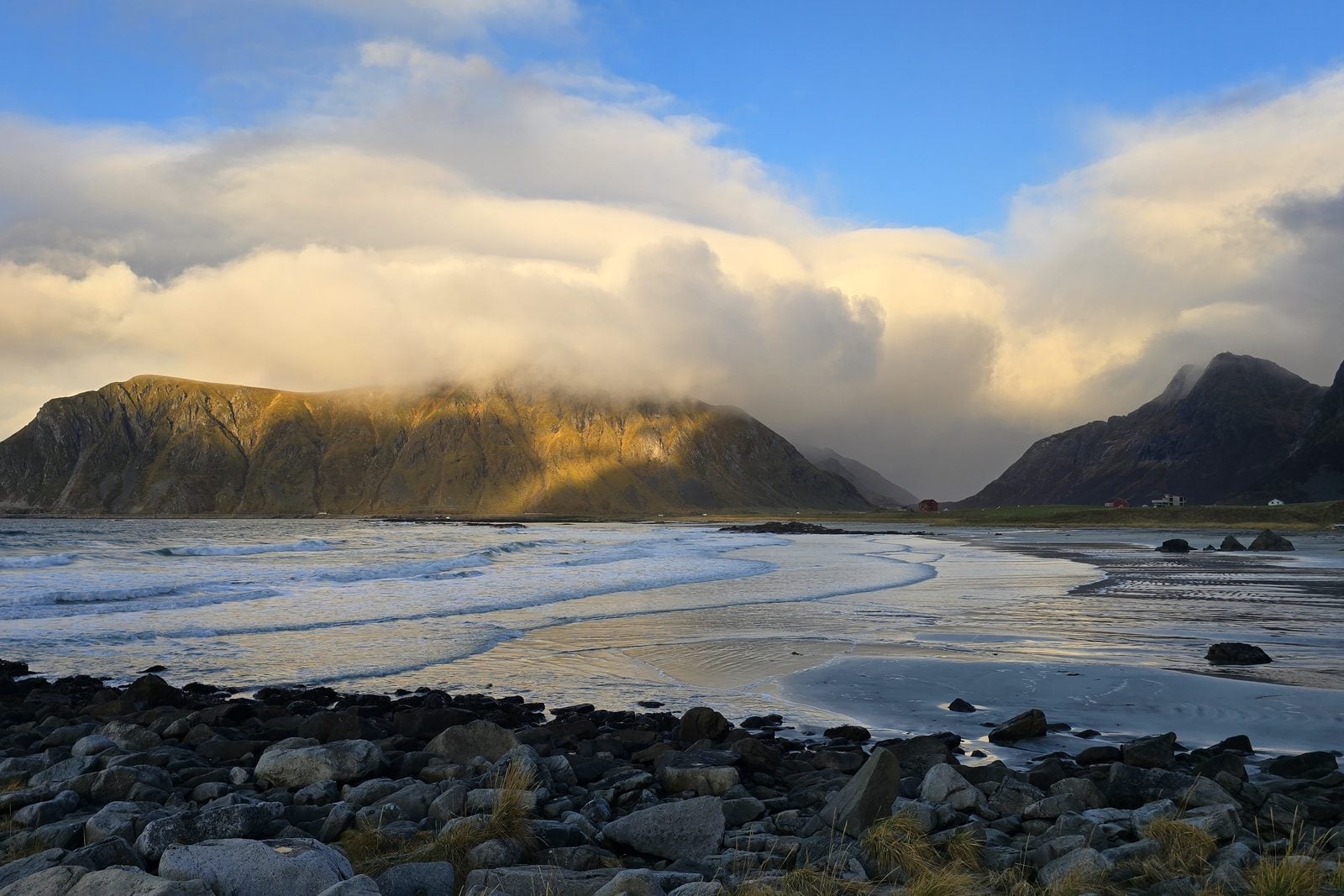
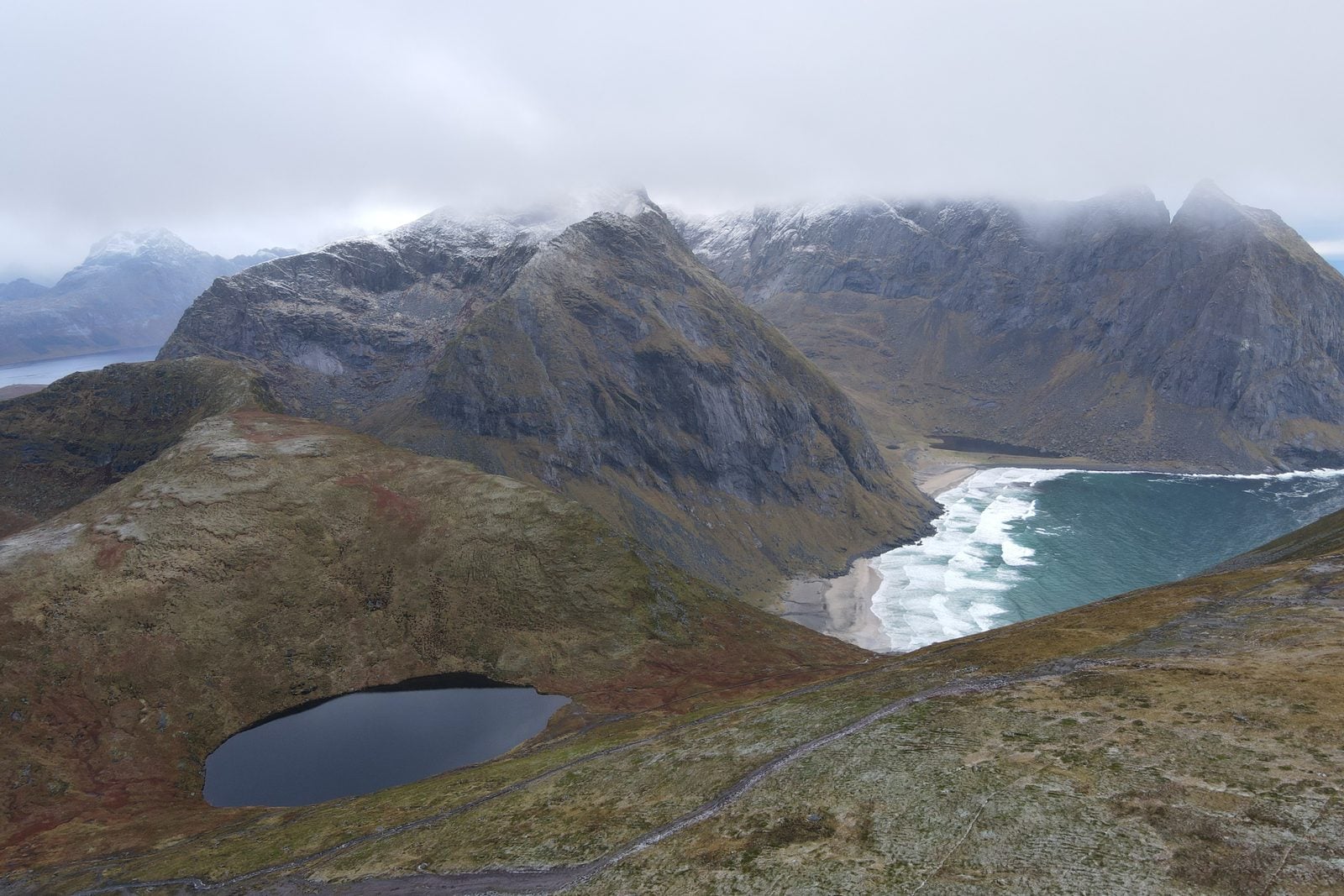
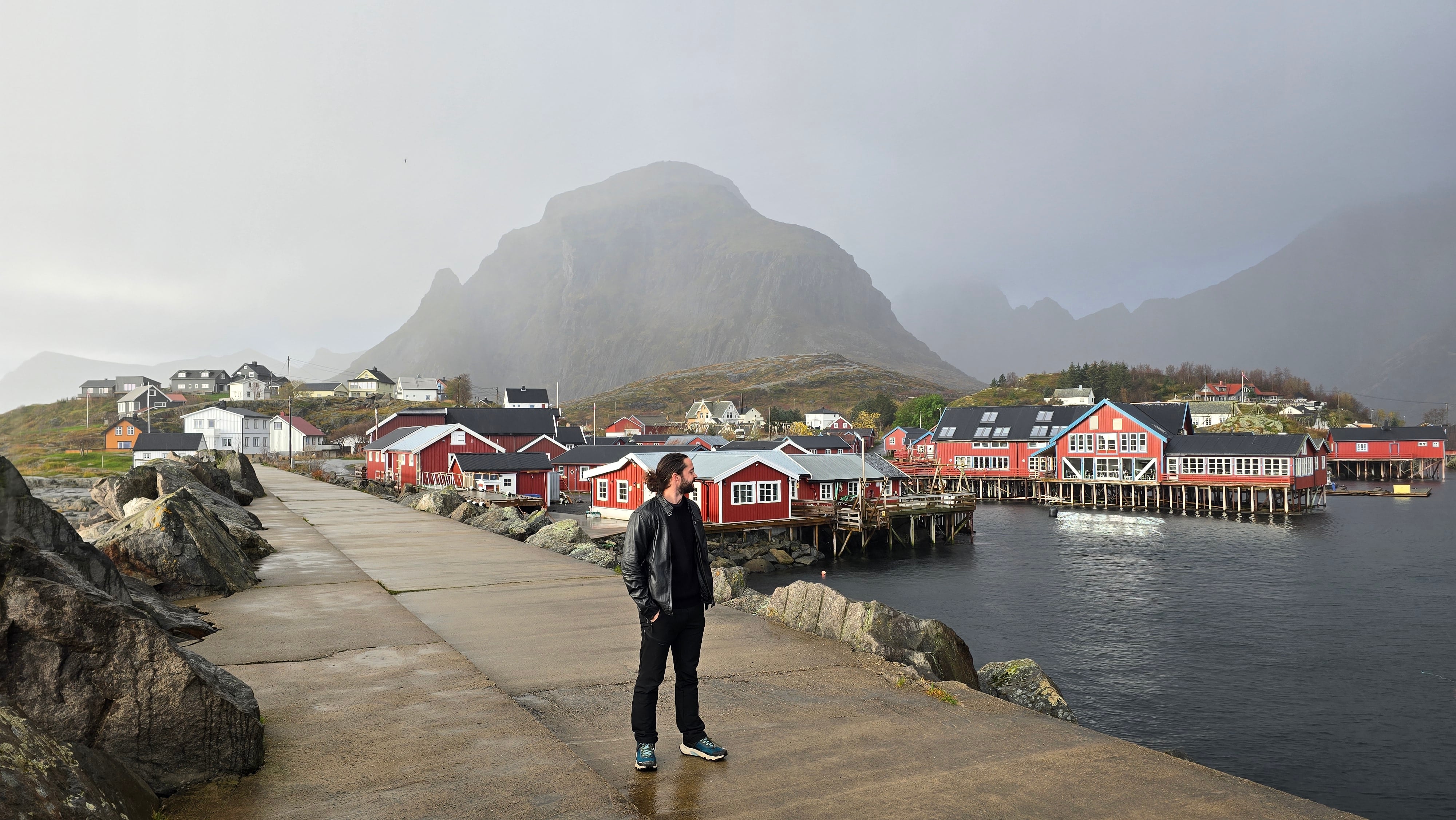
From Bodø you can take the ferry to the Lofoten archipelago, saving a very long drive.
Money-saving tip: if you take the Bodø-Værøy ferry, and then Værøy-Moskenes, you can get to the Lofoten for free! While the direct Bodø-Moskenes costs over 100 euros, the two single legs are free! Værøy is a tiny but charming little island, worth a day visit 😉
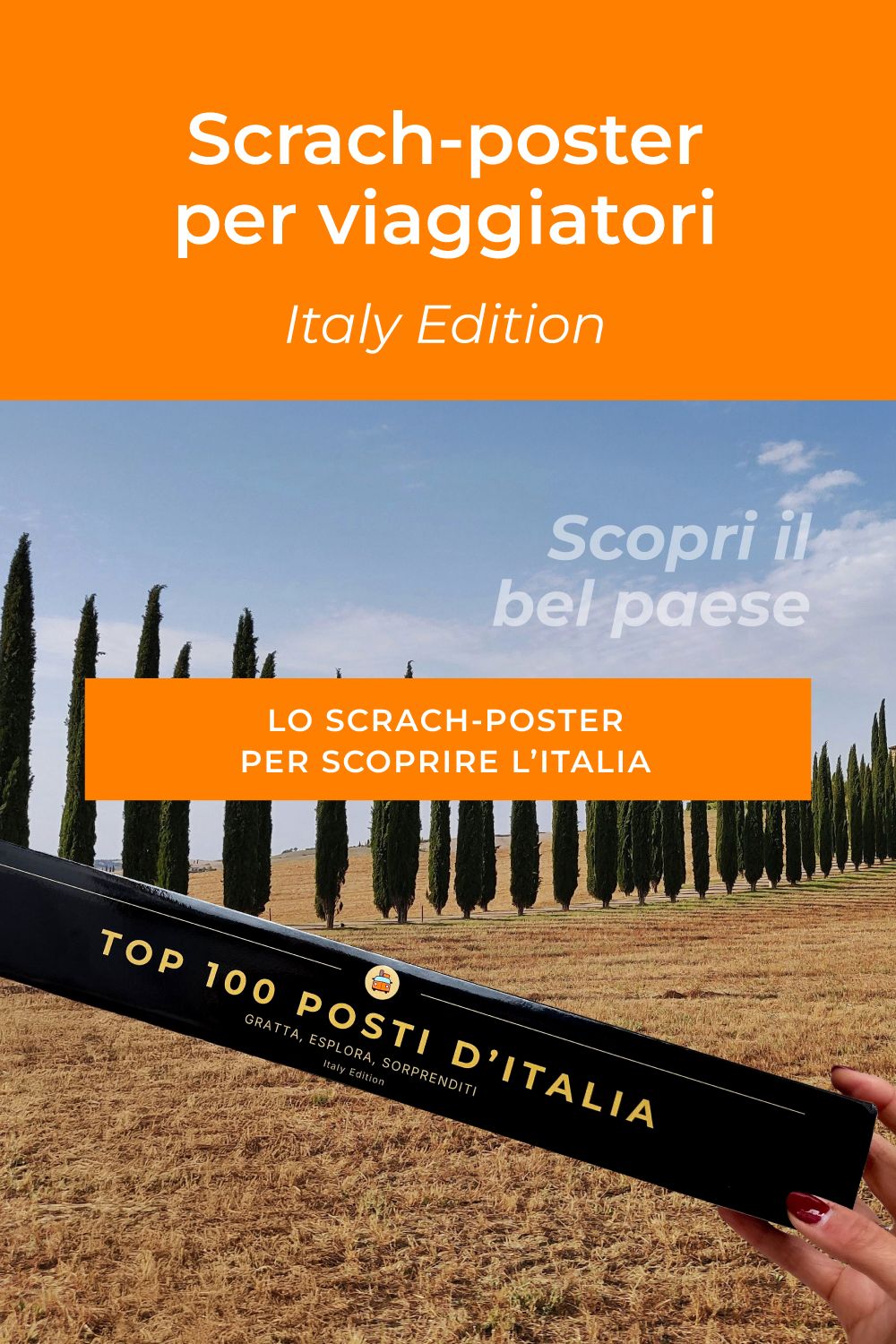
The Lofoten are an incredible place: so much so that we put them in our scratch map of the 100 most beautiful places in the world!
Here you’ll find practically everything: mountains, picturesque little villages perched among the rocks, beaches, coastal roads, hiking trails in the most untouched nature and scenic bridges!
In autumn, in our opinion, 3-4 days are enough to tour them by campervan, starting from “Å” (that’s the curious name of the southernmost village in the Lofoten) and heading north.
If it had been summer, we’d probably have stayed a month! eheheh
11. Tromsø
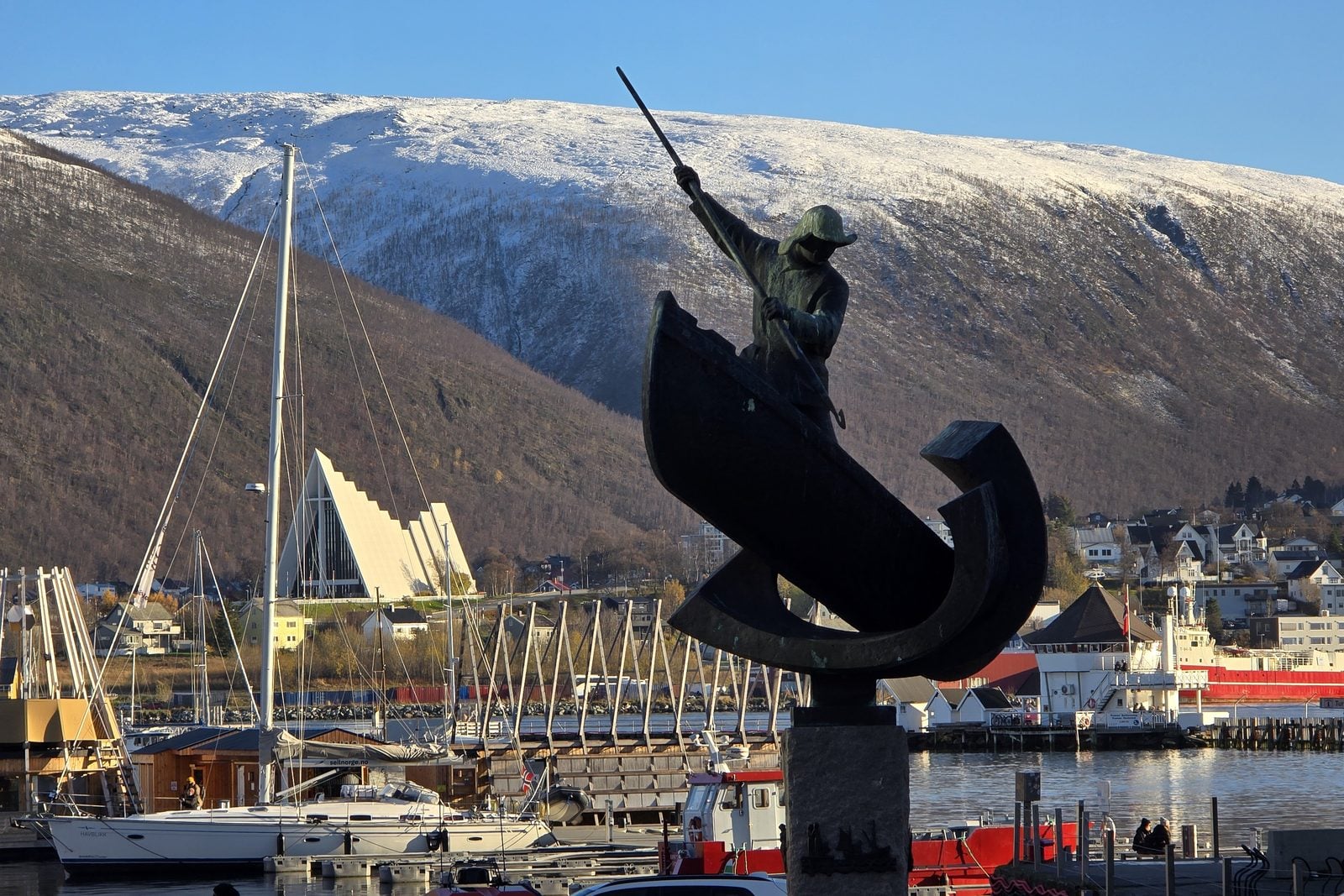
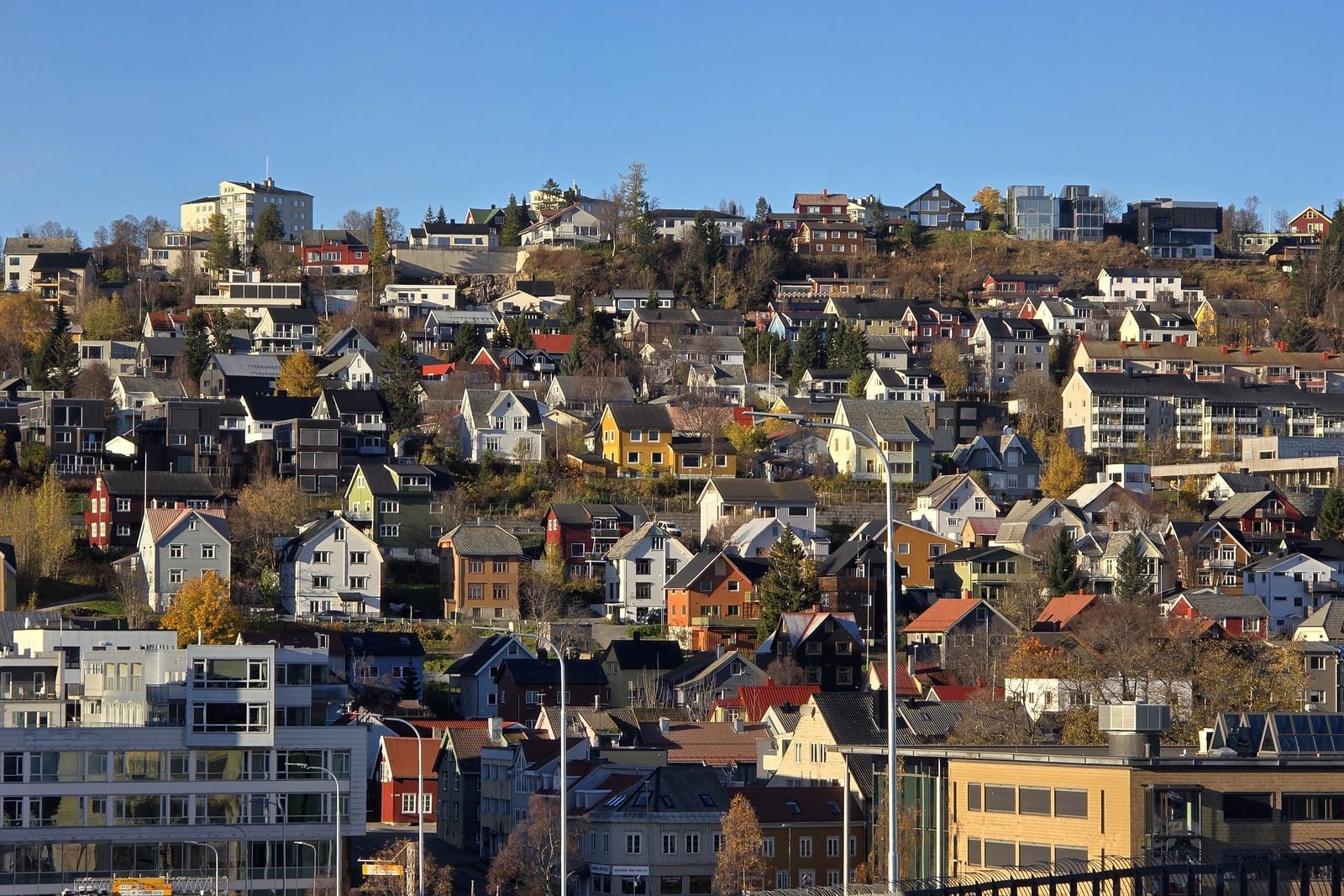
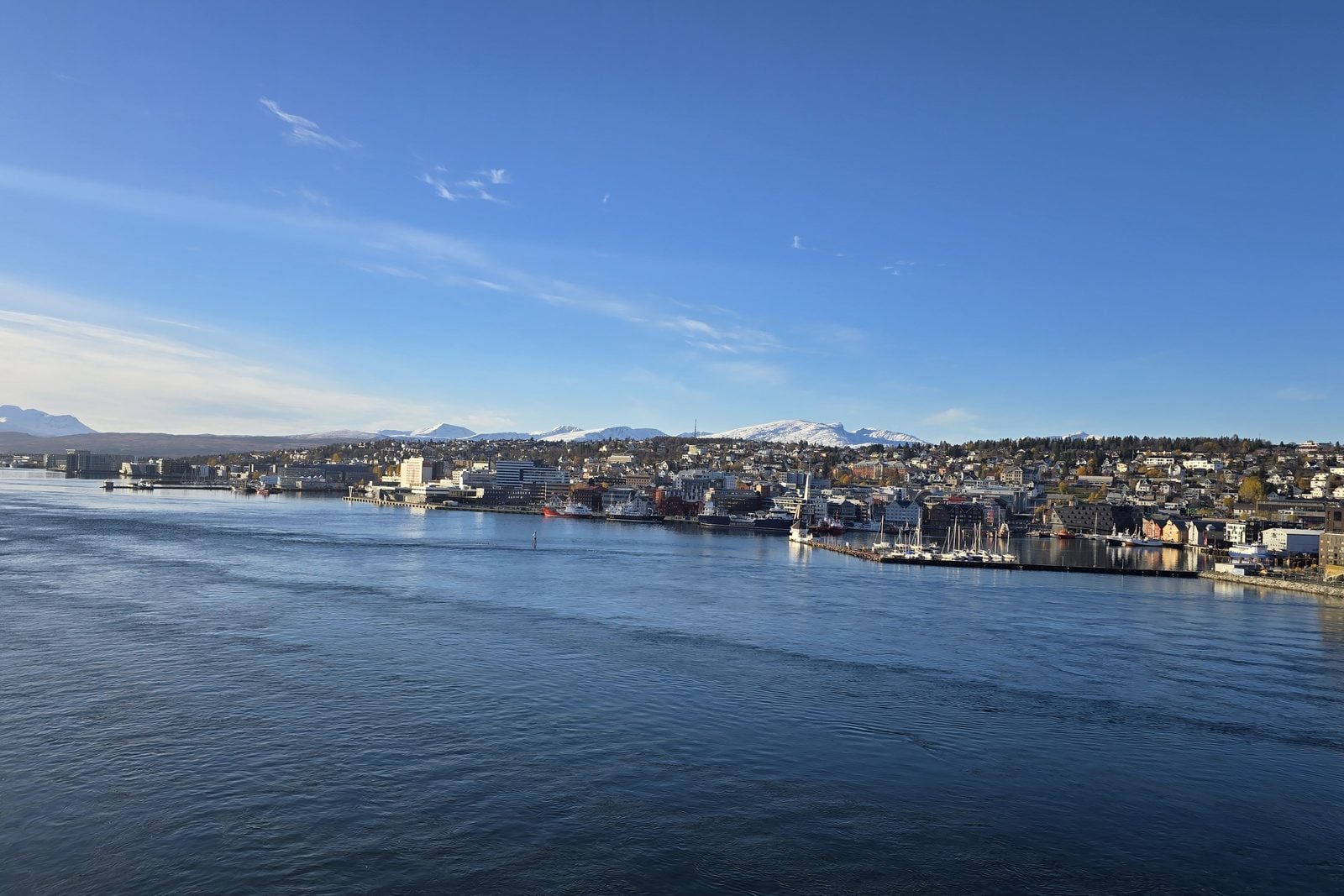
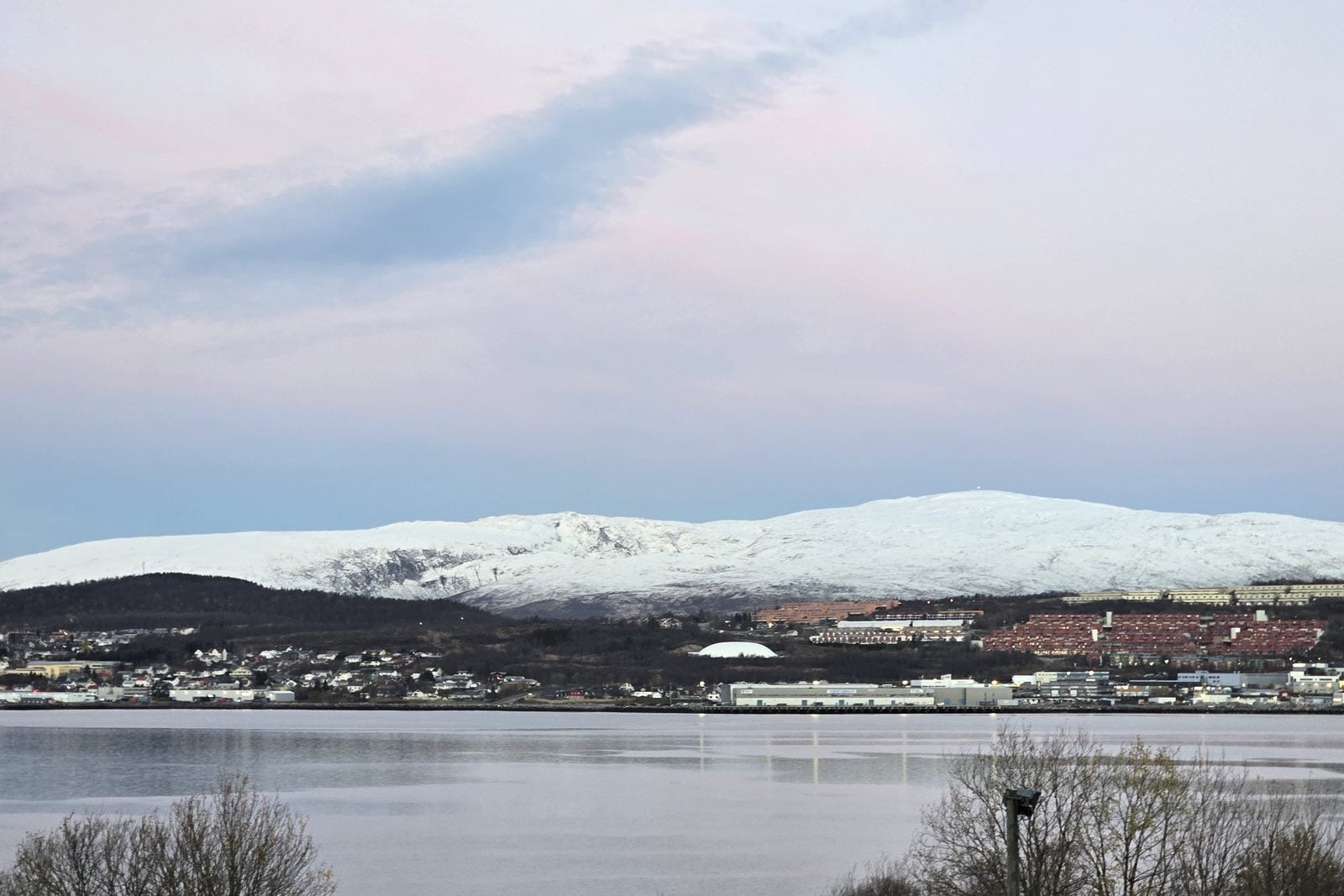
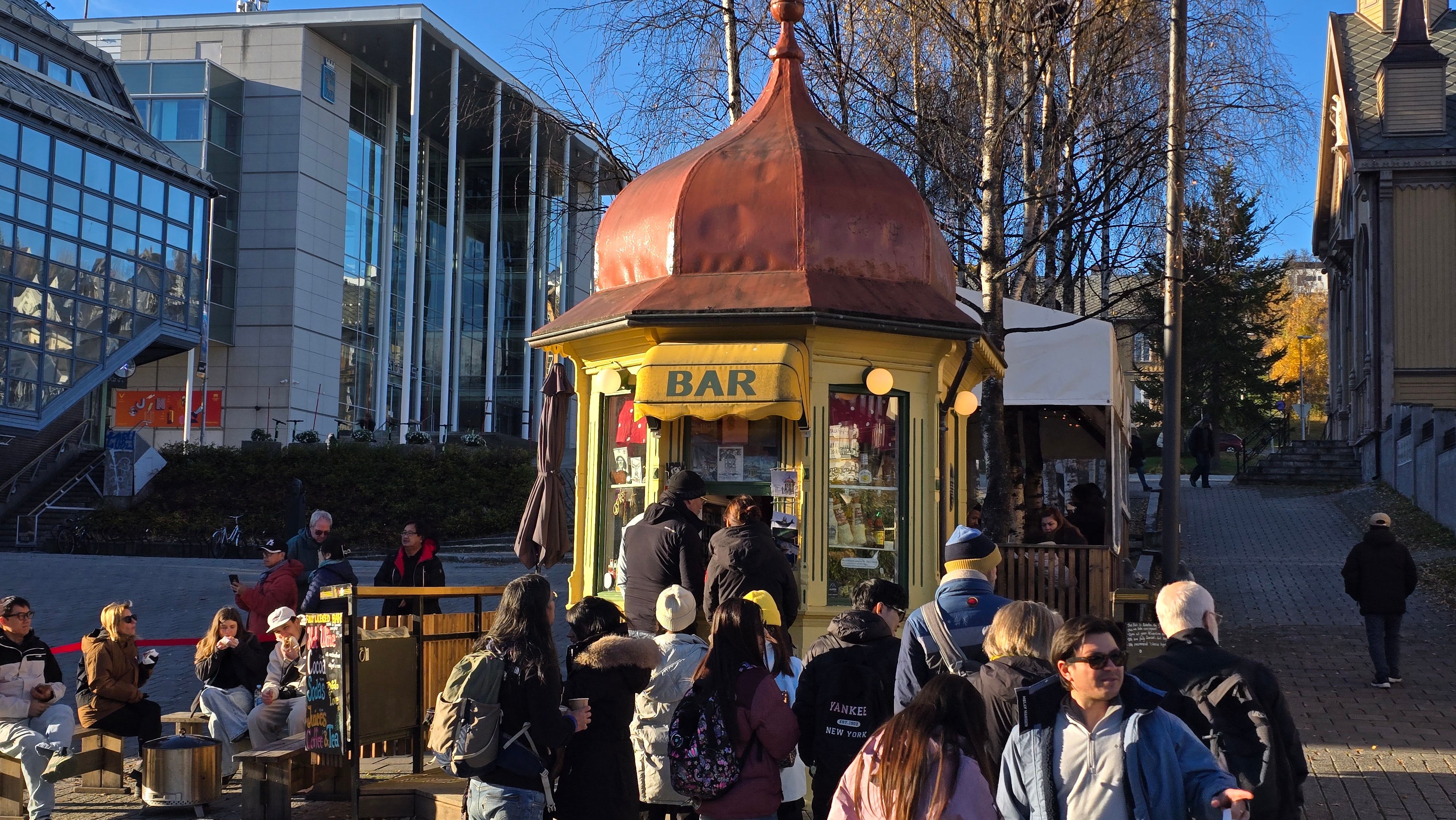
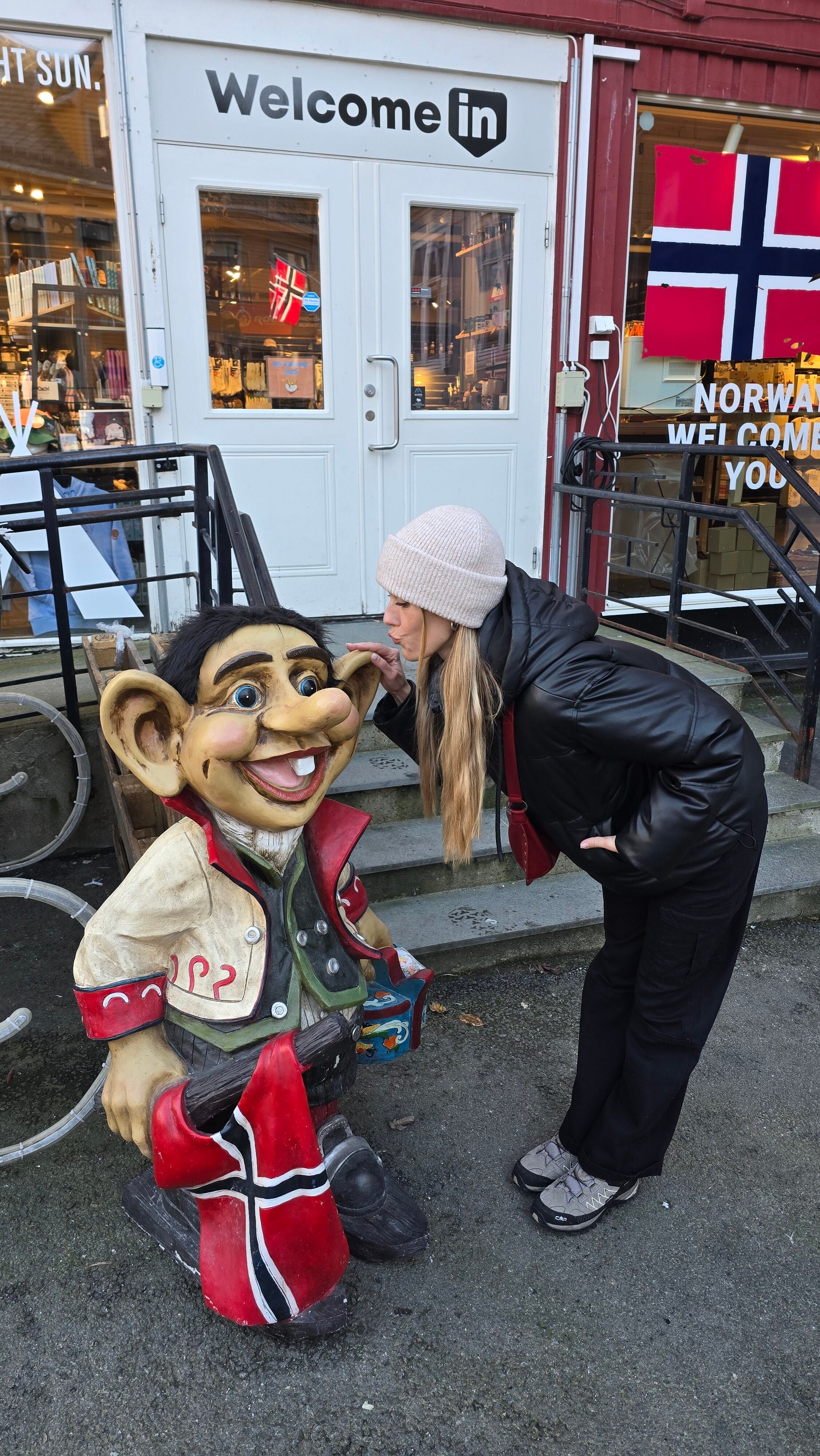
A city built on a small island, surrounded by mountains that were already covered in snow when we arrived, while the city wasn’t yet.
The view is very beautiful, there’s a bridge that takes about 20 minutes to cross on foot and the famous triangular Arctic Cathedral.
In our opinion it’s a nice city to stop for a couple of days and get ready for the last stretch.
PS. Watch out for the many trolls you’ll find on the streets! 😉
12. North Cape
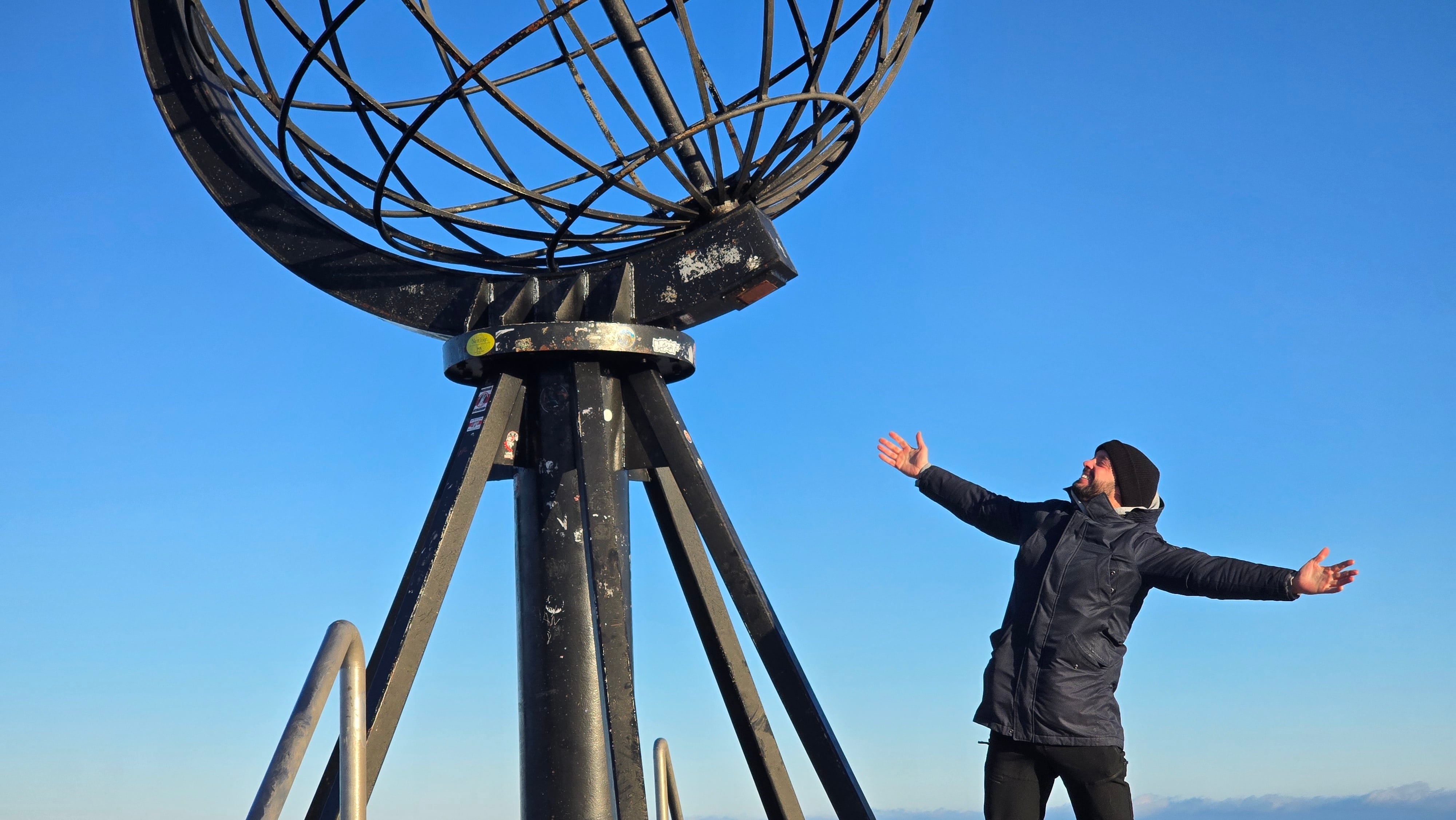
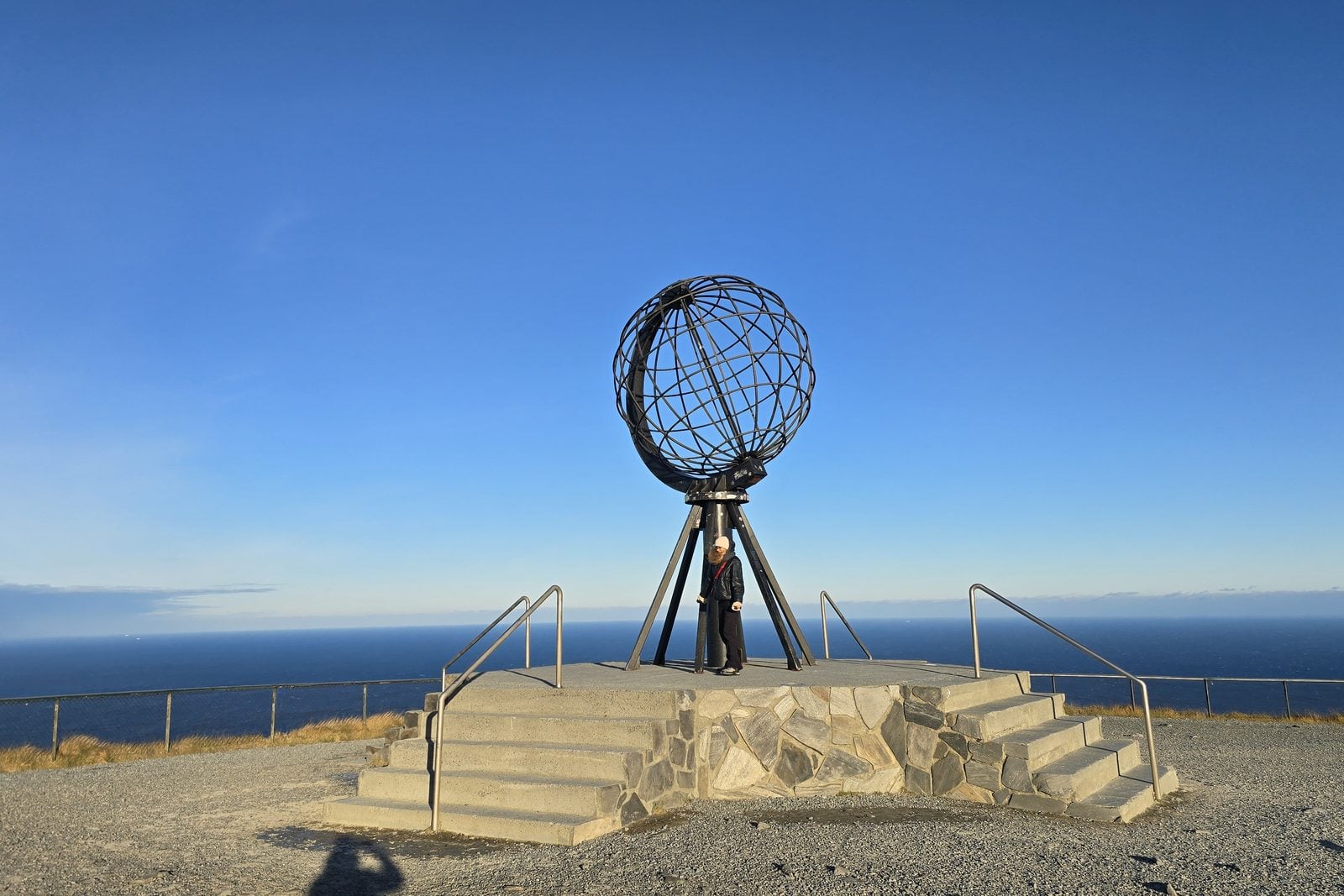
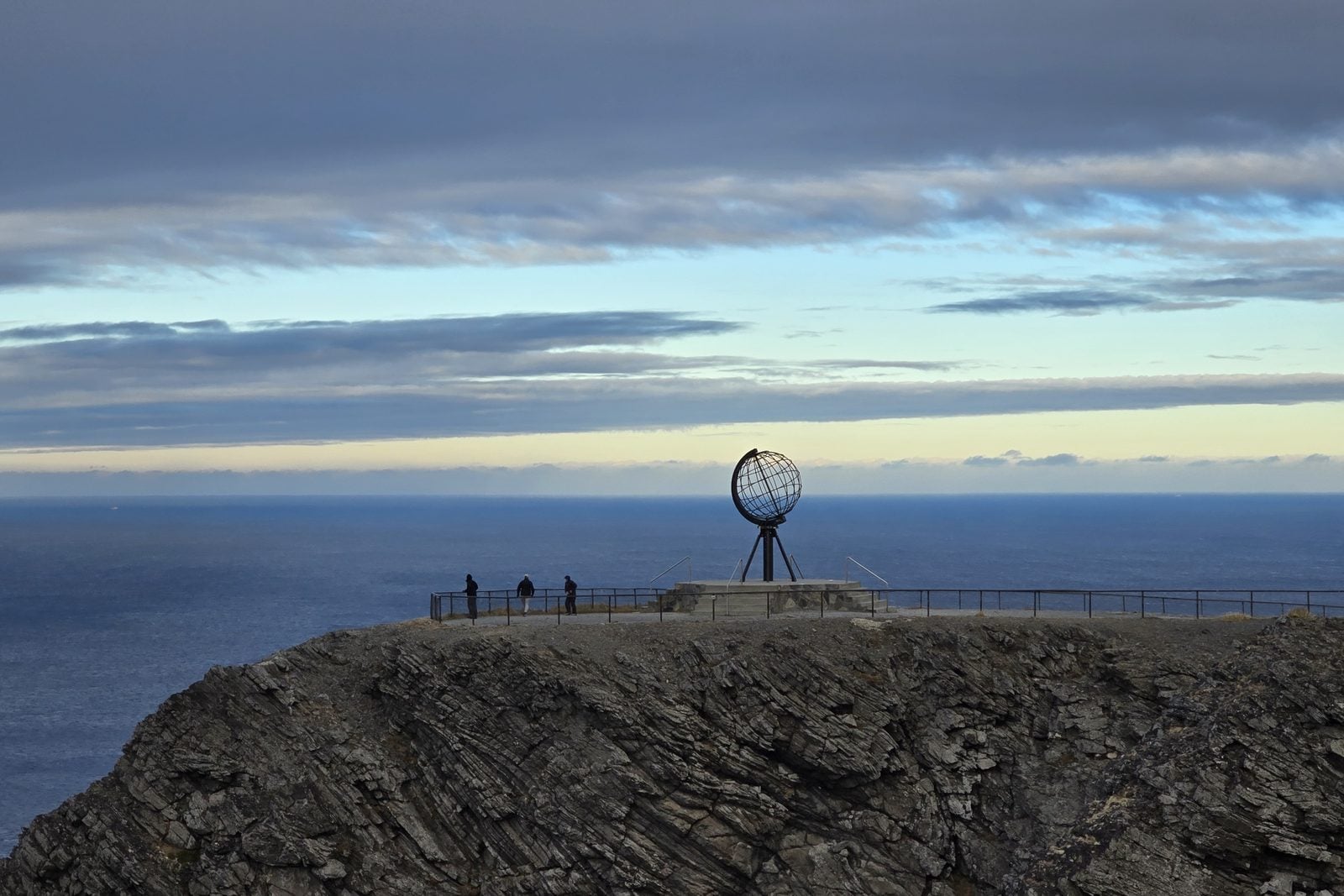
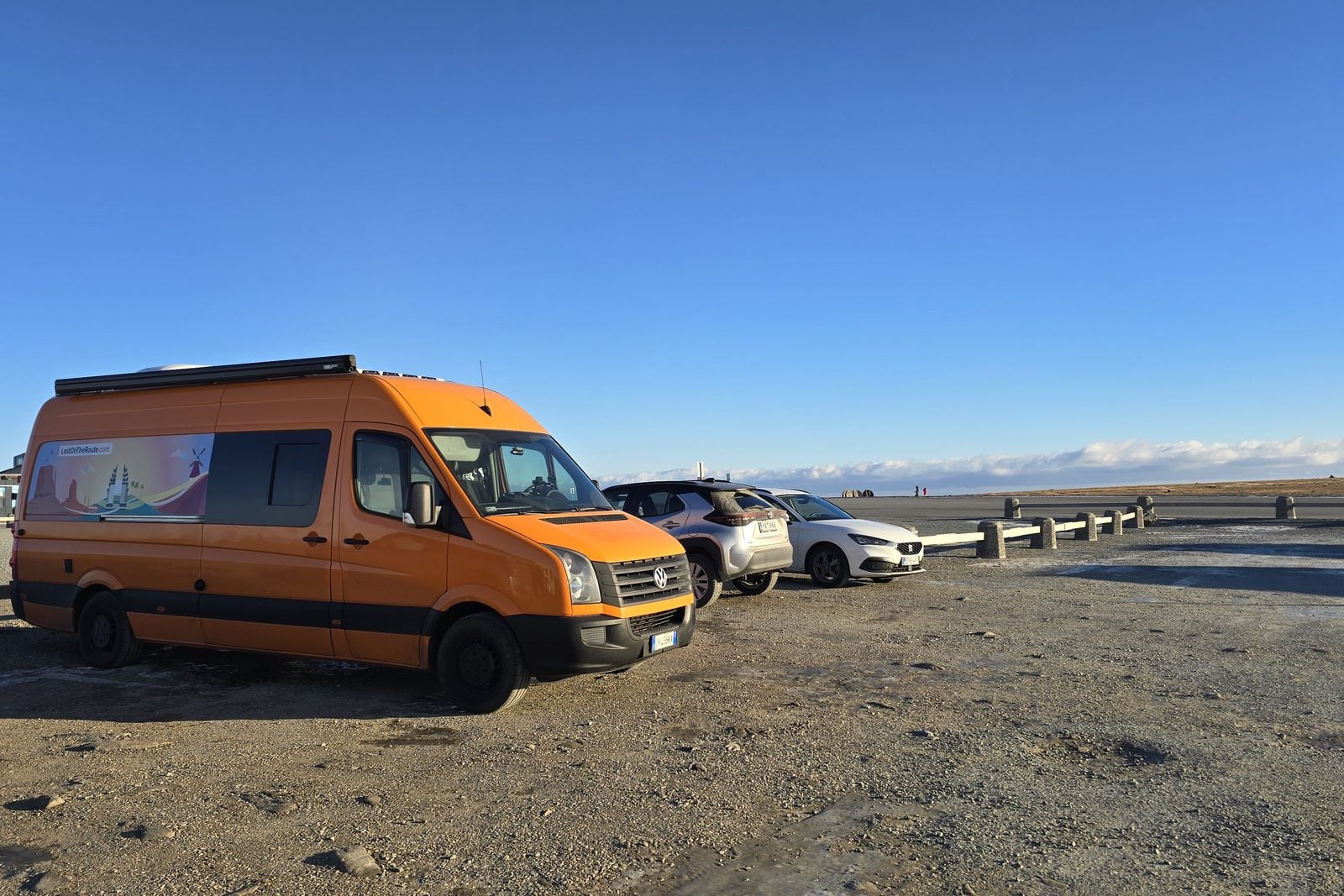
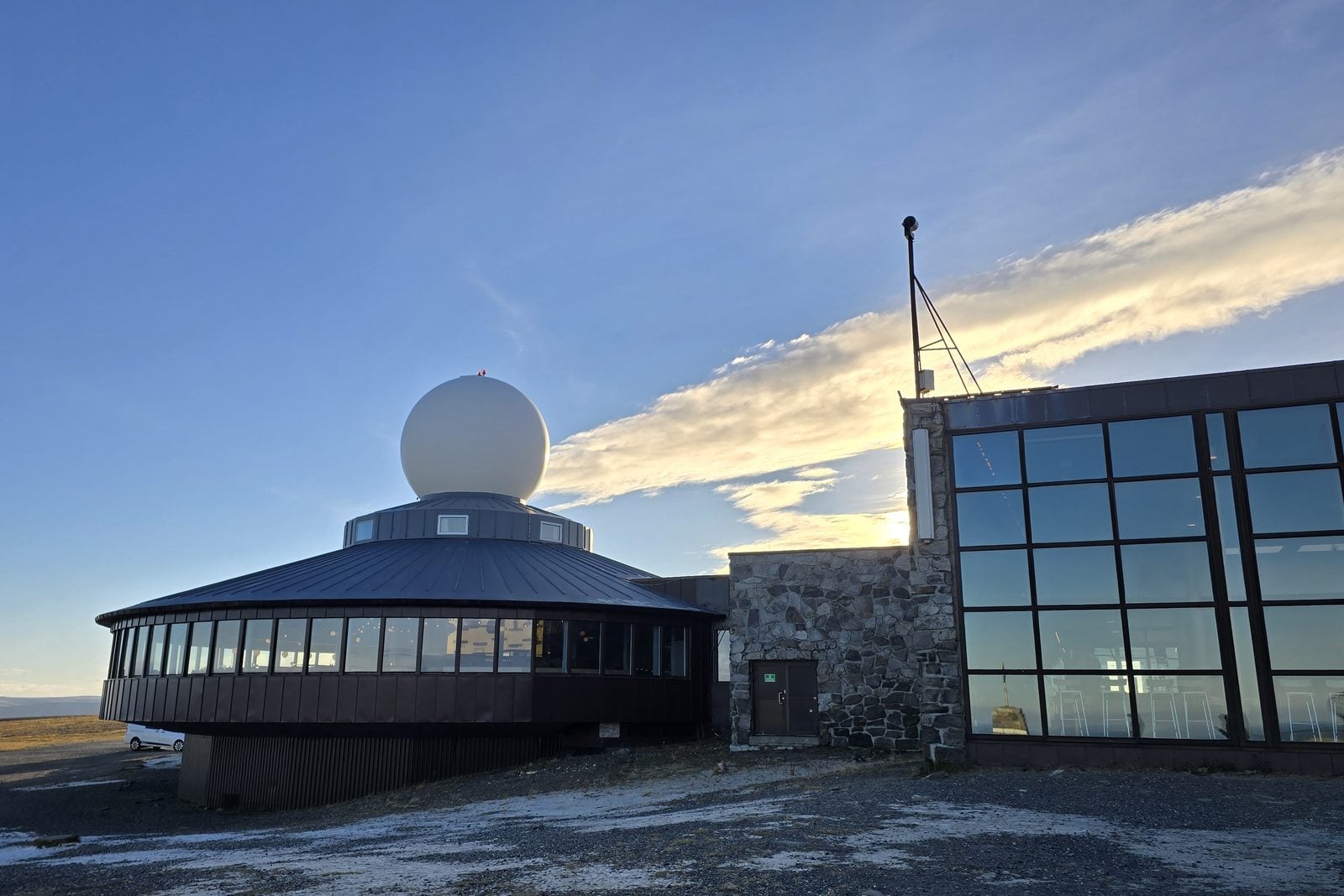
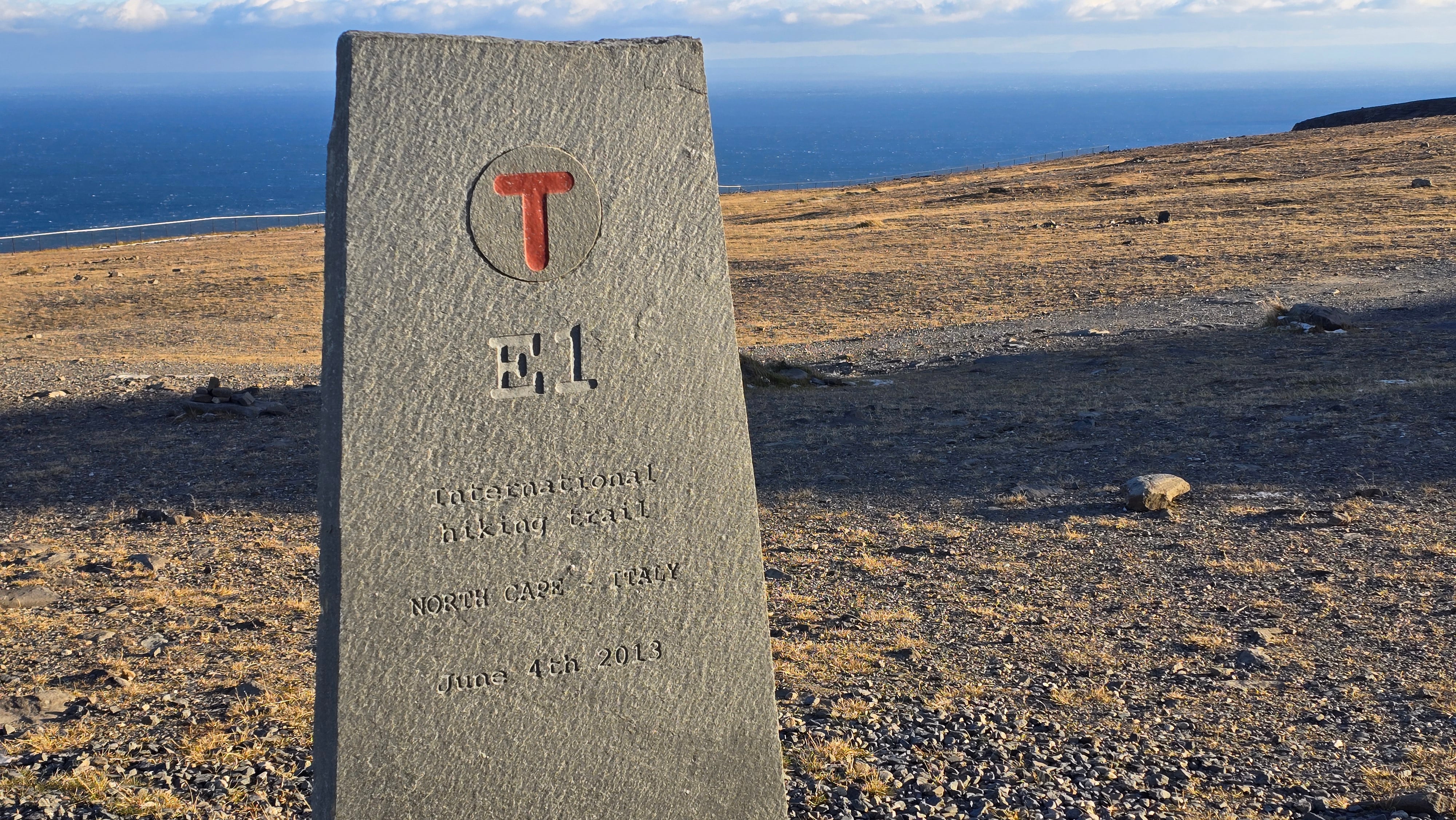
From Tromsø you cross the Arctic region to Alta and then on to the North Cape: from Tromsø it still takes about 7-8 hours of driving.
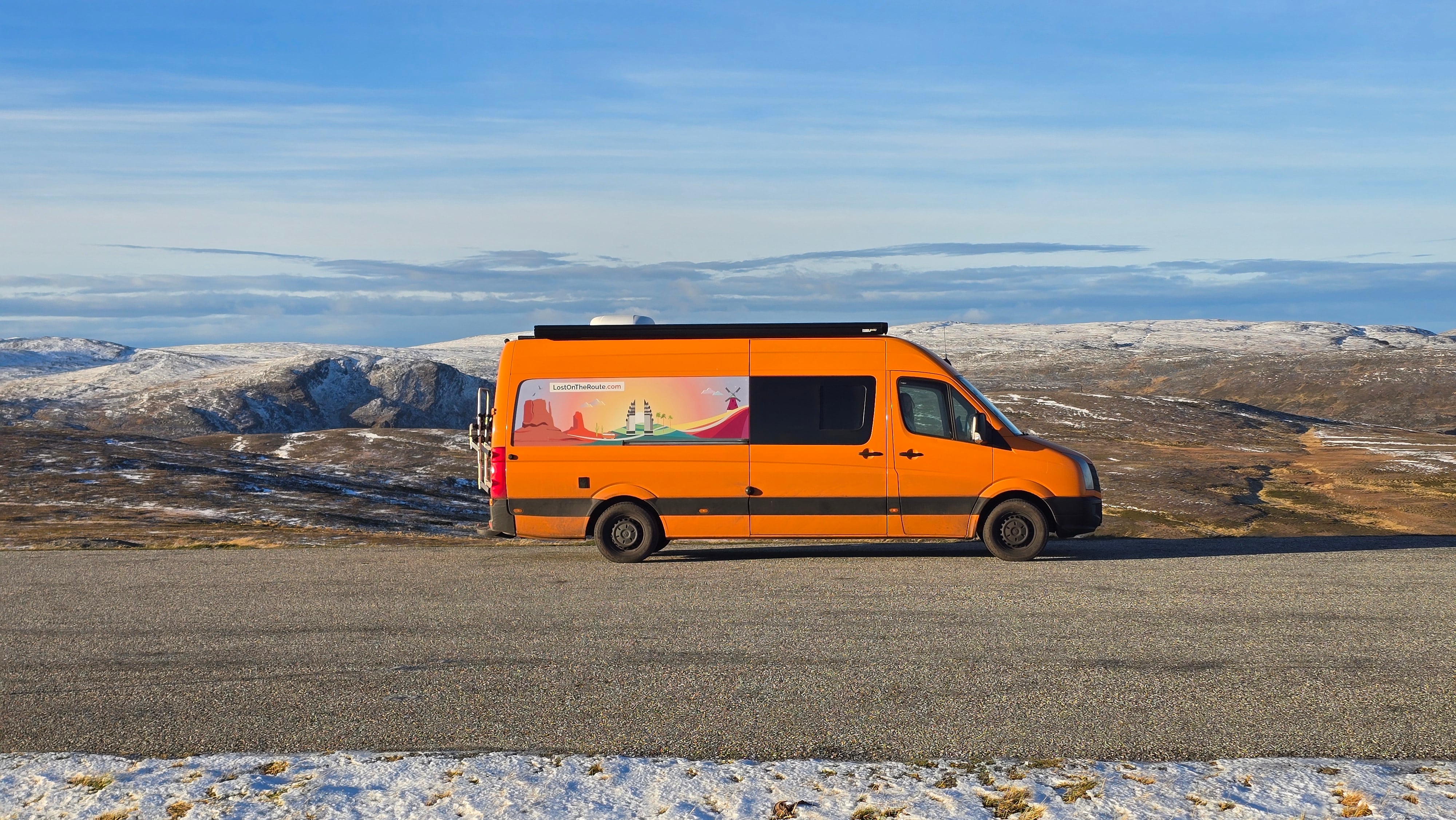
When we drove through, between 5 and 12 October, in some places there was already snow and icy road: no chains needed, but you need to drive carefully.
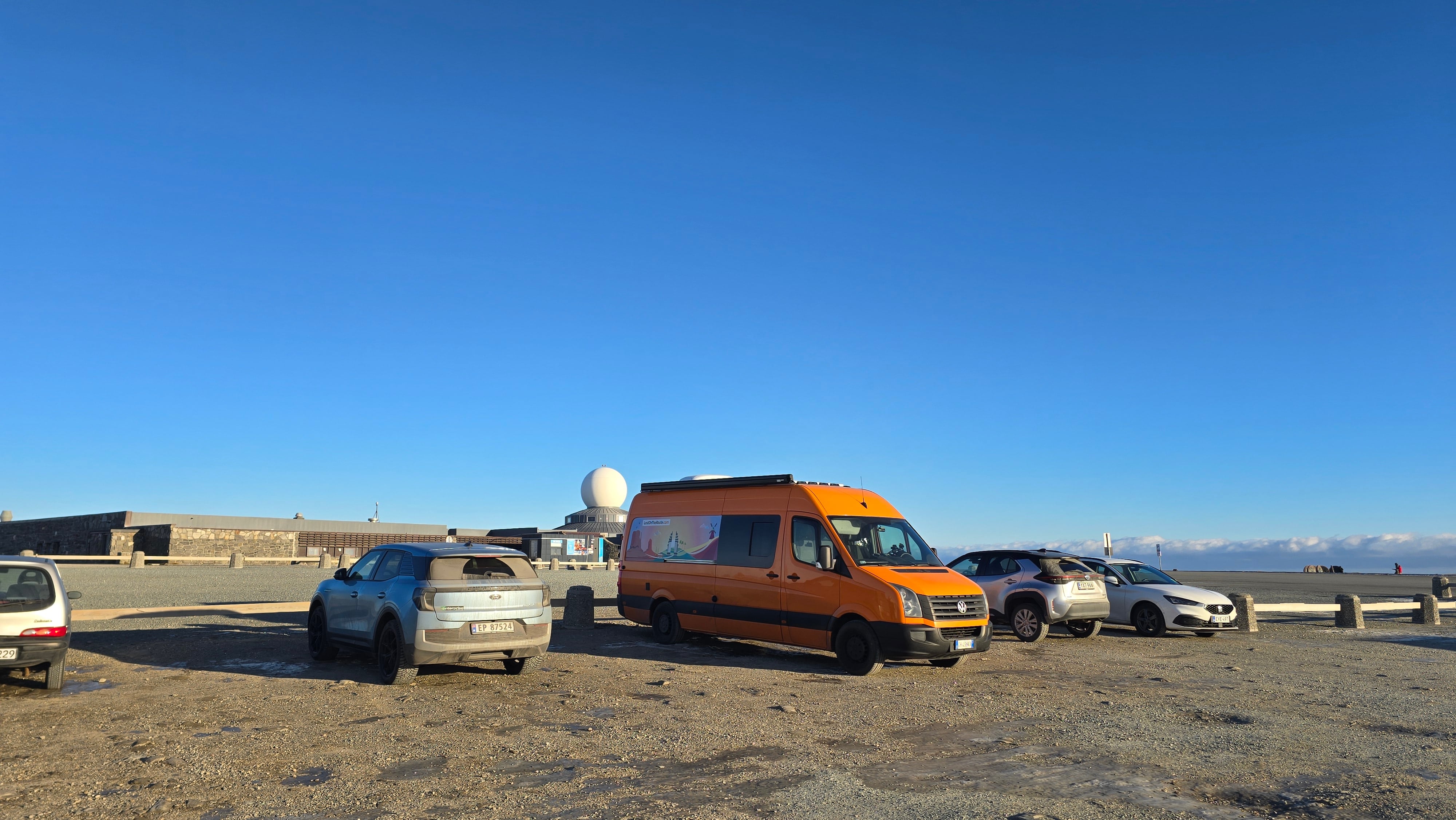
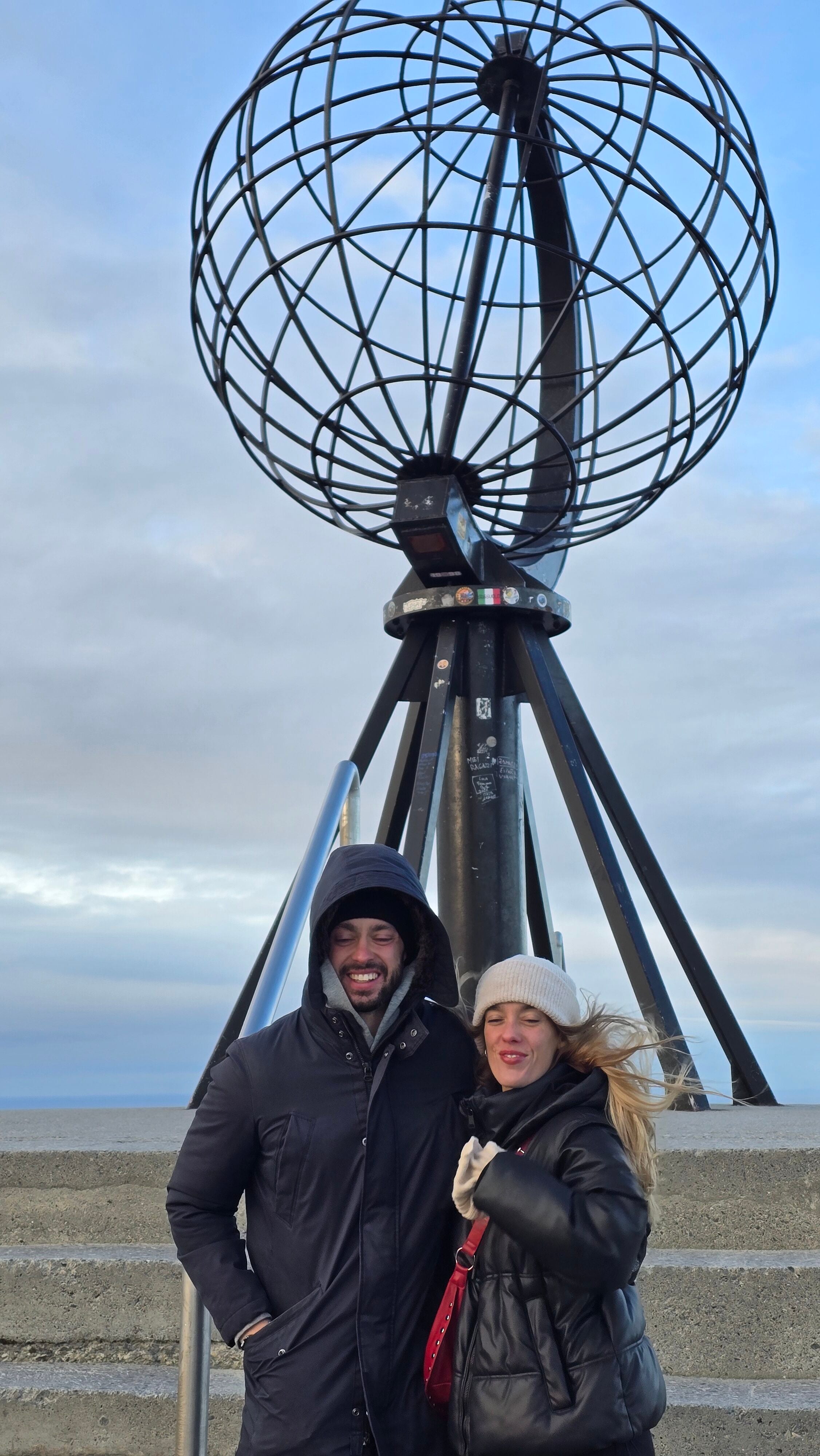
The North Cape is the northernmost point in Europe: there’s the monument, a small café with a souvenir shop and a car park where you can stay for free for 6 hours. Nothing else.
We found it extremely windy: there was so much wind that we could barely close the van door.
Scenically there isn’t a lot to see: in autumn 2-3 hours are enough, but it’s a very strong emotion after the whole trip and the hours it takes to get all the way up here.
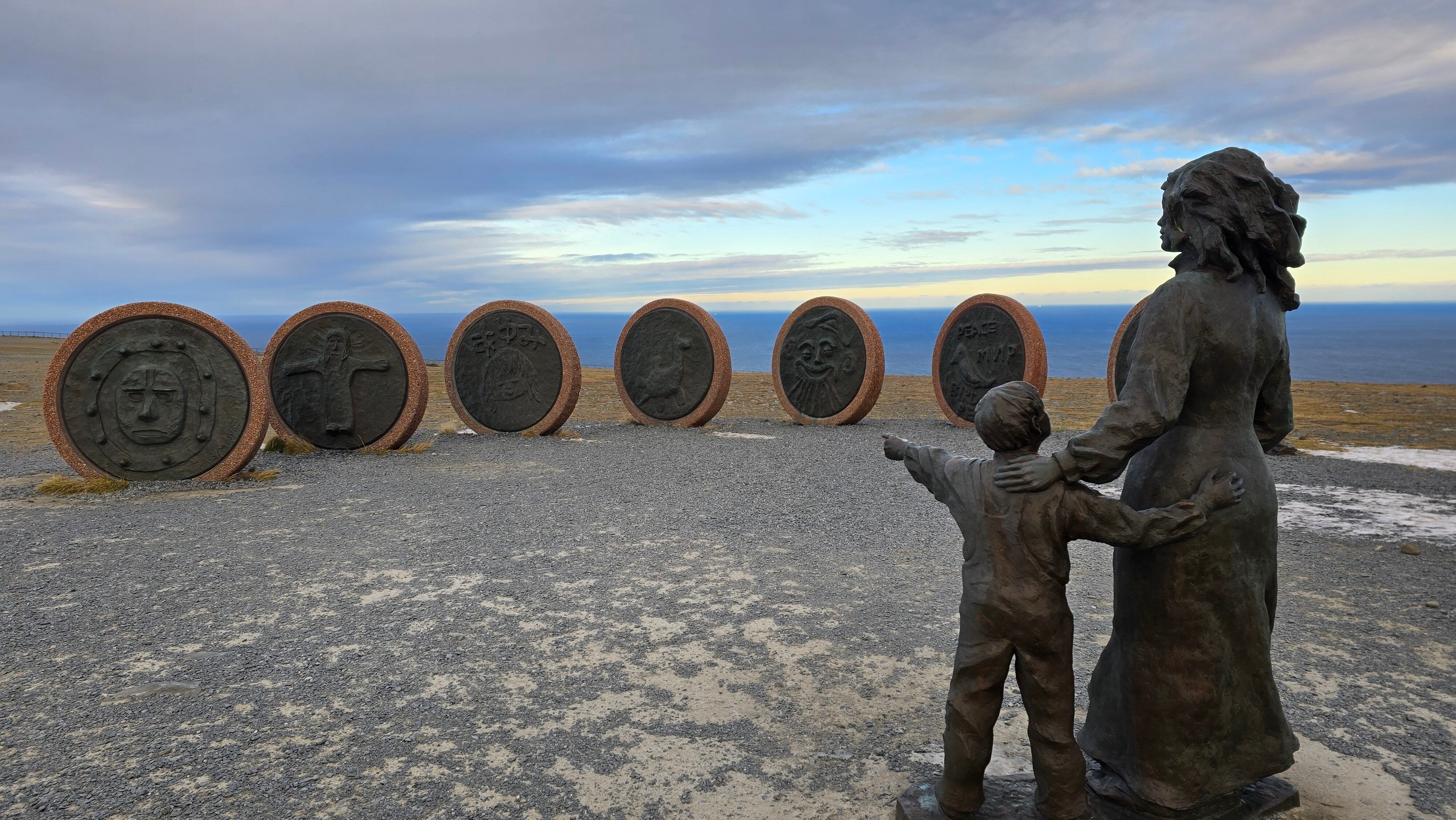
There’s also another interesting monument: coins designed in the ’80s by children from different continents, symbolising friendship and peace between peoples.
6. Overnight Stay and Parking Rules
Norway is a little paradise for campervans: unless it’s expressly forbidden, you can park anywhere.
And not just park: if you’re more than 200 m from inhabited houses or cabins you can also camp, so take out your table and chairs, those “absolute crimes” that cause a scandal back home and here don’t bother anyone.
Summer is probably a bit busier, but in autumn it almost felt like being alone: most nights we slept without a living soul around!
Note: in nature (that is, almost everywhere), parking is super easy. In cities, though, parking a campervan can be very expensive (even 5-10 euros/hour), so always check Park4Night to plan your stops 😉
The rules to remember
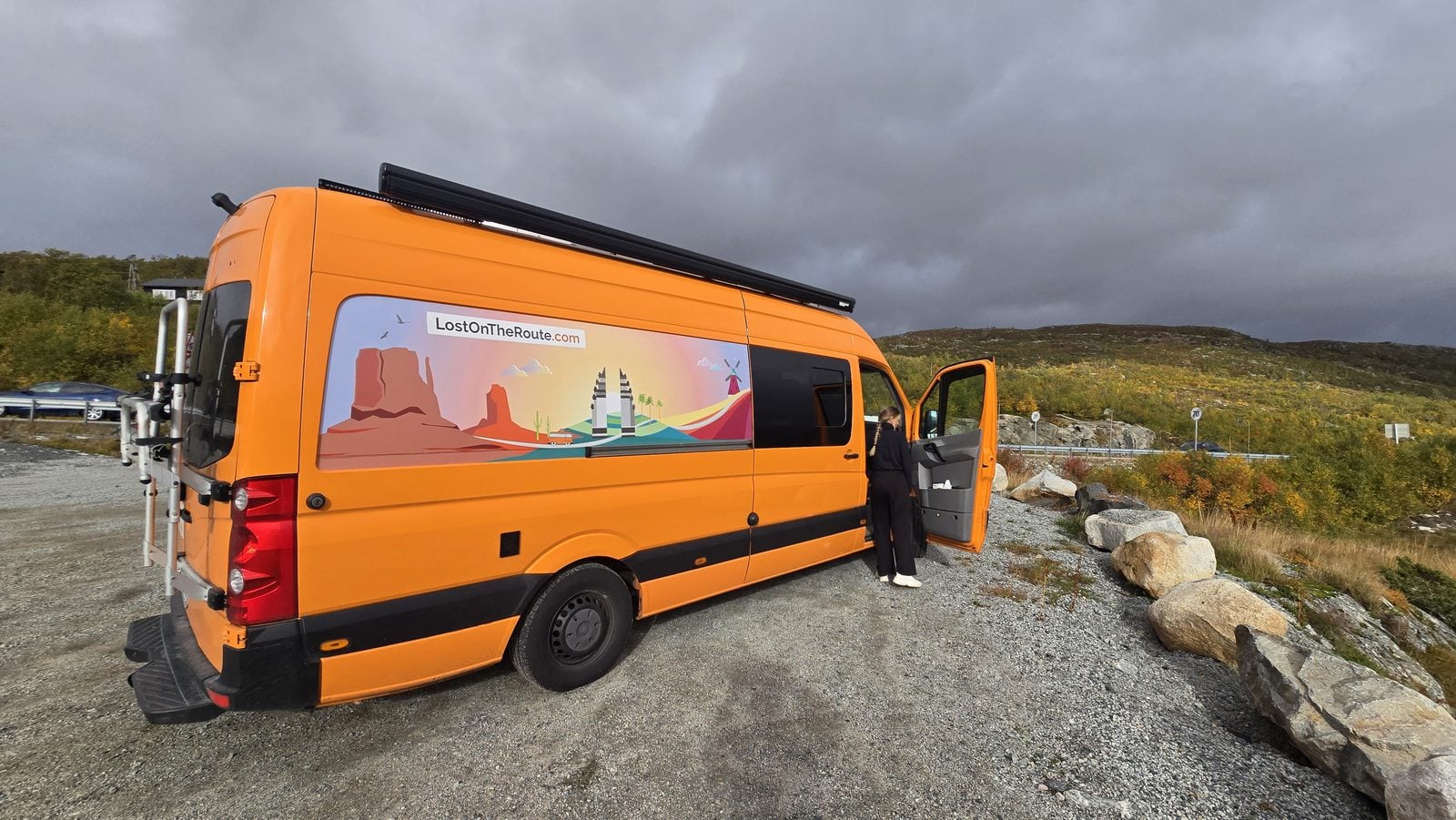
- Normally you can camp for a maximum of two nights in the same spot, unless the owner agrees: on private land, if they allow it, you can stay even longer (note: in the vast majority of places nobody checks, so it works on trust!).
- From 16 September to 14 April you can light fires, as long as they’re safe: a ring of stones around them and some water at hand to put them out. Autumn is TOP if you like barbecues!
- All these rules apply unless there are signs that expressly forbid it.
Where to sleep: Park4Night
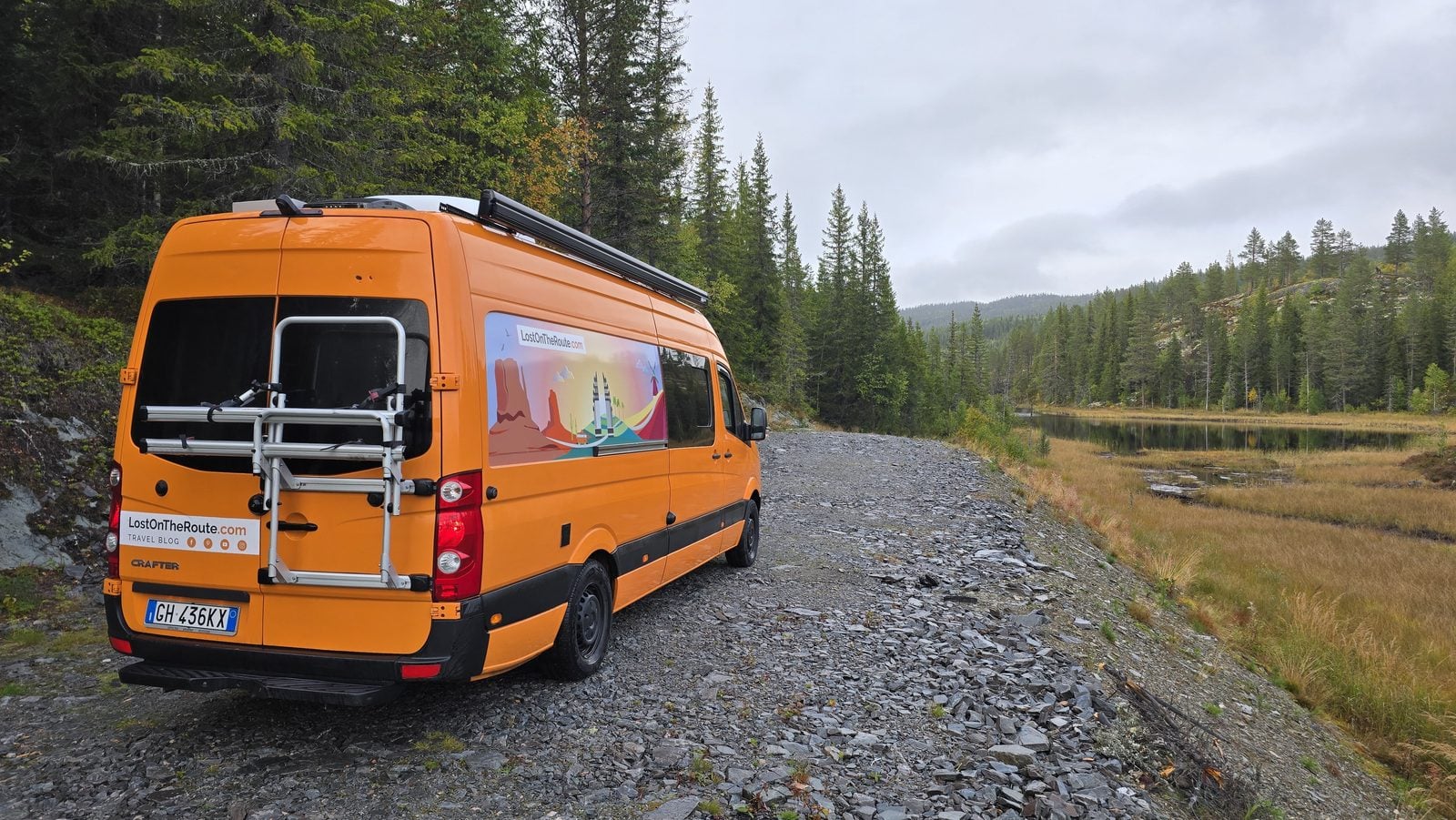
To look for spots, Park4Night is full of wonderful places: just search a little and read the reviews… or improvise wherever inspires you 😉
As for safety, we felt super safe in all the places where we slept.
City parking and EasyPark
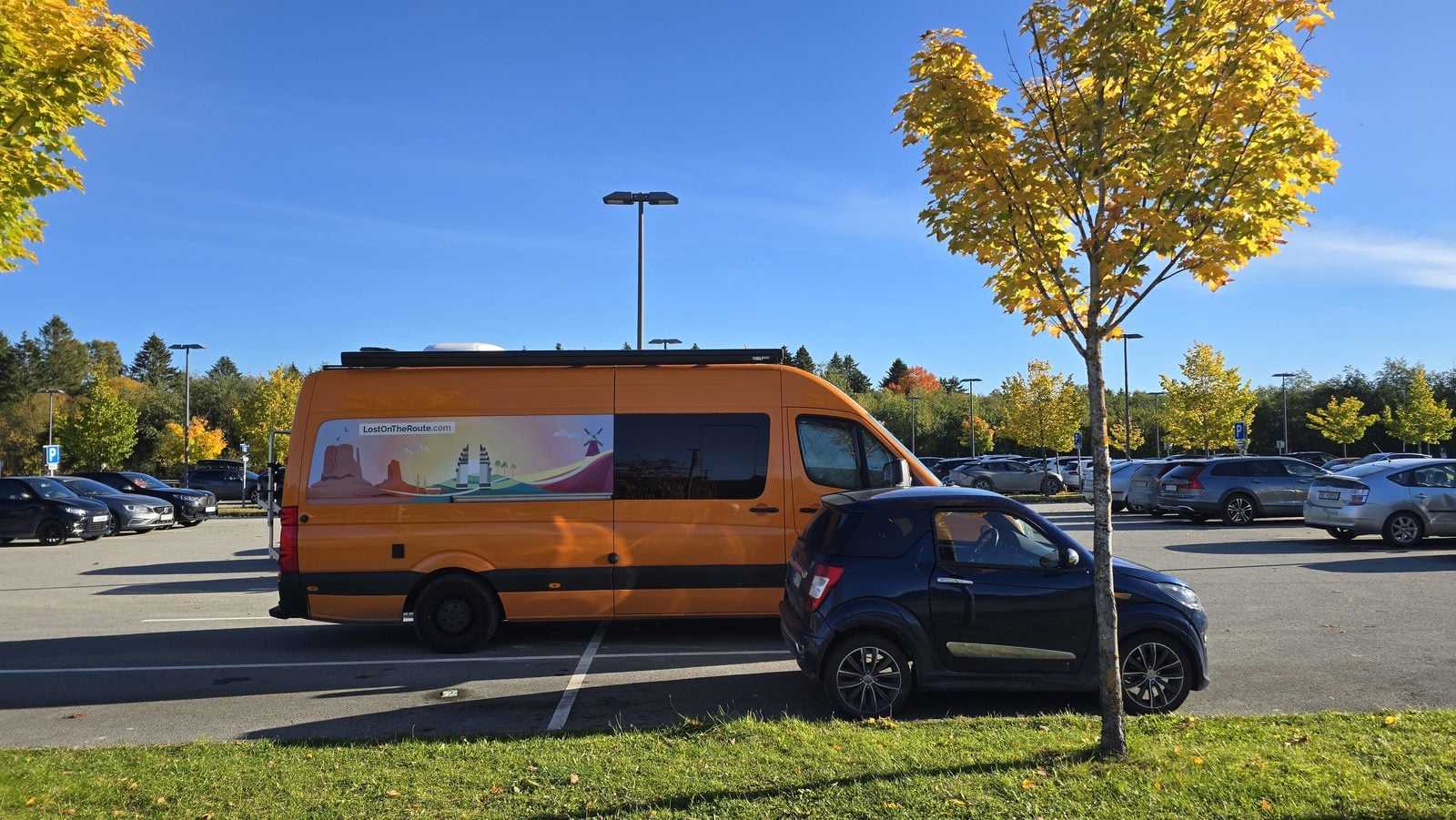
The only car parks you normally pay for, or that cost a bit more, are the ones in cities: often 5, 6, 8, 10 or even 12 euros an hour.
With a bit of planning and some searching on Park4Night, you can pay almost nothing, maybe by parking 20-30 minutes away on foot: we walk a lot, so we actually like it:)
Almost all car parks can be paid with EasyPark: a super handy app where you enter your number plate and start the parking session for as long as you want, with the option to extend it while it’s running or stop it if you leave earlier 🙂
Camping in autumn? It’s cold
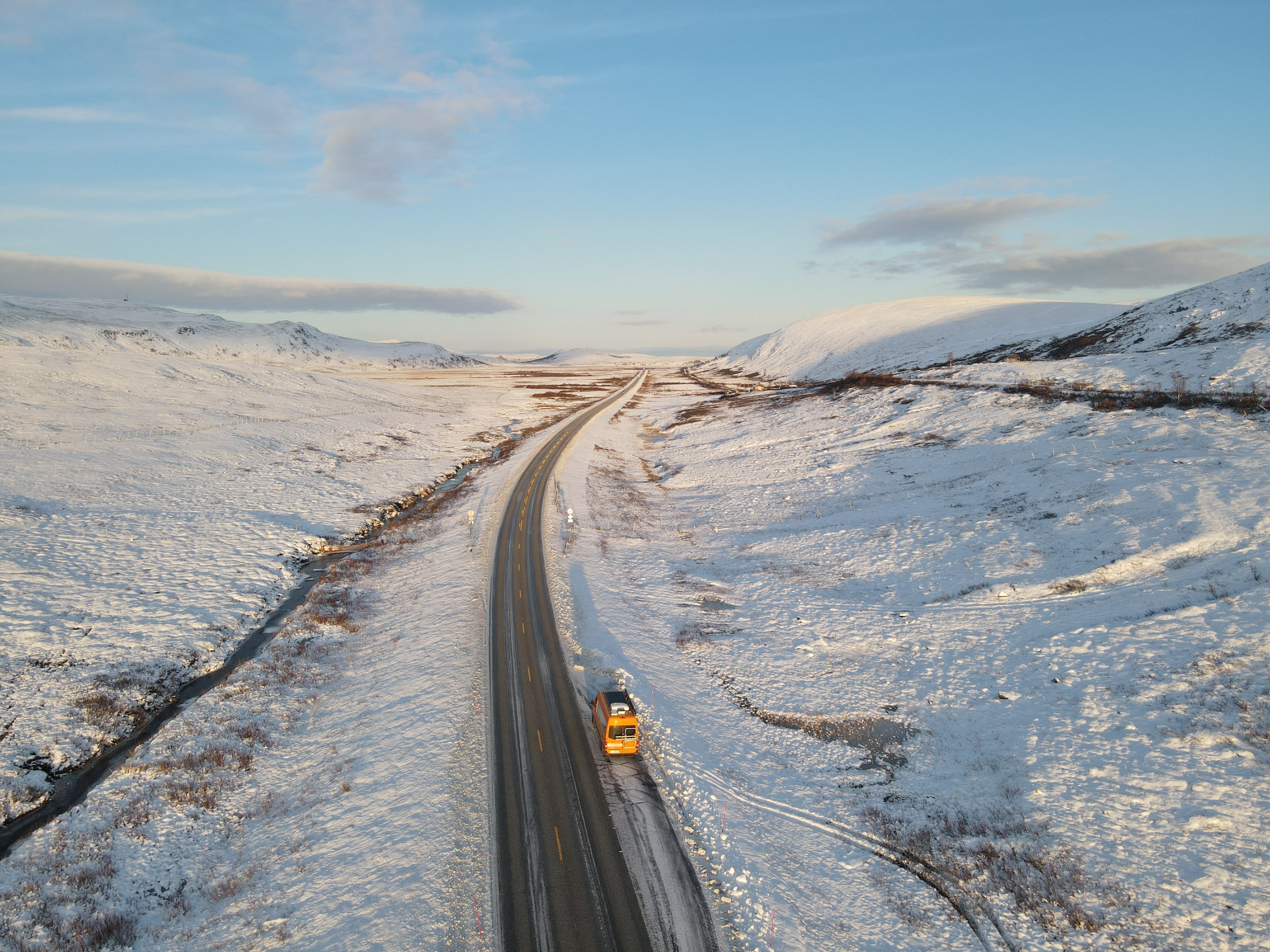
Honestly, we didn’t camp much: during the day we were almost always out visiting and the night temperatures were often already too cold to stay outside.
At most you put a chair outside to enjoy those 20-30 minutes of cold and solitude with a good drink: I love it, Isa a bit less, because she’s from the south (and loves the heat) and I’m from the north (and I love the cold!). But we live on compromises! 🤣
7. Tolls and Ferries

The Norwegian coast is extremely jagged, among mountains, fjords, lakes and rivers: there’s no straight road!
Ferries often simplify the route a lot and are almost impossible to avoid, unless you want to add 100-200 km to your drive (which isn’t worth it money-wise, given the high cost of fuel!).
Luckily, taking them is quick, super easy, and doesn’t require any registration!
How ferries work
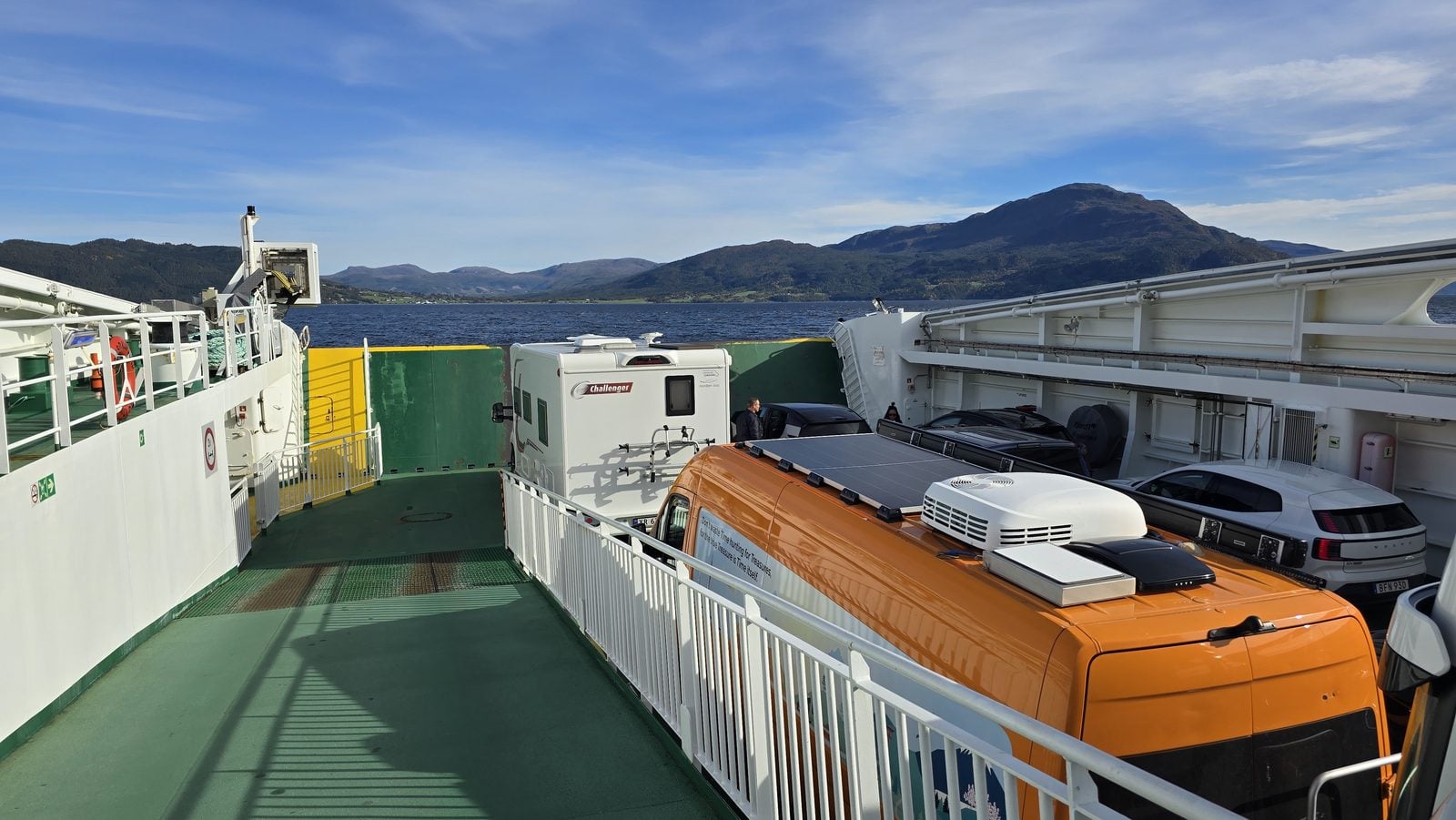
Taking a ferry in Norway is super simple: you arrive at the port, where there are numbered lanes 1, 2, 3, 4, and you get in lane 1 if it’s free, otherwise lane 2, lane 3 and so on.
Then you park and wait for the boat: sometimes it comes every 20 minutes, sometimes every half hour, sometimes every hour, sometimes after 3 hours…but it comes 😉
The ship lowers the ramp, you drive on, it takes you to your destination, lowers the ramp again, you drive off and off you go on your adventure.
The great thing is that you don’t need to buy tickets or book: many ferries are free, while others are paid.
For the paid ones the fare is written on the sign before you board, and payment is automatic and settled online: they take a photo of your number plate, and the bill arrives at the end of the month on your online EPass account… let’s see what that is! 😉
How to pay tolls
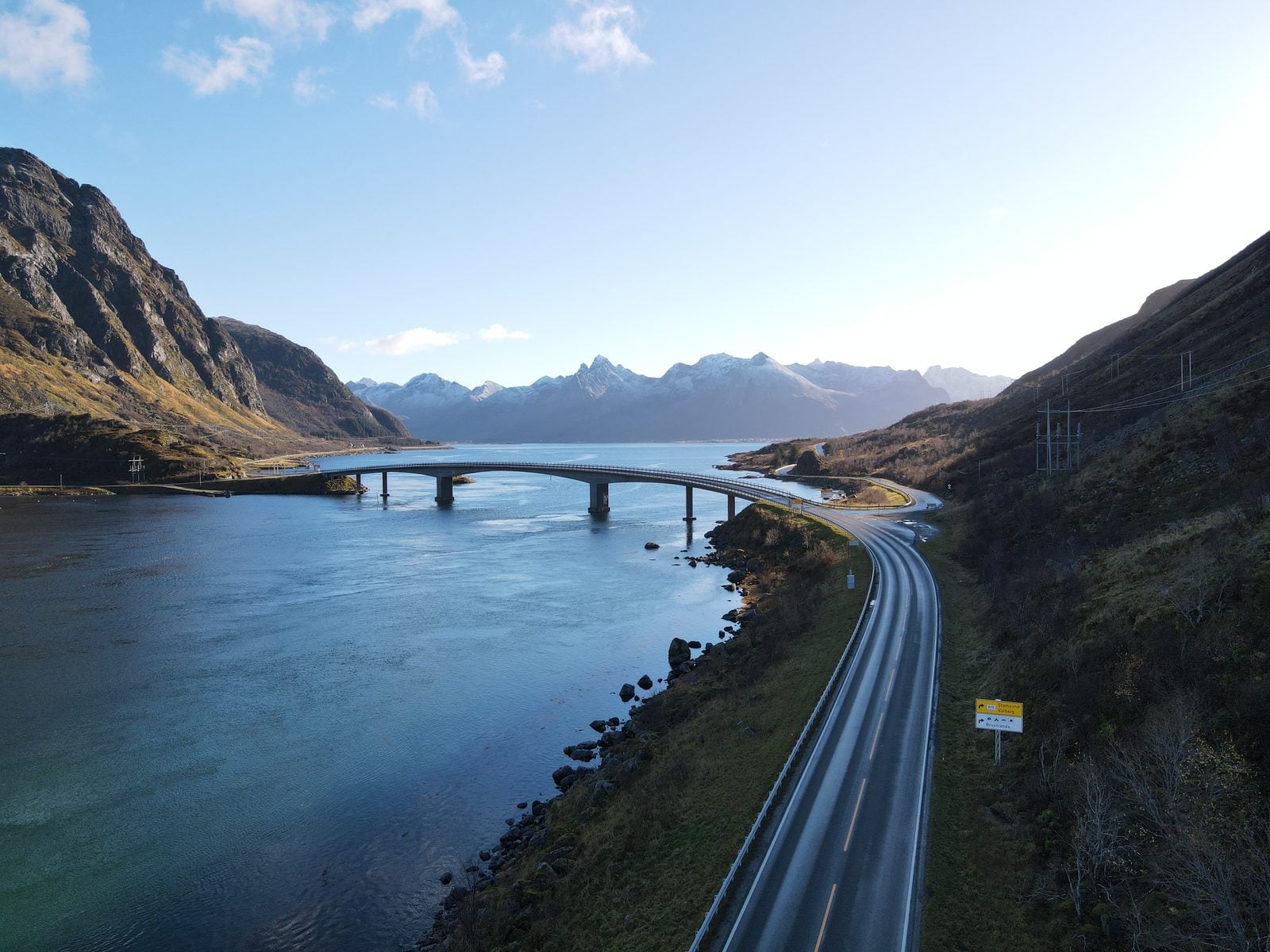
In Norway there aren’t real motorways like in Italy, but there are lots of toll points: toll gantries that read your number plate automatically, for tunnels, bridges, ferries, some fast stretches and some stretches inside cities.
They’re pieces of infrastructure that save you a huge amount of time, and going around them to save money is almost never worth it, because what you save on the toll you pay in diesel.
Payments are all automatic: to pay them you need to register on epass24.com, create an account, enter your vehicle details and a card.
At the end of the month the site adds up all the tolls registered for your vehicle and you pay them with one click, directly from there.
Crossing all of Norway from south to north we paid €78.50 in roads (tolls, tunnels and bridges) and about €74 for eight ferries (some were free), for about €150 in total: nothing crazy, for all the convenience you get!
IMPORTANT: My advice is to register your vehicle as soon as you arrive in Norway, so you avoid getting fined by mistake when driving through a toll section 🙂
The money-saving trick: Bodø, Værøy and the Lofoten
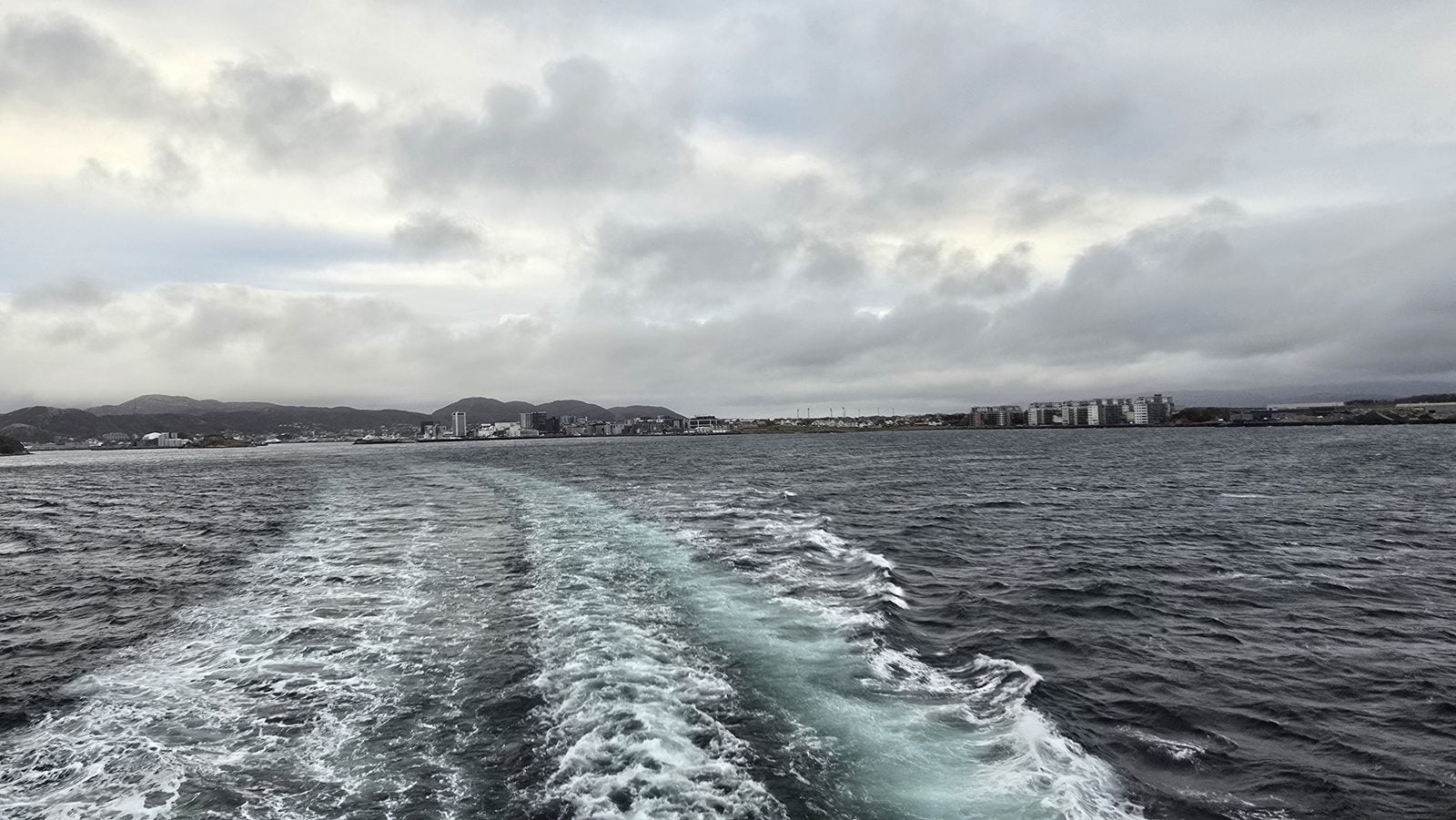
I mentioned it before, but I’ll say it again 😉
To get to the Lofoten from Bodø, normally it’s not worth driving all the way, because then you’d have to come back the same way: there’s a handy direct ferry from Bodø to Moskenes, but it costs about €120 for a 7 m campervan.
You can avoid this fare by stopping at Værøy, a small island off the Lofoten: the ferry from Bodø to Værøy is free, you can visit the island (even for 24 hours) and then take another free ferry from Værøy to Moskenes.
€120 isn’t a full tank of diesel in Norway, but it’s still good money to save 😉
But watch out for the sea conditions: we explain why in section 12
8. Campervan Services and Useful Apps
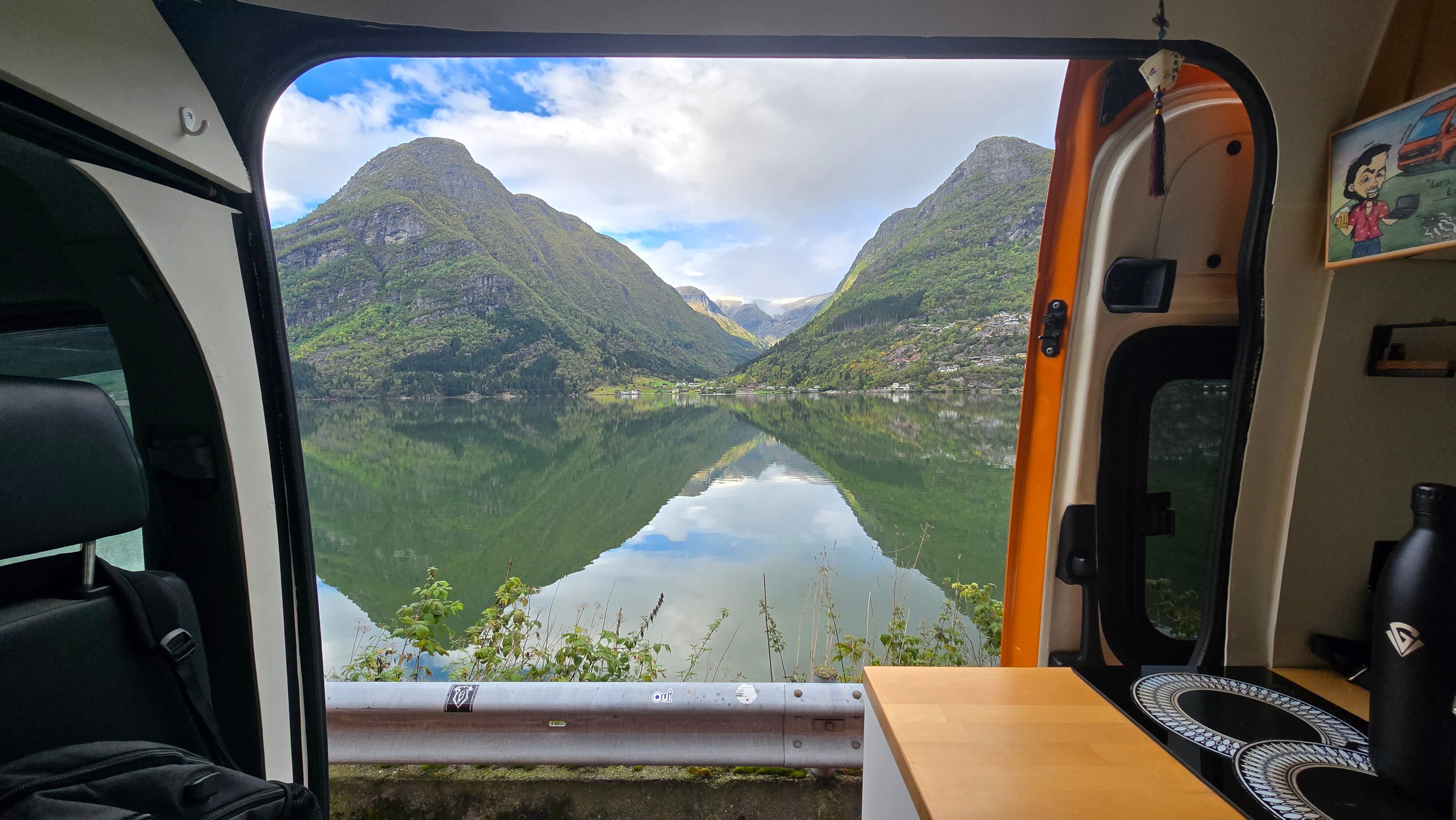
Drinking water
Drinking water is free and plentiful, and super easy to find: just look on Park4Night, where there are loads of free facilities, with the hose ready to refill: TOP! 🙂
Grey water and rubbish
On a road trip it’s fairly easy to find free dump stations for grey water: you just need to plan a little, and on the main roads there’s always somewhere.
For rubbish, along the main roads there are big bins, mostly for general (unsorted) waste: this surprised us a bit, we thought everything would be sorted…probably to maximise collection efficiency, given how few people there are!
Diesel
When we drove through, between September and October 2026, we found the highest prices we’ve ever seen since we started travelling by campervan: from about €2.36 to €2.83 per litre.
Every fill-up was a: aaaarrrrrrgh!!! 🤣🤣🤣
We don’t know when you’ll read this article, and we hope the wars in this crazy world will be over and prices will have come down, but the way things are going they might even go up: keep it in mind in your budget, because every fill-up is a real blow!
Self-service laundromats
They’re fairly rare: in southern Norway there was almost nothing and we barely found one by scrolling through the whole of Park4Night.
Our advice: plan your laundry well and, when you find a convenient one, do your washing right away, because you don’t know how long it’ll be before you find another one!
Electric hook-ups
We didn’t see any free hook-up posts, and there are probably only ones in campsites and equipped camper stops, where the cost is quite high.
If you have an electrical system that supports it, it’s much better to stay off-grid; if you don’t and you want to build one, we have lots of guides on the channel and on the blog, starting with our DIY electrical system guide. 😉
Sawdust for the composting toilet
If you have a composting toilet and need sawdust, we bought it at Musti pet shops: it costs about €9 for a huge bag and you find them everywhere 🙂
The apps we used
- Park4Night: to find places to sleep, water and dump stations, reading the reviews.
- EasyPark: to pay for almost all car parks.
- epass24.com: to pay the automatic tolls at the end of the month.
- Aurora Now, Aurora and Aurora Compass: to follow the auroras.
9. Food, Supermarkets and Local Specialities

Grocery shopping in Norwegian supermarkets is slightly more expensive than in Italy: not crazily so, but about 20% more, yes.
Supermarkets: the cheapest and the most expensive
In our personal experience, the cheapest are Kiwi (the cheapest of all) and Bunnpris, while the most expensive is Rema 1000.
Of course you can always be unlucky in one supermarket and lucky in another, but that’s what we saw in our 30+ days of travel 🙂
What costs more and what costs less?
In general meat and cheese cost much, much more than in the other European countries we’ve visited, while fish costs much less, because they really fish a lot here.
Smoked salmon, to give you an idea, is often cheaper than salami: if you like it, for your hiking sandwiches it’s better to fill them with good salmon instead of salami! (I’m crazy about it, so it worked out great for me haha)
Pasta and sauces are easy to find, so you don’t need to bring endless supplies from Italy.
Bottles and cans have a deposit of 2-3 NOK, that is 20-30 cents, which you get back when you return them.
Watch out on Sundays: many supermarkets are closed!
Specialities to try
Among the unusual things we found whale salami, which is banned in the European Union, even to bring back as a souvenir; then moose salami and reindeer salami and many kinds of different salts flavoured with Atlantic seaweed.
Among the supermarket curiosities there are also the 870 g jars of spaghetti “A la Capri” (photo further down), which, for obvious reasons, as Italians we absolutely did not buy 🤣🤣
Bread and pålegg
The bread section is really big, with lots of kinds of bread and lots of things to put on it: Norwegians call them pålegg.
Among these there are liver pâté, tuna, caviar (a local cod roe spread), salmon and cheeses.
This habit reflects Norwegian culture a bit: people make lots of sandwiches for hikes and quick lunches, because they tend to live outdoors a lot!
10. Gyms to Train on the Road
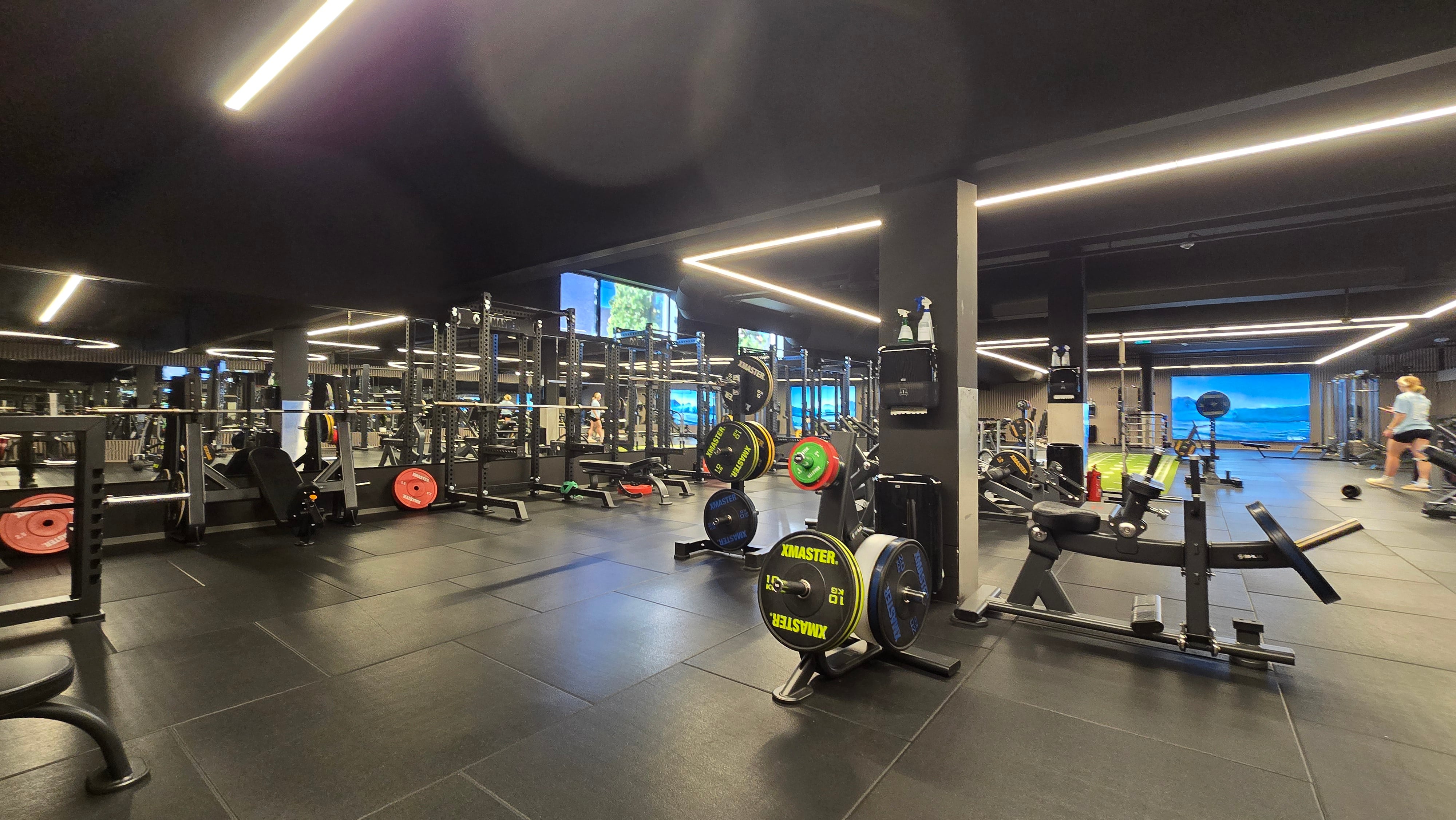
I don’t know who might be interested, but for a couple of years now I’ve been trying to keep training at the gym even when I travel, without stopping.
I used to train and then, when I travelled, I’d stop, telling myself I couldn’t go to the gym: it was a lie, because there are gyms everywhere!
In Norway, if you walk into a gym and ask for a day pass, they charge you €15-25 per entry: what in Italy sometimes you don’t even pay for a month.
The convenient solution for me was a chain of gyms open 24 hours a day, 7 days a week, spread all over Norway (except maybe the fjord area, which is a bit uncovered): you get in automatically with an app and pay €60 a month to go as often as you want, anywhere.
The chain I used is called Feel 24: they’re beautiful gyms, useful both for training and for taking endless hot showers.
It takes a bit of planning to be somewhere with a gym every 2-4 days, but like every campervan trip it has to be planned around your own needs: with a bit of organisation it can work brilliantly…from south to north, I went through 12 gyms! 🙂
11. How Much We Spent: the Full Budget

In 30 days of travelling in Norway, the two of us spent a total of €2,832, all included: about €1,416 per person.
In our opinion that’s not even that much: we expected to spend a bit more!
This figure doesn’t include the drive to get to Norway from Italy and back, which we grouped with other trips (Denmark, Finland, Slovenia, Poland) in a separate category: these are only the expenses inside Norway, from south to north.
| Expense | How much (for two, 30 days) |
|---|---|
| Total | €2,832 (about €1,416 per person) |
| Fuel | about 50% of the budget |
| Grocery shopping | about €640 |
| Tolls and ferries | about €150 |
| Eating out | about €100 |
| Other minor items | Trolltunga shuttles and parking, gym, laundry and van maintenance, sawdust, magnets, thermal clothes, parking, one month of Starlink |
The items explained

Fuel: about 50% of the budget (BOOM!), because in this period it costs a fortune and every fill-up is a real blow.
Groceries: the second item. We almost always cooked in the van, because we’d rather save a bit on eating out to travel more: about €640 for two to eat from the supermarket without going without anything, following our high-protein diets and with vegetables.
Eating out: a little bit, about a hundred euros.
Hikes: we only paid for the Trolltunga, and not so much the hike itself as the shuttles and parking, which make the trip much easier and in autumn are almost mandatory: the day is short and doing it all on foot from too far away, you wouldn’t make it.
Magnets: expect to pay €7-8 per magnet. We’re avid collectors and we spent more than we thought, but they’re the kind of things that stay with you for life.
Thermal clothes: we had to add a few because we hadn’t brought them; if you have some, bring them, because it can get very cold.
Parking: we almost always stayed in free spots, so we paid almost nothing.
Internet: we got a month of unlimited Starlink to have fast internet everywhere, because coverage can often be missing or poor!
12. What We’d Do Again and What We’d Change?
What we’d do again
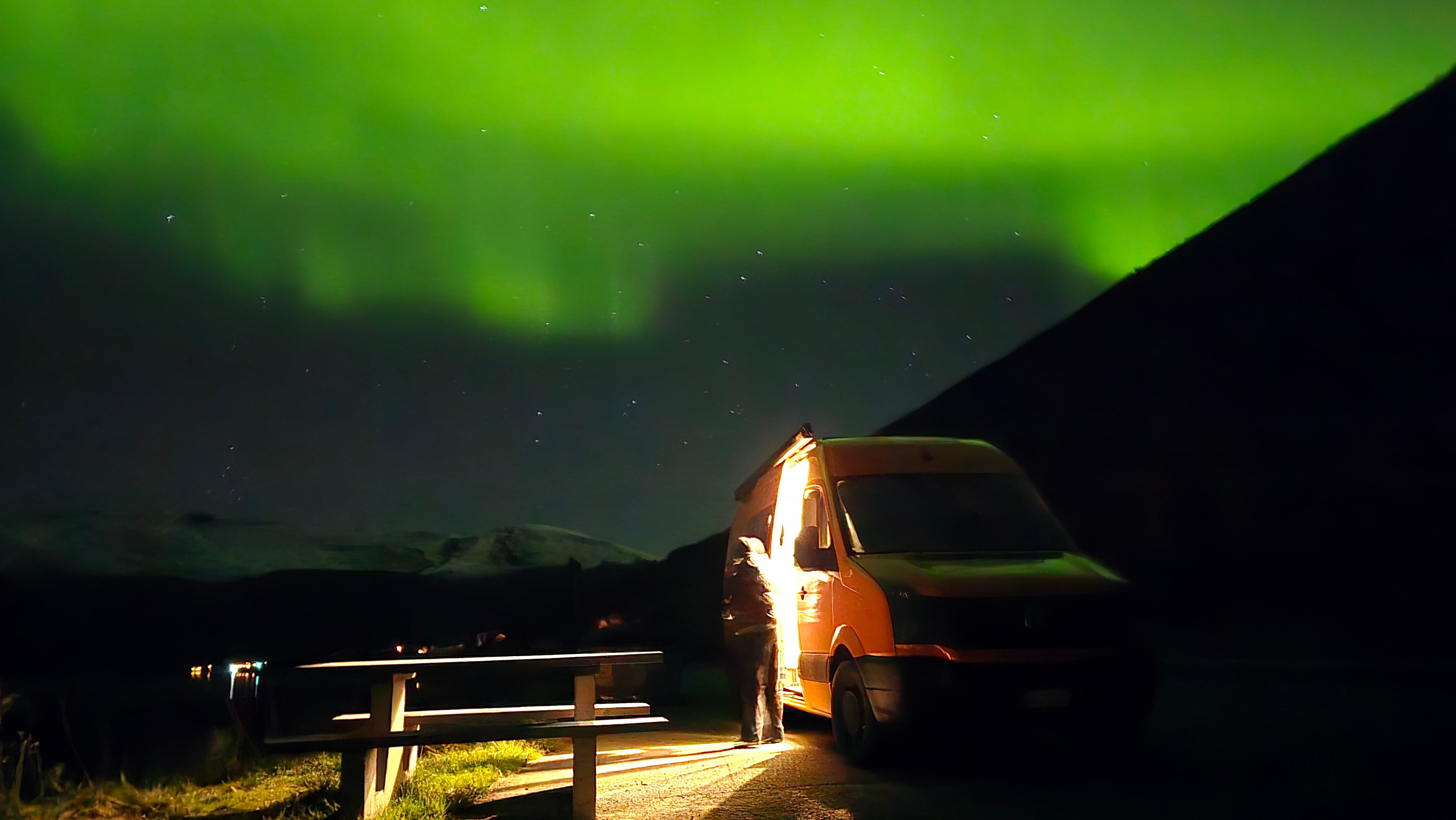
1. Norway by campervan: in our opinion there’s no better way to see it, because it’s immense and diving into it by campervan, on narrow roads and up high, among nature and silence, is a UNIQUE experience.
Staying in a hotel and visiting by car wouldn’t give you the same immersion, sleeping lost in the middle of nowhere, alone, in breathtaking nature, in deafening silences and under the dance of the auroras!
If you’re wondering whether to do it by campervan or take a flight: campervan, ABSOLUTELY!
2. Travelling in early autumn: a great compromise, because the colours are special, you can already start seeing the auroras and it’s less crowded: we almost always parked alone, no queues, with empty trails.
The price is some occasional rain, a few windy days and fewer hours of sunlight, but with good planning the compromise is absolutely worth it.
3. The scenic detours: if on Maps you see a tunnel or a detour that costs you two extra hours, take the detour, because it’s really worth it!
On visitnorway.com you’ll find the list of all the scenic routes in Norway: we did four or five of them (there are about twenty) and each one was worth it.
Sometimes you don’t even need to stop: just drive and look out of the window, it’s like driving in a dream 🙂
4. The 10-hour Trolltunga hike: it’s hard and takes the whole day, but it’s worth all the effort, an experience to have at least once in your life!
What we’d change
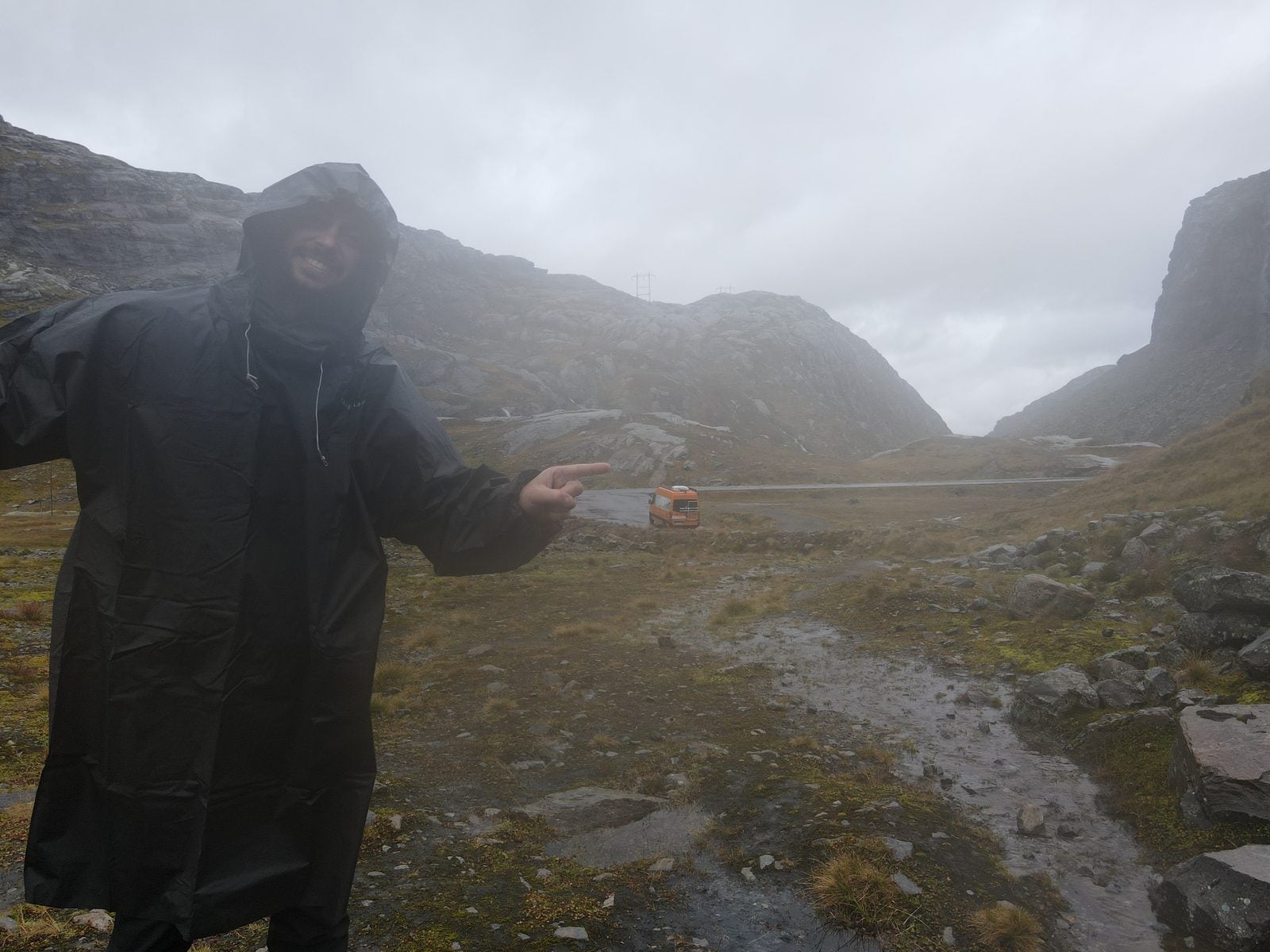
1. A few more days in the south: we’re sorry we didn’t dedicate 4-5 more days to the southern part, with its beautiful hikes, Preikestolen, Kjeragbolten and the city of Stavanger…
We had them planned, then we got 5 days of rain in a row and we chose to do the Trolltunga, because with the days getting shorter it would have become complicated.
In hindsight we could have waited and done them all: on the bright side, we’ve left ourselves something that will motivate us to come back 😉
2. More time margin: 30 days for 4,000 km was a tiny bit tight.
With two more weeks we could have gone more slowly and enjoyed the stops and the calm more.
If you’re also thinking of doing all of Norway from south to north, 30 days is doable, but expect it to be a bit tight!
3. Check the sea and wind more carefully before crossings: we waited two days for the crossing from Bodø to Værøy, then decided to go when the forecast said 50 km/h (it was probably 70 km/h in reality).
It was one of the worst journeys of our lives: 4 hours on a ship going down and up, down and up, unable to stay in any position other than lying down, feeling incredibly sick (Isa threw up SIX (!!!) times in the bags provided).
Our advice: if you need to make a crossing, wait until there’s 25 km/h of wind or less; if there’s more, wait, because it’s absolutely not worth it, the seasickness stays with you for days!
4. If you work remotely, slow down: if you’re a digital nomad or work remotely anyway, the pace we kept doesn’t leave much time to work.
For me it was very hard to keep up, so much so that I had to pause the channel for almost two months. If you also need to work, take it a bit easier.
13. Conclusions
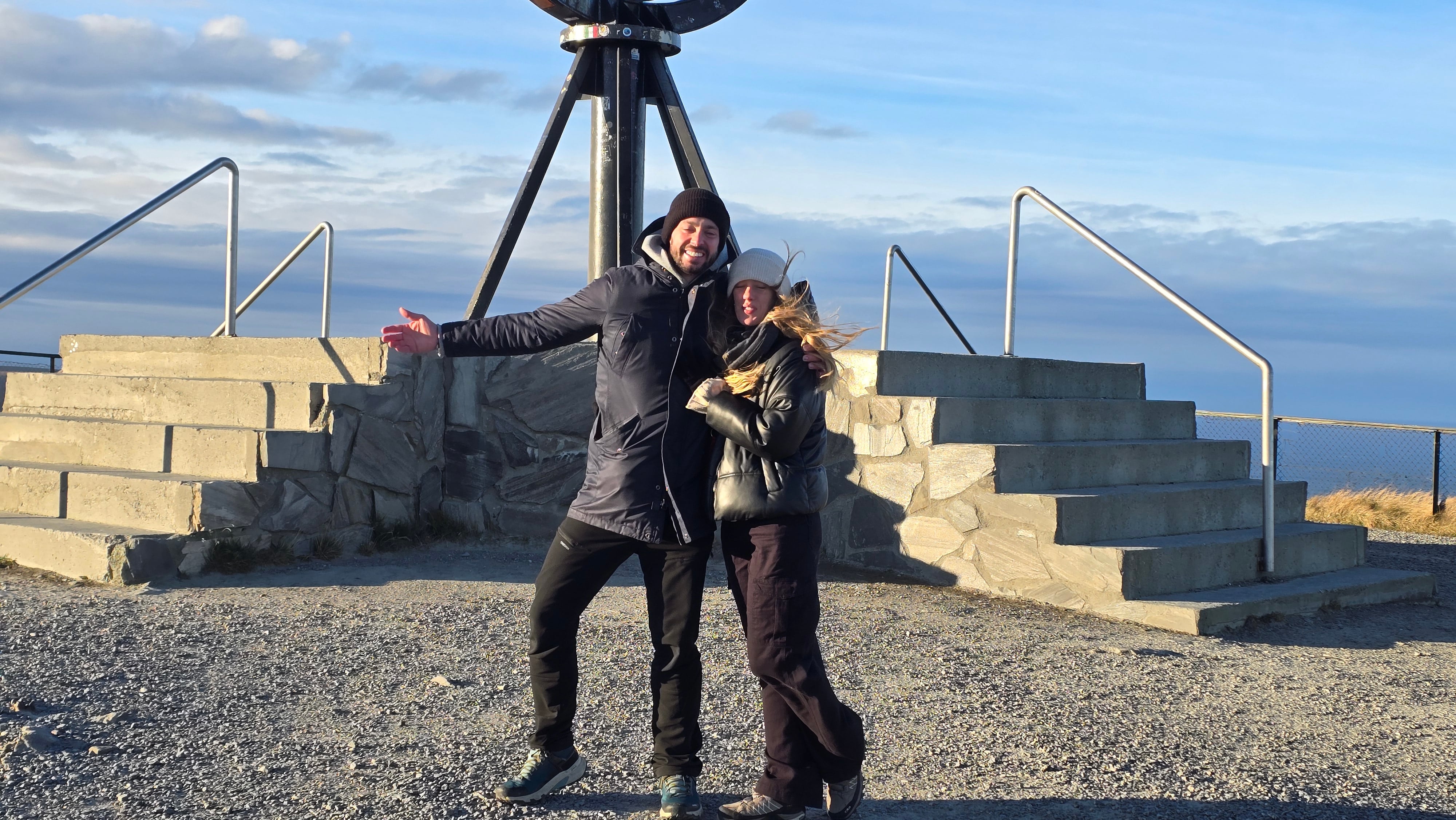
And here we are at the end of this long journey and of this guide.
Norway by campervan left us with a huge emotion that’s hard to describe and pass on… the autumn colours, the auroras, the empty roads and the silent nights.
I hope that, at least a little, through these words, the sense of wonder has reached you 🙂
Remember that what we’ve told you is our own humble little experience, not all of Norway: there are surely just as many beautiful places, because it’s immense!
If you too have been telling yourself for years “sooner or later we’ll go to Norway”, we hope this guide gives you the push to take the next little step and really go.
Any questions?
Feel free to leave them in the comments below, and if you want to see all these places in motion, watch the full video on our channel.
And if you also want to get ready on the technical side, we invite you to read our other articles: the complete guide to the campervan electrical system, the review of the PowerQueen lithium batteries, the review of the Bluetti in a campervan and the mega-list of all the products for the electrical system.
Thank you for making it this far and for sharing your time with us, there’s no better motivation to write than knowing your articles are read and are useful to someone 🙂
We wish you a good road!
Until next time,
Dani 🙂




0 Comments