Hello beautiful people, and welcome back on the route! 🙂
Ever noticed how on social medias, the digital nomad life looks like a laptop on a beach and a coconut next to the keyboard…?
As a digital nomad myself, when I see it, I get to smile…
Personally, I can confirm you that our lives are exactly like that… at least for 2% of the times! 🤣🤣🤣
The truth is, that the digital nomad life is more complicated than what it looks like…
Of course, on one side, there are many benefits: you manage your own time (great if you learn to do it well!), you get geographical independence, you draw your life around your passions and potentially you get to travel a lot (depending on how good you manage to earn – like in every other job!
Said that, there is also the darker side that nobody sees until it lives it:
- you NEED to nurture self-discipline and management skills,
- you likely need to multitask and integrate work and life, instead of keeping them in different compartments (having the laptop always with you is a bless and a curse!),
- if internet is not fast enough, often you need to move and change place, even if you just found your “little paradise on Earth”
- traveling often means saying a lot of goodbyes and working constantly in front of a screen can feel lonely without systems in place and determination to meet new people every time!
- Staying safe and keep your gear safe is always on your mind, unlike living at home,
and many many more!
Said that, the digital nomad lifestyle is growing more and more every year.
According to MBO Partners, in 2025 there were 18.5 million digital nomads in the United States alone, 153% more than in 2019!
According to many interviews and research, a big chunk of digital nomads can suffer from stress… stress that comes from everything around it: health, money, documents, data, loneliness!
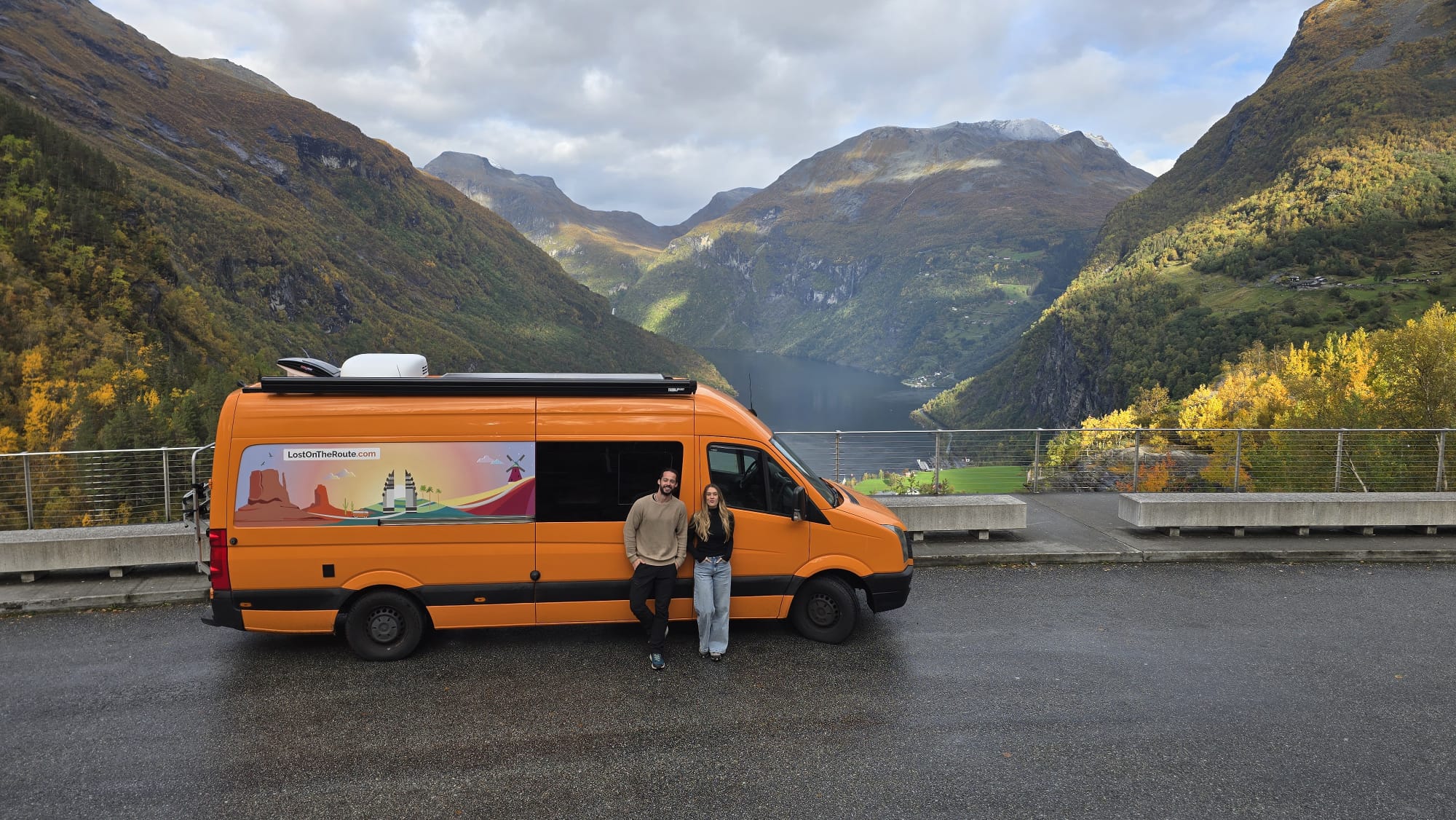
After years on the road in our orange van, we’ve personally feel we learned (often the hard way) that peace of mind doesn’t come by chance, it comes by having systems in place and by building one safety net at a time!
Years ago, when we started our digital nomad journey, we felt way more stressed than now: we were working longer hours, improvising locations every single day, failing miserably in choosing places to work (too hot, too cold, too many mosquitoes, too loud, etc. xDDD) and overall, we were playing the game – foolishly i would say – without backup systems in place for when things could go wrong (and went wrong couple of times!).
So today we’re thought of sharing 10 simple hacks that work for us (and hopefully for you too!) and help us work, travel and sleep well, wherever we park.
Let’s dive right in!
In this article:
- 1. Get Health Insurance That Travels With You
- 2. Always have a backup plan for your internet: God Bless E-sims!
- 3. Build Your Money Safety Net
- 4. Copy Your Documents Before Someone Steals Them
- 5. Make Sure Someone Always Knows Where You Are
- 6. Back Up Your Work as if Your Laptop Will Be Stolen Tomorrow
- 7. Lock Your Digital Life with a Password Manager and a VPN
- 8. Hard Things First, Shutdown at Night
- 9. Train Your Body, It’s What Fuels Your Brain
- 10. Never Eat Alone: Build Your Tribe on the Road
1. Get Health Insurance
That Travels With You!

Let’s start with the most boring hack: insurance!
Classic travel insurance (the one you purchase on airlines websites or tour packages) is designed for people who leave for two weeks and then come back home.
As nomads, we often doesn’t know which country we will be in next month, let alone when we will “go home”.
Accidents, sicknesses, can happen all the time, everywhere though.
Without insurance, a broken leg in the United States or a hospital stay in Thailand can cost more than a year of travelling!
When you work a traditional job, you can get covered by public insurance or make a private insurance by your local provider, which can help you afford health expenses as they may arise.
Working on your own, you have to think for it yourself.
After traveling uninsured for roughly 8 years (foolish youth!!), we had:
a scooter accident in Bali (“luckely” inside Jatiluwih national park, where we payed for a one-day insurance and got covered by chance!),
and Isa got a tyroidal disfunction in Spain which required 8 months of medicaments and visits (she had just got a seasonal job for 6months, and luckely was covered by public insurance).
Both times, lucky circumstances saved us A LOT of money, as we got covered basically by chance.
Learned the lesson of how important is insurance in those situations, we dug the internet in search of a solution to cover our every travel around the world, and four years ago we found out about SafetyWing Nomad Insurance and got covered ever since.
The SW Nomad Insurance works like a subscription that renews every 4 weeks: you can activate it while you’re already abroad, and it covers you in more than 180 countries.
The Essential plan includes up to $250,000 in medical expenses and $100,000 for medical evacuation, and starts at around $56 every 4 weeks for people under 40 (which works awesome for us youngsters!).
All in all, in our opinion, getting a complete health insurance is one of the most important steps to get peace of mind as digital nomads: health is wealth, and ensuring yourself that you can stay or return healthy, is a warranty on your future job and life and a nice factor affecting peace of mind!
Said that, let’s continue with another lifeline: INTERNET!
2. Always have a Back-up Plan
for your internet!
God Bless E-sims!

You land after 12 hours of flying from Tokyo, or a bumby 24 hours bus-drive from across the Andes to Argentina, you need to call a taxi, find your accommodation, and your bank sends you a code to confirm a payment… but you have no connection!
Tam, tam, taaaaaaam: welcome to stress level 100!
Happened to me way too many times in the past. Too many!
Without internet, not only I cannot work, but I feel very vulnerable while traveling:
Are taxi drivers here scamming me?
Is this or that a honest price to pay?
Deadline is approach and what could I do about it?
Sad to notice how dependent we are on our devices…
but I can get a little bit paranoid without having the world in my pocket!
As you know, on our campervan Arancino, we installed starlink in 2023 and that has been a game-changer for when we are staying at our “home on wheels”.
Said that, our goal in life is not staying closed forever within our campervan walls: we love explore, cities, mountains, treks… nature is out there! Adventure is out there!
And also many great working stations immersed in nature!
For when we leave the van, we found in E-sims the perfect backup!
If you’ve reading this blog for a while, probably you already know how greatly I hate physical SIMS from the bottomest bottom of my heart: it was always problematic to find a needle, pushing it in that little hole meant pushing it painfully in my nail, and removing my SIM card meant I had a 80% of losing it. I always hated the process…and that is why today i don’t even have a physical SIM card anymore…we are in the goddam 2026 damn!!!
The eSIM is a digital SIM that you buy online and install on your phone in a couple of minutes while you’re still at home.
When the plane lands or you change country, it connects to a local network, and you’re online before you reach passport control.
Easy, fast, beautiful and, most important….CONVENIENT!
If you’re looking for a practical e-sim for everywhere, we can definitely recommend Simfuse, which is a service that covers more than 205 countries (basically the globe!), with regional plans (Europe for example has 54 countries on a single eSIM, with plans starting from €1.19). You can top up and choose your plans with their apps, and you are always online.
To us, perfect backup solution for digital peace of mind, long life to the Esims!!
Quick Tip: if you do video calls or share the connection with your laptop, don’t buy the smallest plan. One hour of video call can easily eat 1 GB.
3. Build Your Money Safety Net:
Two Cards, a Fund and an App

Money worries are probably the most common source of stress on the road.
Here I want to share with you our own system, in three layers.
Two cards, two banks, two places.
Sooner or later a card gets blocked: an “unusual” payment, an ATM that swallows it, a theft, or a digital breach that forces you to block it yourself (once I fell victim of phishing and they got passwords to my GMAIL and all connected services…imagine the nightmare!).
If you only have one card, you’re stuck.
Put it simply, one card can be enough for traveling, but not for traveling with peace of mind!
Always travel with two cards, ideally from two different providers, ideally a Visa and a Mastercard (different circuits might or might not work in different places!).
Keep them also in two different places (one in your wallet, one hidden in your backpack, in your van or, as I like to do, stored virtually under password on your phone!).
At least one should be a multi-currency card, because traditional bank cards often charge 1% to 3% on every foreign payment, plus an unfavourable exchange rate, and over a few months of travel, that’s hundreds of euros!
Many of these multi-currency apps now use AI to spot suspicious transactions in real time, so they can freeze a fraudulent charge before it empties your account.
They also automatically sort your expenses and show you, currency by currency, exactly where your money is going. It’s AI financial planning in your pocket: instant alerts, live exchange rates and a budget that adapts as you move from one country to the next.
Have an emergency fund.
Personally I would recommend you to have 3 to 6 months of expenses, kept separate from your travel budget!
Think about this money not for spending, but for sleeping well!
If a big client disappears, the van breaks down (we had many major maintenance costs on our journeys!) or you have to fly home urgently, you don’t panic.
Along with insurance, having an emergency fund can help you navigate the challanges that nomad life will inevitably throw at you!
An app to track your expenses.
You cannot improve something you don’t measure.
That’s my philosophy in everything I do: training, eating, video-making, language learning, money-making and money-spending too!
Personally, I have downloaded an app called Money Budget from the Playstore back in 2023, and loved it since then.
It is an app that allows you to create spending categories, customize pretty much everything on how you see them, and save what you spend in the blink of an eye.
In three years, it changed the way we spend and budget my life completely…
The first time I added up the numbers, I discovered I had spent over 1,000Euro on beers alone in 2023 alone eheh^^
Since then, I intentionally decided to shift my budget toward more rewarding spheres of my life: unlimited budget for books, unlimited budget for learning apps, and fitness (I also finished an ironman while reducing my beer consumption – which is by no mean cheap!).
All in all, knowing where your money goes is the best cure for end-of-month anxiety and to plan long-term!
4. Copy Your Documents
Before Someone Steals Them
(I wish I knew it sooner!)

This one we learned the hard way.
In November 2025, someone broke into our van while we were in Apulia (Italy) and, among other things, they took my passport.
I had a digital photo of it, but once you go to police and denounce the fact, all data become invalid.
Luckily, I was in Italy and had my national ID with me for the time being…
For the passport I had to book a new appointment back in my home region in Italy (Trentino, 1000km away from where I was), show up in person, and wait two months for the new passport.
Two months of plans on hold, not being able to travel outside of Europe. A nightmare!
With the copy, at least everything can go a bit faster: the police report, the visit to the embassy (if you are abroad!), the request for an emergency travel document!
So today, before every trip, we do this:
- we scan passport, ID card, driving licence, insurance, vehicle insurance and vaccination certificates;
- we save them in an encrypted cloud and also offline on the phone, so we can see them even without a connection;
- we also keep a paper copy in a different bag from the originals.
It takes 15 minutes. It can save you months if bad luck strikes!
This goes for normal documents, later we will talk also about the digital ones… but before, let’s think about ourselves first:
5. Make Sure Someone
Always Knows Where You Are!

When you change country every few weeks, it’s easy for nobody to know exactly where you are.
Then something happens (an earthquake, a protest, an accident) and you realise that no one would know where to look for you.
Register with your embassy.
For Italians like us, we can use the website Dove Siamo nel Mondo, the Farnesina’s free service.
If you’re from another country, for sure your country has a similar website too to register before traveling!
You enter your trip details, and in case of an emergency in that country the Crisis Unit knows you’re there and can contact you!
Americans have the STEP program, which also sends safety alerts for the country you’re in. Few people do it, and it takes 5 minutes…
Share your live location.
With Google Maps, Find My on iPhone or WhatsApp (which shares your live position for up to 8 hours), you can let a family member or friend see where you are.
My 69-years old dad, with his Iphone, learned to check out the location of my sister everywhere she is in the world (once he showed me how he was monitoring her movements while on a Brazilian roadtrip).
Today it is incredible what technology can do with ease, we just learn to use it correctly!
We also have a GPS tracker built within our van which my parents from back home can check from time to time to know where we are! 🙂
Save emergency numbers before you need them.
In the European Union, 112 works in every country, for free, from any phone.
Outside the EU, save the local number before you arrive, together with your embassy’s number and your insurance’s emergency line.
6. Back Up Your Work as if Your
Laptop Will Be Stolen Tomorrow
(Seriously!)
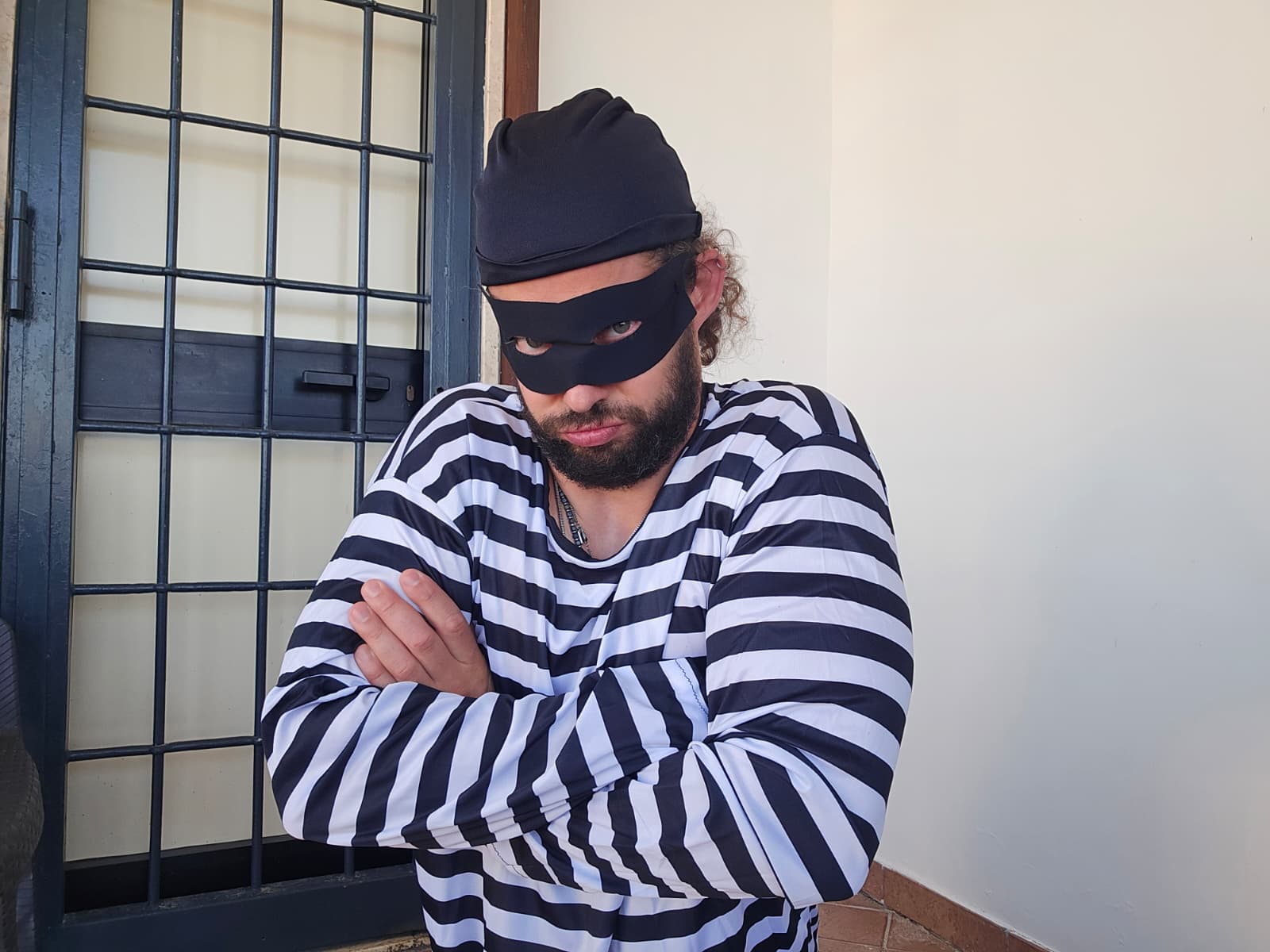
The same break-in in November 2025 also took both our laptops.
We lost travel photos, many of my current working projects, excel sheets, word files, and personal photos too.
Imagine, from one second to another, your laptop that you use everyday, gone.
Terrifying!
I really do not wish it to anybody!
The only luck we had, is that they did not see my huge external hard-disk.
But it was there, and I risked losing that too!
Since then, we’ve mounted a vault in our van, got a NAS backup of all our files and set an automatic One-Drive backup too.
Our rule now is:
- 3 copies of data;
- on 2 different types of storage;
- with at least 1 copy somewhere else.
As a rule of thumb, keep it simple: laptop, an external SSD kept in a different bag, and a cloud service that syncs automatically (because the backup you have to remember to do is the one you never do – seriously!).
Like this, if the laptop disappears, the work survives.
We now also put Bluetooth trackers on our most valuable things; we explain how in our 7 essential tools for the modern digital nomad. They fooled us once, and once was enough!
7. Lock Your Digital Life with a
Password Manager and a VPN

Imagine losing your phone abroad.
Email, bank, cloud, social media: how many passwords do you actually remember by heart?
One? Exactly….
USE A PASSWORD MANAGER
That’s why I’ve always used LastPass.
LastPass is a very convenient cloud service which stores all your passwords in one encrypted vault that you open with a single master password, from any device.
If the phone disappears, you log in from a new one and you’re back in control.
It’s also a great place to store your document scans from hack #4.
Said that, there is also to notice that it might not be the panacea to all bads: in 2022 LastPass suffered a serious breach, in which attackers stole encrypted copies of users’ vaults.
Vaults protected by a strong master password stayed safe, while the weak ones were attacked over the following years.
The lesson applies to any password manager: use a long master password (four or five random words are better than “Password123!”), turn on two-factor authentication, and save the backup codes somewhere separate from your phone.
Otherwise, if you lose the phone, you lose the 2FA too.
USE A VPN
The second shield is the VPN.
Airports, cafés, hostels, coworkings: the public Wi-Fi we work on every day is rarely secure, and sometimes it’s even fake (a hotspot called “Airport_Free_WiFi” can be anyone’s!).
A VPN encrypts your connection, and it also lets you access services that block foreign connections, like some home-banking sites.
Our pick is NordVPN: over 7,000 servers worldwide and up to 10 devices connected at the same time, so laptop, phone and tablet are covered.
8. Hard Things First, Shutdown at Night:
Give Your Day a Structure
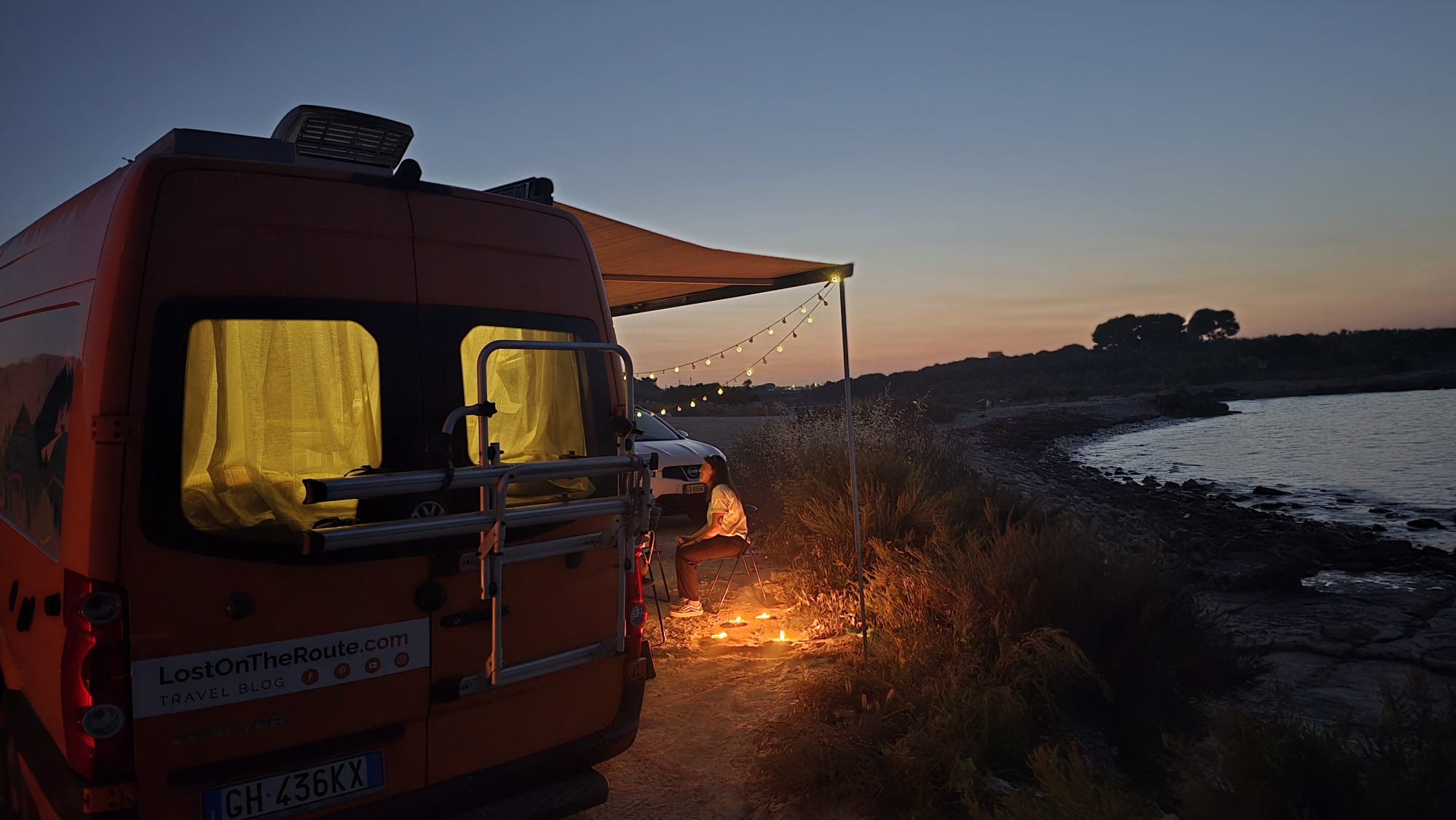
Without an office, a boss and fixed hours, freedom can easily turn into chaos: you start late, you never really finish, and you feel like you’re always working and never working at the same time.
If you are a digital nomad, I guess you know what I am talking about 😉
What can saves us though, is establishing a few simple routines.
Here are some that works for me:
- Hard things first. The most difficult or boring task of the day goes first, before email and social media. Brian Tracy called it Eat That Frog in his 2001 book: if you start with the frog, the rest of the day feels like dessert!
My day starts at 6:00 with a gym, chinese learning and my most important work-related task in full deep work: no notifications, just the important stuff!
- Fixed anchors. Wake-up time, work block, workout, dinner. When the country, the bed and the view change all the time, having a few things that never change keeps you grounded.
- A shutdown ritual at night. In his book Deep Work (2016), Cal Newport suggests ending the day by reviewing your open tasks, deciding when you’ll handle each one, and then closing everything with a fixed phrase. He literally says “Shutdown complete”. Since I read it, I do it too xD
There’s science behind it: it’s called the Zeigarnik effect.
In 1927 psychologist Bluma Zeigarnik discovered that unfinished tasks stay in our mind much more than completed ones. Writing them down “closes the loop”, and your brain can finally rest.
Ten minutes a day, and evenings become yours again 😉
9. Train Your Body,
It’s What Fuels Your Brain!

When you work with your head, it’s easy to forget you have a body!
Then after a few months of café chairs, bus seats and laptop on your knees, it reminds you: back pain, low energy, foggy mind…
Personally, in the past two years I start working out almost every day: gym 3-4 times a week, and cardio the other days.
In June I completed my first Ironman, and in two years I completely changed my body.
While I gave up 1-2 hours everyday for fitness, I never felt so productive in my life, and our blog Lost on the Route grew with me!
When on the road training, I lied to myself for years saying that training was impossible (for years!!!). Then, I found out that with systems in place, it is easier muuuuuch than it sounds:
- everywhere you are you can take a morning walk -even better without phone!;
- I do calisthenics in the van when there is no gym around (two square metres are enough so you can do it wherever you are too!);
- a gym day pass you can get it in every city for 5-15Euro! (it’s more expensive than home? Probably yes, but not that much and it is money invested in your Health, which remember, it is wealth too!);
- running at dawn is also the best sightseeing ever!
- You can also find what you like: yoga retreats, stretching spots on the beach, swimming pools for swimming, bring your bike for biking… the limits are only in our minds!
Here you can also find 10 essential tips to travel happy and healthy long-term.
10. Never Eat Alone:
Build Your Tribe on the Road
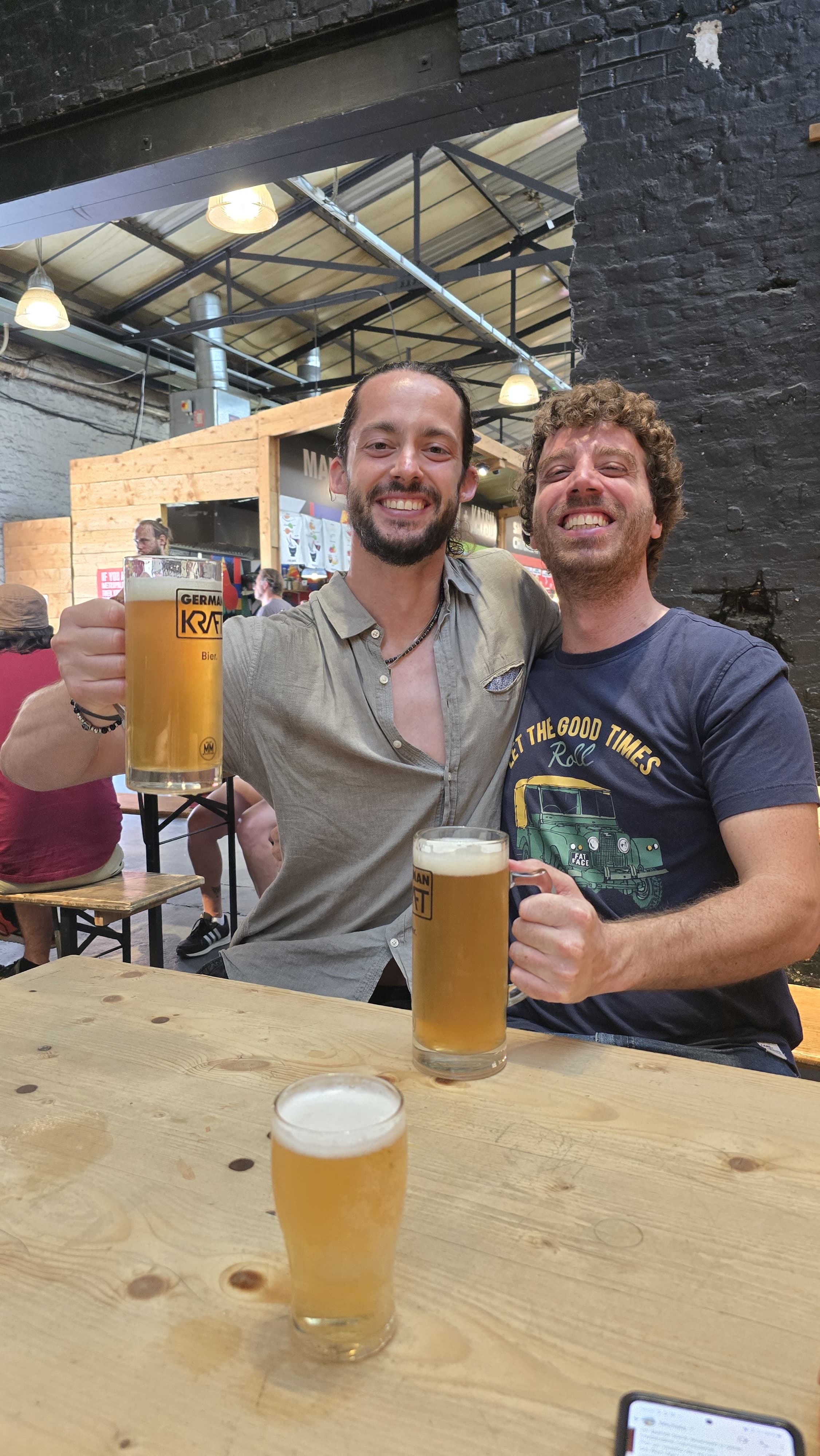
Loneliness is the side of nomad life nobody posts on Instagram.
In Buffer’s State of Remote Work report, 23% of remote workers said loneliness is their biggest struggle. As an extremely social person, I can agree on that too!
Last month, I finished reading the book “Never Eat Alone” by Keith Ferrazzi (2005) which has a simple idea at its core: the most successful people are the ones who invest in relationships, one coffee and one dinner at a time!
Since I read it, I realize how on the road it makes even more sense!
The people you meet can become friends, travel buddies, collaborators and sometimes even clients if you put effort in developing and deepening the relationships beyond the simple small talk!
Knowing you have someone to call in a new city is a huge relief all the time
The good news is that today it’s easier than ever: coworking spaces, colivings, local events, communities of nomads in the same city and whatsapp groups!
We collected our favourite apps in 6 apps to help you meet new people while traveling, feel free to check them out:))
Conclusions 🙂
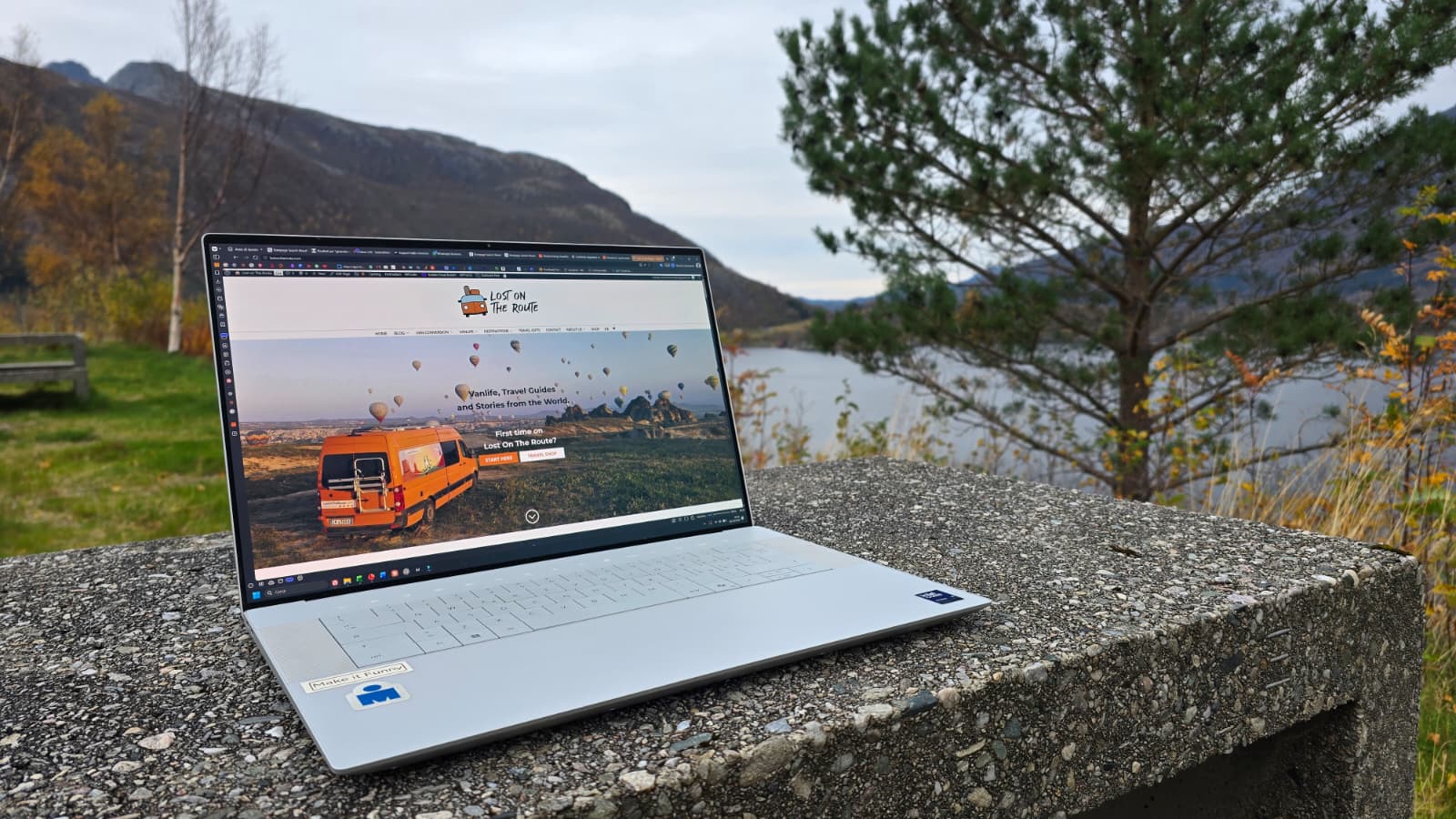
And here we come at the end of this article! 🙂
In this post we’ve showed you our main strategies to keep mental and physical stress away from our digital nomad real lives 🙂
Before going, we would like to ask you:
- Which of these hacks do you already use, and which one will you start with?
- Has something ever gone wrong on the road that taught you a lesson?
Let us know in the comments below! 😀
If you’re looking for the gear that makes our work on the road possible, check out our 7 essential tools for the modern digital nomad, and for a healthier routine don’t miss 10 essential tips to travel happy and healthy long-term.
Thank you for reading, and see you in the next article! 🙂





0 commenti