
Hello beautiful people, and welcome back on the route! 🙂
In the curiosity article of today, we will fly – first class – to the French Alps, so buckle up and get ready to discover one of the most exclusive and luxurious resorts in Europe: Courchevel!
Does it ring familiar? 🙂
Courchevel is a complex that sits in the Savoie department of the French Alps (south-east France), in the Tarentaise valley, about 2.5–3 hours by road from Geneva airport.
Most people in Europe know this place as they know Saint Tropez, Capri, Porto Cervo, Zermatt or St. Moritz… it’s one of those posh and renowned location for people that love to take a deserved break and pamper themselves with “first class” holidays 🙂
For 80 years it has been the winter home of passionate skiers, food lovers and some of the world’s wealthiest travellers!
Its name is now in 2026, is almost a synonym for “Alpine luxury”: here you can find Michelin-starred restaurants, lavish Palace hotels, private chalets with charming indoor pools, and private concierges who can arrange anything from a chef in your living room to a helicopter from Geneva! 😉
Behind the glamour, though, there’s a surprisingly interesting development story, a few numbers that are hard to believe, and some curiosities that even regular long-time visitors probably don’t know…and as we LOVE curiosities, this is exactly what we are talking about today! 🙂
So following are 7 fun facts about Courchevel!
Let’s dive right in! 🙂
1. “Courchevel 1850” Isn’t Actually
at 1,850 Metres

As said in the intro, “Courchevel” isn’t one single village but a family of them!
For decades, these villages were simply named after their altitude: Courchevel 1300, Courchevel 1550, 1650 and 1850; as it often happens with this kind of Alpine ski resorts (i was born in the Italian Alps, and we have many such names near my home-town too! :).
Said that, a funny fact we discovered is that the heart of Courchevel 1850 actually sits at around 1,747 metres, roughly 100 metres lower than its name says.
Then we wondered, why is that?
Of course we needed to dig a bit deeper as, like behind most odd things we notice while traveling, there might always be an interesting historical story behind it…and we found it! xD
As the story goes, when the resort was named in the late 1940s, its founders picked “1850” so it wouldn’t sound lower than its great rival Val d’Isère, which really does sit at 1,850 metres. 🤣🤣🤣
And why numbers in the first place instead of giving it an entirelty different name?
Because “Courchevel” already belonged to a small hamlet further down the valley, and its inhabitants weren’t happy to see their name taken by the new resort.
The compromise was to call every level Courchevel and attach its altitude to tell them apart.
In the 2011–2012 season the resort changed its mind though…
As the brand grew abroad, the lower numbers started to sound like “second-class” Courchevels, so the villages were renamed:
- 1850 became simply Courchevel (they got the original name at the end! eheh)
- 1650 became Courchevel Moriond,
- 1550 Courchevel Village
- and 1300 Courchevel Le Praz.
And then there’s “La Tania”, a fifth village built from scratch to house athletes during the 1992 Albertville Winter Olympics 🙂
Each Courchevel has its own slightly different personality: 1850 is the glamorous heart, Moriond offers a more relaxed vibe, the Village is popular with families, and Le Praz is the most traditional, with old stone-and-wood houses and a small lake 🙂
So, whenever you’d like to visit Courchevel, keep in mind that accomodation and surroundings might be very different depending on where you go! 🙂
2. Courchevel Was Built from Scratch
by a Former Prisoner of War

Many of the Alps’ most famous ski resorts, like Chamonix in France, Zermatt in Switzerland or Cortina d’Ampezzo in Italy, grew out of mountain villages that existed for centuries before the first skier showed up!
Courchevel on the other side, didn’t!
In 1946, just after the Second World War, the Conseil Général de Savoie (the local government of the region) decided to build a brand-new ski resort from nothing on the high pastures above Saint-Bon, as an effort to bring jobs and tourism to a poor mountain area.
The man chosen to design this new resort was a certain Laurent Chappis, a young architect and urban planner who had just come back from five years in a prisoner-of-war camp in Austria.
During his captivity he had surprisingly completed his doctorate (he was allowed to stay within the “officers” prison camp along many other engineers and doctorates), and the subject was the development of a ski resort in the 3 Vallées. Who would have thought? 🙂
His idea, while seeming obvious today, was absolutely revolutionary for the time: build the resort around the slopes, so guests could ski straight from their door and back!
Today we call it “ski-in, ski-out”, and Courchevel was one of the first pioneering resorts in France designed around it.
Extra fun fact: This winter (2026) Courchevel celebrates its 80th birthday! The celebrations start on 4 December 2026, the opening day of the season, with a big evening show at the Forum ice rink, a film about its history and a commemorative book (the Mairie de Courchevel has the full programme).
3. Courchevel is Part of the Largest
Connected Ski Area in the World!
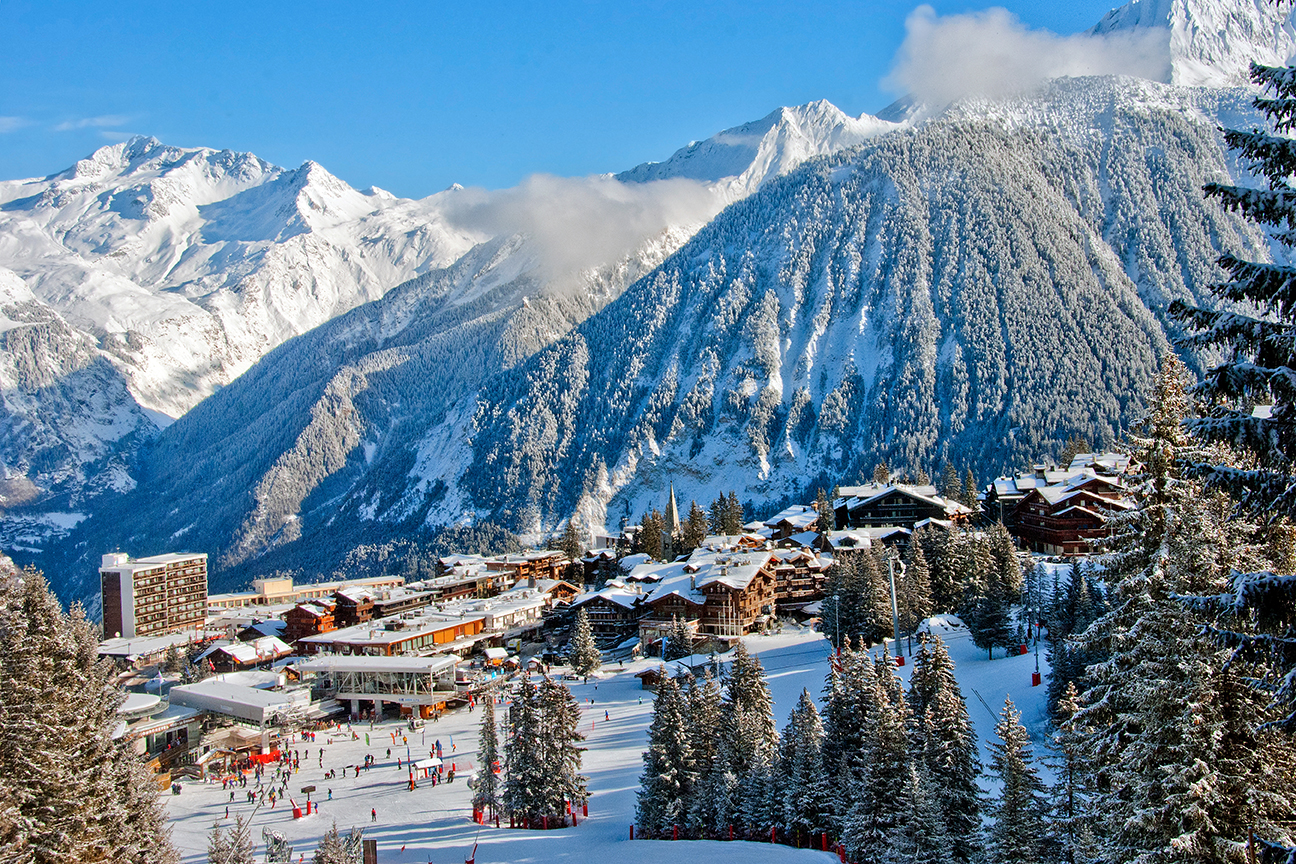
Courchevel is one of the resorts of Les 3 Vallées, three neighbouring valleys connected by lifts and slopes, together with famous names like Méribel, Val Thorens and Les Menuires.
Altogether, they offer around 600 km of pistes (about 4 times the Madonna di Campiglio to give you an idea!!), served by more than 150 lifts, which makes it the largest connected ski area in the world 🙂
To give you an idea, 600 km is roughly the driving distance from Paris to Bordeaux. In practice, you could ski here for a whole week without repeating the same run! Here you can check the complete slopes map for the 3 Vallees 🙂
Courchevel’s own share is about 150 km of slopes, backed by one of the most extensive snowmaking networks in the French Alps, and it reaches up to the Saulire, at 2,738 metres.
On a clear day you can spot Mont Blanc from up there too!
On the other side of the 3 Vallées, Val Thorens sits at 2,300 metres and is the highest ski resort in Europe:)
Read More: If you’re curious about how the other side of the Atlantic does luxury skiing, have a look at our guide to exploring Aspen, Colorado too!
4. Courchevel’s Grand Couloir Is Among
the Most Feared Run in the Alps
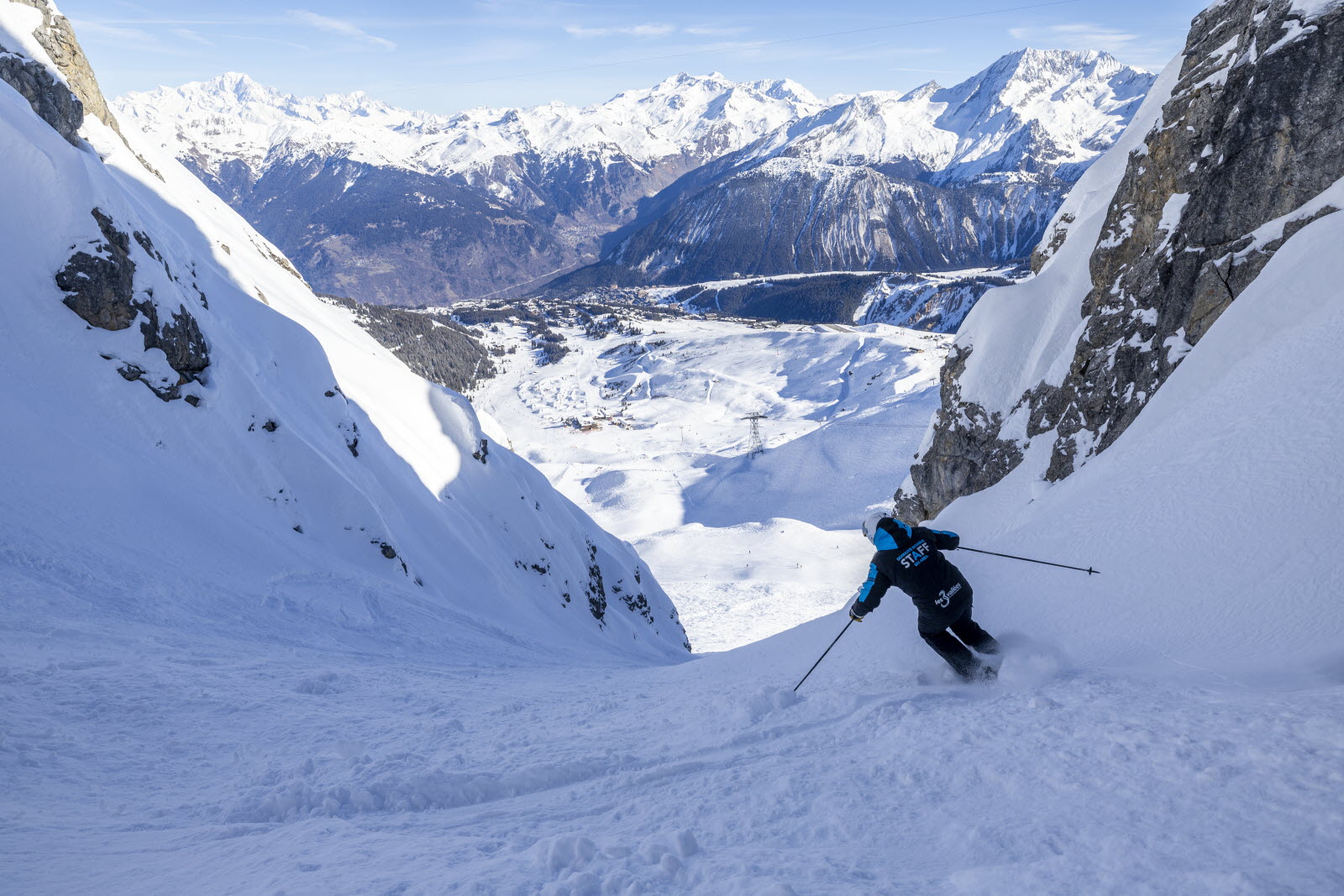
Courchevel is famous for its wide, perfectly groomed and also beginner-friendlyt slopes, but it also hides one of the most feared marked runs in the Alps: the Grand Couloir!
This black-flagged run, starts just below the Saulire cable car station, and from the top it looks more like a narrow gully between rocks than a ski run… even for en expert skier and snowboarder like me (my parents put me on the snow when I was 3), I admit my palms were sweating! xD
To give you an idea of how steep that is, I’ll let numbers talk: the GC is 692 metres long, and it drops 340 metres in altitude. In its steepest section the slope goes over 80%, while most of it stays around 55%. It’s a black run, and when the snow is hard or icy even as a good skier I would suggest to think it twice before dropping in!
LEARN SKIING IN COURCHEVEL: If you’re not quite there yet, know that Courchevel 1850 might be the right place to learn skiing as it is home to the largest ski school in the world (the local branch of the ESF – École du Ski Français), with around 500 ski and snowboard instructors…In the busiest weeks of the season, their red jackets are everywhere on the slopes! 🙂
5. Courchevel’s Altiport Has One of the Most
Extreme Runways in the World!
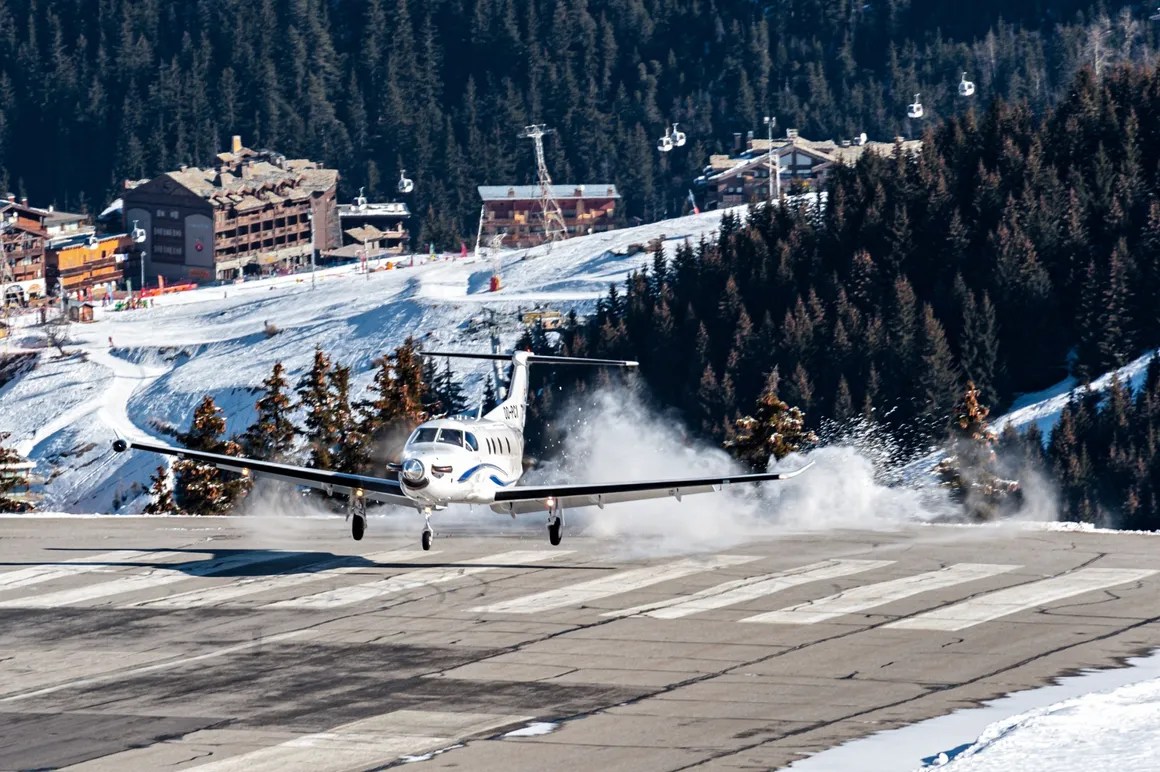
Courchevel 1850 has its own airport… sort of: it’s an altiport!
An altiport, for those of you not familiar with mountain facilities, is a small mountain airfield (in this case located at about 2,008 metre).
It was created in 1961 by Michel Ziegler, a 26-year-old pilot who founded the airline Air Alpes, and the first plane landed there on 31 January 1962 (extra fun fact, since 2023 the altiport carries his name!).
Landing there of course is not for everyone, and especially not for standard commercial flights!
The runway is only 537 metres long and it’s built on the mountainside, with a gradient of about 18.5%…wait what??!
Yes, you heard it right, 18,5%!
Planes land uphill to slow down and take off downhill to gain speed!
There’s no runway lighting and no instrument approach.
Because of the mountains all around, there’s also no way to abort a landing and try again: once a pilot commits, they land (picturing this, my hands are sweating more than in front of the Grand Coulour xD).
That is why pilots need a special mountain rating to fly in, and why the History Channel’s Most Extreme Airports ranked it seventh in the world.
Read More: If you love this kind of aviation curiosity, don’t miss our 12 surprising and unexpected fun facts about airlines.
Today the altiport is mostly used by private planes and helicopters of wealthy individuals which take 20-30 minutes from Geneva instead o 3 hours by car:)
6. Courchevel Has More Michelin Stars
Than Any Other Ski Resort!
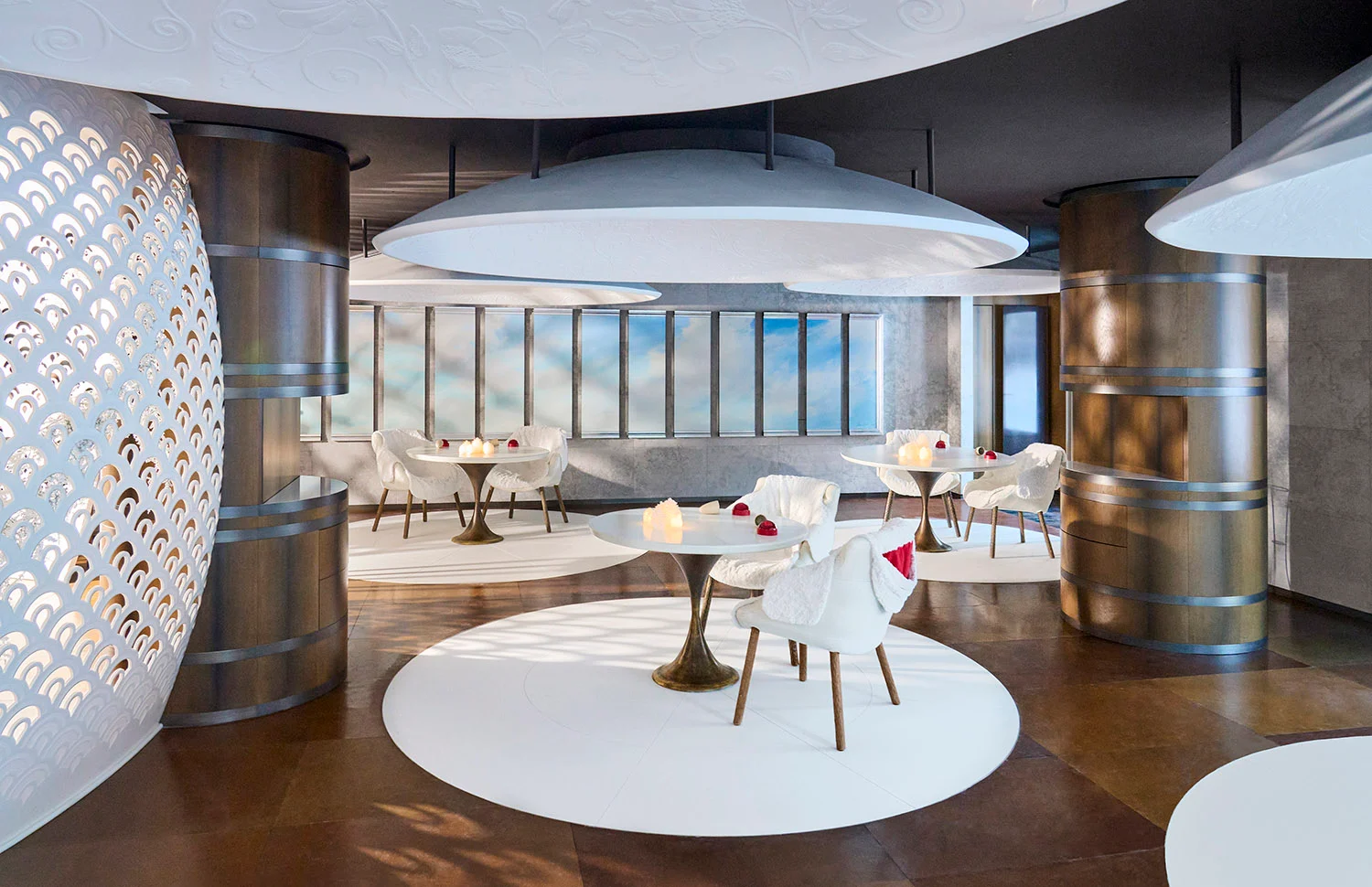
Courchevel is often called the ski resort with the most Michelin stars in the world, and the numbers back it up.
In the 2026 edition of the Michelin Guide it counts 13 starred restaurants for a total of 18 stars:
- one with three stars,
- three with two stars
- and nine with one star.
For a town of about 2,300 permanent residents, that’s quite something.
The top table is “Le 1947″ at Cheval Blanc, led by chef Yannick Alléno, which earned its third star in 2017.
The restaurant is named after 1947, the most legendary vintage of Château Cheval Blanc, one of Bordeaux’s most famous wines (if you want to know more, here are our 7 curious fun facts about Bordeaux) – feel free to check it out too! :)).
The restaurant is tiny: just five tables, about 21 guests, open only in the evening during the winter season. A dinner for two is listen around 950-1000Euro – drinks excluded. Not cheap, as expected, but a fairly-priced dinner for enjoying a world class experience in one of the most pictoresque and exclusive location in the Alps! 🙂
Of course, good food isn’t only at the top of the Michelin pyramid though: you are in France, food is almost-always super! 😀
On the slopes of Courchevel you can find dozens of mountain restaurants where you ski in for lunch and ski out after dessert:)
7. Some Courchevel Chalets Can Cost Almost
Half a Million Euros a Week!
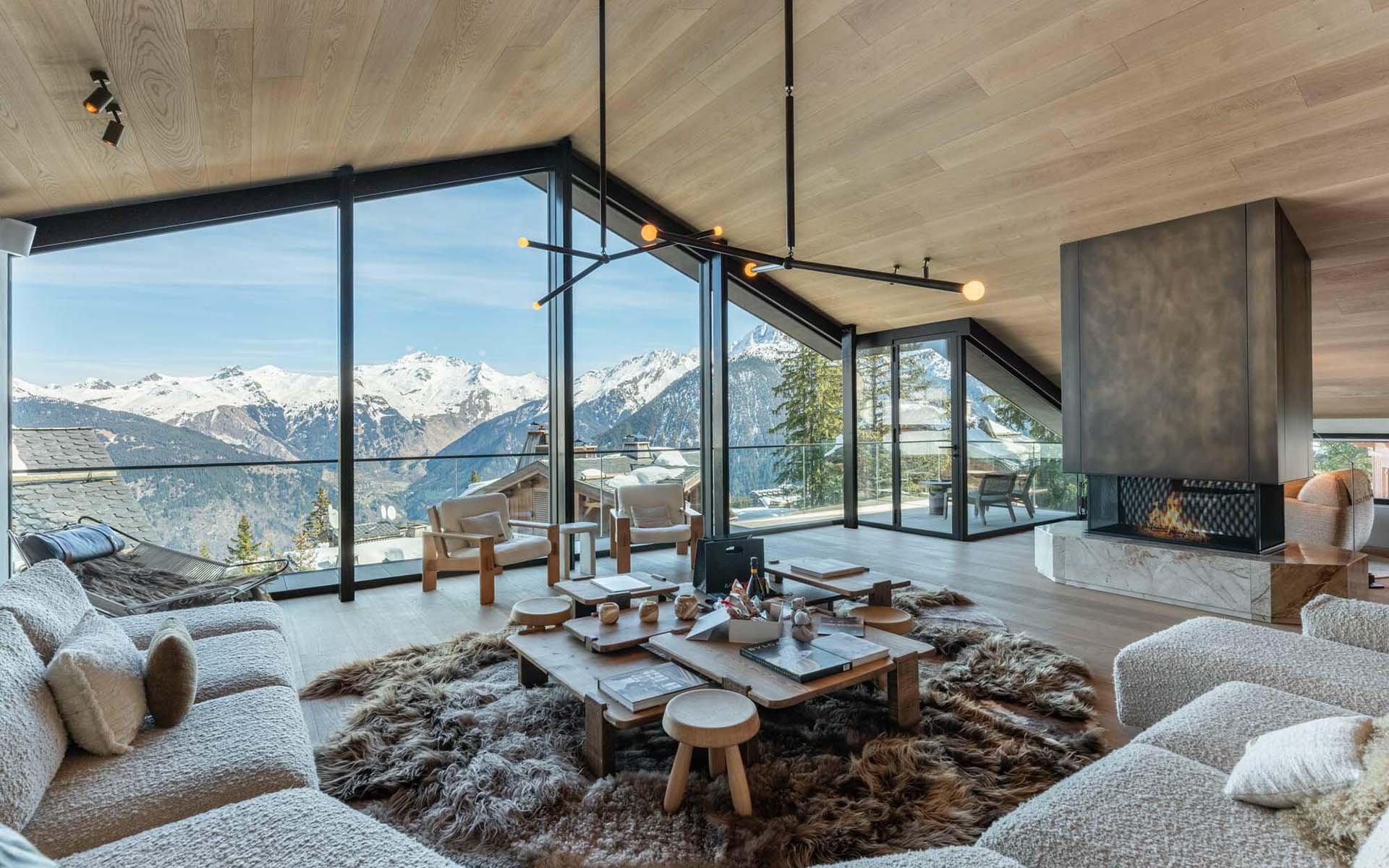
In a town of about 2,300 residents, Courchevel has 20 five-star hotels in 2026, plus several hotels holding the official “Palace” distinction (the highest category of French hotels!).
Most loyal guests though, don’t even stay in hotels at all: they rent private chalets!
And these aren’t your average mountain huts.
The most exclusive chalets in Courchevel 1850 come with indoor swimming pools, private cinemas, spas, Nordic baths on the terrace and direct access to the slopes, plus staff like private chefs and butlers.
Prices range from under €8,000 a week for a small chalet in Moriond to around €470,000 a week for the most exclusive estates in 1850.
Organising a stay like this is a job in itself: choosing the right village and chalet, then booking ski instructors, transfers, restaurant tables and in-chalet services….
That’s why many guests rely on specialised concierges.
AR Privé in Courchevel, for example, is a well-established and respected local service, which takes care of selecting private chalets in Courchevel 1850 and arranging everything around the stay for their busy clients: from private chefs and wellness, to drivers and helicopter connections from the airport and more!
A tip if you’re planning: ski-in, ski-out isn’t guaranteed for every chalet, even in 1850. So be sure to always check the exact distance to the nearest lift before booking 🙂
Conclusion

And here we come at the end of this article! 🙂
In this post we’ve seen how Courchevel got its curious altitude names, how a former prisoner of war designed it from scratch 80 years ago, why its slopes, its extreme altiport and its 13 Michelin-starred restaurants are unlike anything else in the Alps, and what it takes to spend a week in one of its private chalets! 🙂
- Have you ever been to Courchevel before, or is it on your winter wish list?
- Which fact surprised you the most?
- Do you know more you would like to share with other readers?
Let us know in the comments below, we always love to chit-chat with fellow travelers 😀
Thank you for reading, and see you in the next article! 🙂





0 commenti